





The US Department of Defense is considering blacklisting Anthropic — one of America’s leading AI companies, and the creator of the Claude large language model — after it refused to let the military use its technology without ethical limits. Anthropic says its usage limits are essential to protect against mass surveillance and creating autonomous weapons, while the Pentagon is reportedly considering designating the company a “supply chain risk” and severing defense ties after months of negotiations have broken down.
The previously quiet technology partnership between the DoD and Anthropic has erupted into a public, philosophical, and potentially precedent-setting dispute. At issue is whether an AI firm can set ethical boundaries on how its technology is used, or whether the government gets to decide. This feud raises bigger questions about who controls AI: the companies who build it, the citizens whose liberties are at stake, or government institutions that want unfettered access.
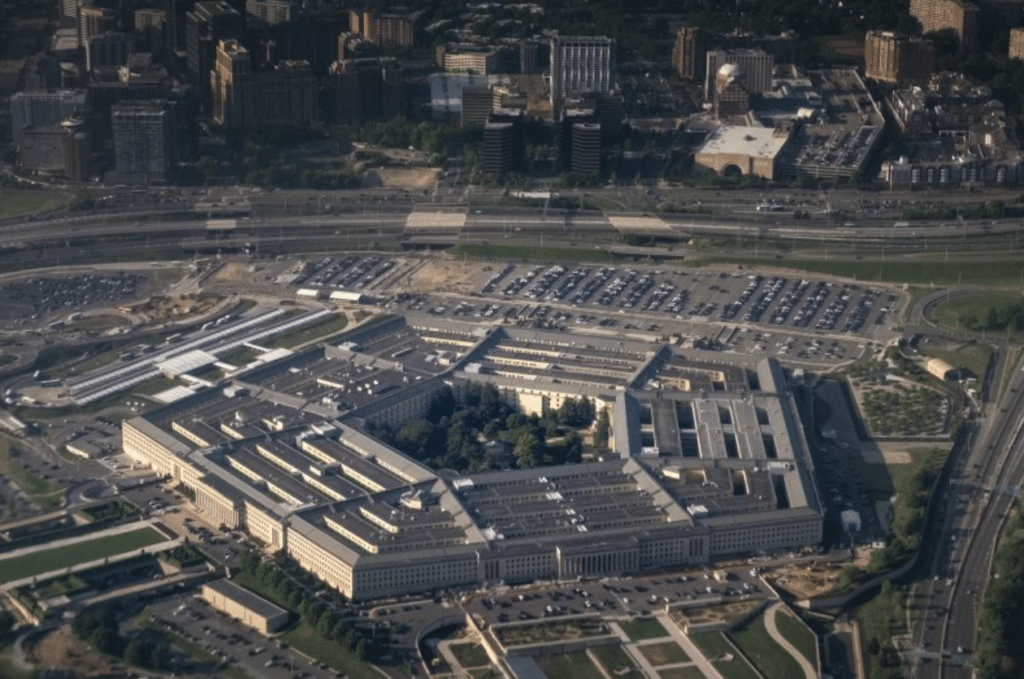
The Stand-off: Supply Chain Risk & Ethical Limits
Defense Secretary Pete Hegseth is said to be “close” to severing ties with Anthropic and labeling the company a supply chain risk — a label historically reserved for foreign adversaries — because Anthropic has refused to relax the ethical guardrails attached to its AI tools. Those limits include refusing to allow Claude to be used for mass domestic surveillance of Americans and fully autonomous weapons that can fire without human intervention.
The dispute is not hypothetical; the Pentagon has been pushing four leading AI providers — OpenAI, Google, xAI, and Anthropic — to allow their models to be used for “all lawful purposes,” including sensitive areas like weapons development, intelligence collection, and battlefield operations. Anthropic alone has maintained that some applications should remain off limits, and that stance has now triggered open frustration among senior defense officials.
Anthropic’s contract with the Pentagon, awarded in July 2025 and valued at up to $200 million, is part of a broader push by the U.S. military to integrate top AI technology into defense workflows. Claude was the first model approved for classified military networks and remains the only such system deployed for sensitive tasks. Other companies have agreed to lift their safeguards for use in unclassified government settings; only Anthropic has stood its ground on holding ethical limits in all contexts.
The Pentagon argues that pre-setting boundaries for lawful use is too restrictive. A senior official reportedly told Axios that negotiating individual case-by-case approvals is impractical for military planning and that partners must be willing to help “our warfighters win in any fight.” That official also warned that Anthropic could face consequences for resisting, reflecting how serious the standoff has become.
Anthropic Didn’t Know That Claude AI Was Used to Capture Maduro
The philosophical fault line in this dispute was made clearer after reports that Claude was accessed during the U.S. military’s January 2026 operation to capture Venezuelan President Nicolás Maduro. According to multiple outlets, Claude was used through a system built by Palantir — yet Anthropic’s provisions on violence and use policy prohibit its models from being used to “facilitate or promote any act of violence” or to design or deploy weapons. The military has not confirmed details, and Anthropic has stated it did not discuss Claude’s use in specific operations, insisting its usage policies apply to all contexts.
What this reveals is a disconnect between how the government interprets “lawful use” and how Anthropic interprets ethical restraint. For many, the Maduro incident exemplifies the risk inherent in embedding commercial AI into military operations: companies promise moral standards, but when governments deploy the tech through third parties, those standards can be circumvented or ignored.
Ethics or Efficiency? Anthropic Stands Its Ground
At its core, this feud is philosophical rather than simply contractual. Anthropic’s CEO and leadership have publicly argued for guardrails that prevent civilian surveillance and unfettered autonomous weapon development. These are positions rooted in concerns about civil liberties and the potential societal harm of unrestrained AI deployment. That stance resonates with segments of the public — particularly those who see government overreach as a threat to privacy and freedom — and has even become a rallying point for supporters who frame Anthropic as principled and the Pentagon as heavy-handed.
But from the Pentagon’s perspective, restrictions slow down innovation and complicate defense planning. In an era where near-peer competitors are racing to apply advanced AI in military contexts, officials see hesitation as an operational liability. The Pentagon’s push for AI that can be used for “any lawful purpose” reflects this urgency, but it also raises questions about civilian oversight of military AI use.
Adding to the tension is the reality that AI models like Claude are widely integrated into corporate infrastructure — reportedly used by eight of the ten largest American firms — meaning a supply chain risk designation would not just impact defense relationships, but could ripple through broader commercial ecosystems.
What We’ve Learned From the Anthropic & Pentagon Feud
This clash highlights a broader dilemma of the AI age: who determines how advanced technology gets used once it moves beyond development and into powerful institutions? Anthropic is trying to assert that boundaries should be set by the creators who understand both the power and the risks of their tools. The Pentagon, tasked with national defense, is asserting that it should be unfettered in how it uses technology it has contracted and deployed.
The deeper issue is whether ethical restrictions should follow technology into all spheres of use, or whether governments should be able to override them in the name of security. The answer carries implications far beyond one contract. It touches on privacy, military autonomy, corporate responsibility, and ultimately on whether citizens or governments — and what kind of governments — shape the limits of technology.
Final Thought
In the tug-of-war between Anthropic and the Pentagon, we are seeing a pivotal question about our future: when powerful tools are created, whose values are going to determine how they are applied — the companies that build them, the governments that wield them, or the public whose liberties are on the line?
The Expose Urgently Needs Your Help…
Can you please help to keep the lights on with The Expose’s honest, reliable, powerful and truthful journalism?
Your Government & Big Tech organisations
try to silence & shut down The Expose.
So we need your help to ensure
we can continue to bring you the
facts the mainstream refuses to.
The government does not fund us
to publish lies and propaganda on their
behalf like the Mainstream Media.
Instead, we rely solely on your support. So
please support us in our efforts to bring
you honest, reliable, investigative journalism
today. It’s secure, quick and easy.
Please choose your preferred method below to show your support.

Categories: US News
nothing on trump yet lol
The CCP will supply a AI system for the Pentagon to spy on Americans as long as the CCP has a backdoor for…updates.
I don’t know if this is a company with integrity or an enemy protecting anti American forces. You can’t trust anyone anymore. Technology is designed to destroy all freedom, privacy and sovereignty. It is the tool by elitists to destroy the masses. And no one can stop them but God Himself. He is coming.
The people have to stop it. God gave us freedom to fight and resist evil forces