





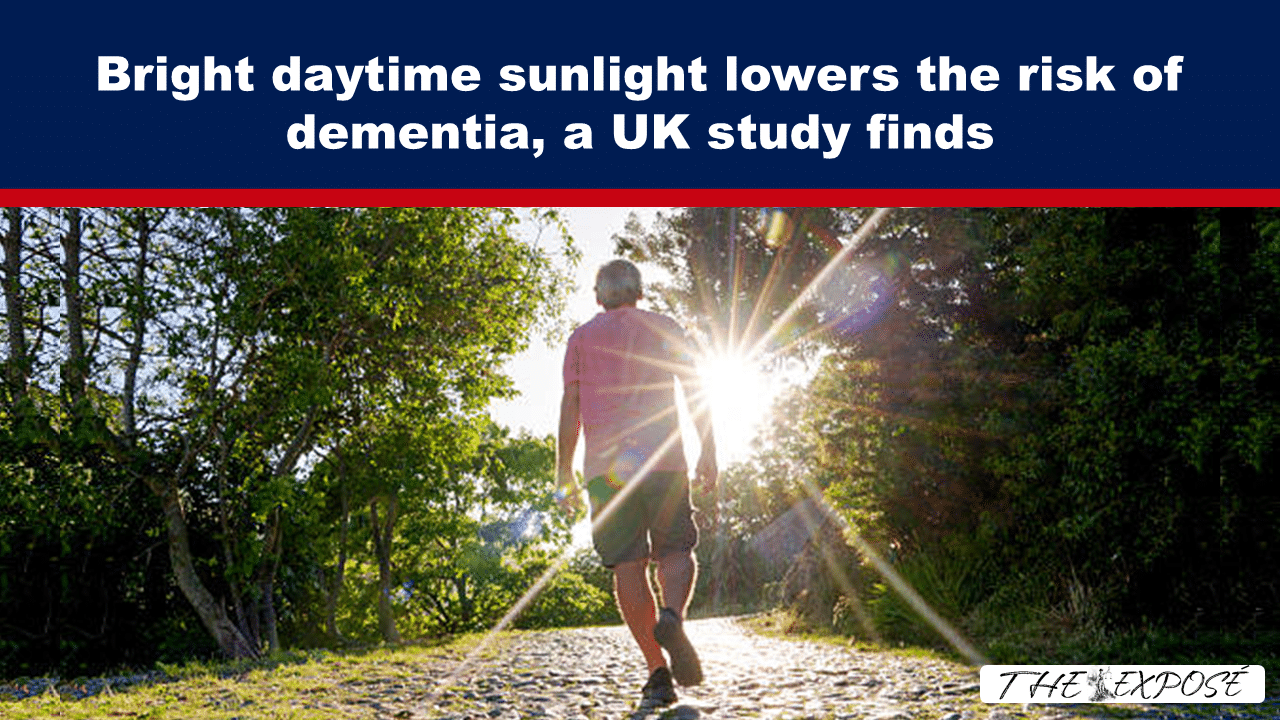
Research suggests that spending more time in bright daytime light was linked to a lower risk of developing dementia, with measurable brightness targets that are often reached outdoors. The study published in June included people who have voluntarily registered on the UK Biobank. The researchers caution these thresholds may not transfer directly to the rest of the population.
In the study’s machine-learning analysis, bright daytime light ranked as a stronger predictor of future dementia risk than several familiar factors, including alcohol consumption, obesity, hearing loss and traumatic brain injury.
The strongest association between brighter daytime light and lower dementia risk was found in people already at higher risk, including those with an evening chronotype and people who carry the APOE4 gene variant.
Research suggests sunlight supports your body in ways that extend beyond vitamin D, influencing compounds involved in circulation, mood, sleep, immune function and your body’s natural daily rhythm.
Building simple habits such as spending time outdoors in the morning, taking daylight breaks during the day and reducing dependence on dim indoor lighting may be a practical way to support long-term brain health.
Let’s not lose touch…Your Government and Big Tech are actively trying to censor the information reported by The Exposé to serve their own needs. Subscribe to our emails now to make sure you receive the latest uncensored news in your inbox…
Brighter Daytime Light Is Linked to a Lower Dementia Risk
By Dr. Joseph Mercola, as published by Mercola on 17 September 2026
Table of Contents
Introduction
Dementia is characterised by progressive loss of memory, thinking, judgment and the ability to carry out everyday tasks. This means the brain gradually loses the ability to process information normally, making familiar conversations, appointments and even simple daily routines increasingly difficult. In advanced stages, it can lead to dependence on others for daily care, which is exactly why the modifiable factors discussed in the featured research below are worth your attention.
Yet research points to a surprisingly simple factor tied to your future brain health – the amount of bright light you receive during the day.
A large prospective cohort study of 87,577 UK Biobank adults (with an average age of 62.36 years) followed participants for 8.1 years after measuring their daily bright-light exposure with wrist-worn devices for seven days, and found a consistent pattern linking brighter days to lower dementia risk.1
The associations held across the study’s adjusted models, and the specific brightness targets the researchers identified give you something more concrete to aim for than vague advice to simply “get outside more.” However, keep in mind that the effect sizes were modest and the design was observational, so the study shows association rather than causation.
Meanwhile, decades of research show that sunlight does much more than support vitamin D production. Natural daylight also appears to influence your internal body clock, blood vessel function, circulation, mood and sleep – systems that research links to brain health as you age. This matters because modern life keeps so many of us indoors beneath artificial lighting that rarely approaches the brightness found outdoors.
Researchers Identified Specific Daylight Targets Linked to Lower Dementia Risk
For the General Psychiatry study, investigators wanted to determine whether the amount of bright light received during an ordinary day influences long-term dementia risk. They equipped dementia-free adults with wrist-worn devices that continuously measured light exposure for seven days.
The participants, whose average age was just over 62, were then followed for a median of 8.1 years. During that time, 741 people developed dementia. Because the study used objective measurements rather than personal estimates, the findings provide a more reliable picture than self-report studies – though the authors note that wrist-worn sensors are only a coarse representation of the light actually reaching your eyes.
• Brighter daytime light was consistently linked to lower dementia risk. People whose average daytime light exposure exceeded 1,000 lux [one lux is the equivalent of one lumen per square metre], roughly the brightness near a sunny window or outdoors on an overcast day (a practical comparison rather than a figure reported in the study), had a 16% lower risk of developing dementia than those who remained below that level, even after researchers adjusted for age, education, physical activity, smoking, diet, obesity, diabetes, high blood pressure, hearing loss and other important risk factors.
Researchers also identified practical brightness targets. Spending more than 1.4 hours each day above 3,000 lux, more than 0.7 hours above 5,000 lux, or more than 0.45 hours above 7,000 lux was each associated with roughly 17% to 18% lower dementia risk than shorter exposure times. One caveat worth knowing: The wrist sensors used in this study had an approximately linear response only up to about 5,500 lux, so the 7,000-lux threshold should be read with more caution than the lower two.
• The greatest reductions appeared in people who already faced higher risk. The strongest protective associations were found among people exposed to higher nighttime light levels, people with an evening chronotype – meaning they naturally prefer later bedtimes and wake times – and those who carry the APOE4 gene variant, one of the strongest inherited risk factors for Alzheimer’s disease.
Depending on the group and the amount of daytime light received, brighter daytime light was associated with a 19% to 41% lower dementia risk. Researchers also found that the relationship between brighter daytime light and lower dementia risk remained consistent across different ages and between men and women, though they caution that the UK Biobank cohort is healthier and less socioeconomically deprived than the general population, which limits how broadly the risk estimates translate to real-life application.
• Daytime light outperformed several familiar dementia predictors. Using a single machine-learning model (XGBoost), researchers compared four daytime light measurements with 15 established dementia risk factors using the SHapley Additive exPlanations method.
Spending less than 0.70 hours each day above 5,000 lux ranked 10th of the 19 factors examined – a stronger predictor than alcohol consumption, obesity, air pollution, vitamin D supplement use, hearing loss and traumatic brain injury. That doesn’t mean those factors are unimportant.
Instead, it highlights that daytime light has received far less attention than its predictive value deserves. Unlike many health markers that require laboratory testing, light exposure is also easy to measure with wearable devices, making it a practical way to identify people whose future dementia risk warrants closer attention.
• Healthier daily body rhythms explained part of the association. Researchers investigated whether brighter daytime light supported the body’s internal 24-hour timing system, known as circadian rest-activity rhythms. This system controls your sleep-wake cycle, hormone release, alertness and many other biological functions.
Their analyses suggested these rhythms explained roughly 6% to 33% of the relationship between brighter daytime light and lower dementia risk, although these rest-activity mediation effects were no longer statistically significant after correction for multiple comparisons, so the authors classify them as exploratory. These results suggest that a stronger daily rhythm may be one pathway through which brighter daylight relates to long-term brain health.
• The benefits extended beyond vitamin D alone. Brain imaging showed that brighter daytime light was associated with healthier characteristics in several brain regions. The clearest of these findings involved the fusiform cortex – an area that helps recognise faces and process complex visual information – which mediated about 9% of the association. It was also the only brain-structure mediator to survive correction for multiple comparisons.
Researchers also examined whether vitamin D explained the relationship between daylight and dementia but found no significant mediation effect. That finding suggests bright daytime light may influence brain health through pathways beyond raising vitamin D levels, though the study did not identify which ones.
If vitamin D alone doesn’t account for what the researchers observed, the question becomes which biological pathways do, and decades of research point to a set of responses that begin the moment sunlight reaches your body.
Sunlight Starts Powerful Biological Processes Beyond Vitamin D
Daylight is more than a vitamin D delivery system. It acts as an environmental signal that research links to circulation, hormone release, immune activity, sleep quality and cellular energy production. An analysis by A Midwestern Doctor argues that modern indoor living has separated many people from the level of natural light the human body evolved to receive, making sunlight an often-overlooked part of overall health.2
• Your body creates compounds that supplements don’t provide. Ultraviolet light does much more than start vitamin D production. As sunlight reaches your skin, it also produces photoproducts such as lumisterol and tachysterol, which researchers continue to investigate for their biological roles.3
Research by Dr. Michael Holick suggests that sunlight stimulates the production of compounds that may support immune function, cardiovascular health and mental well-being. He has also reported that vitamin D produced in your skin remains in your bloodstream two to three times longer than vitamin D taken by mouth because nearly all of it binds to transport proteins, whereas only about 60% of supplemental vitamin D does.4
• Sunlight includes its own built-in safety system. According to Holick, your body naturally limits vitamin D production during sun exposure. Once enough vitamin D precursor forms in your skin, continued ultraviolet exposure converts additional precursor into other photoproducts instead of endlessly producing vitamin D.
As he explains, “Mother Nature designed us” with a self-regulating system that prevents excessive vitamin D production through ordinary sun exposure. This differs from supplements, where excessively high doses can raise vitamin D levels beyond the body’s normal regulatory process.5
• Natural daylight is linked to better circulation throughout your body. One of the fastest responses described in the article involves nitric oxide, a signalling molecule released from your skin almost immediately after sun exposure. Nitric oxide relaxes blood vessels, allowing blood to move more freely throughout your body. Holick explains that sunlight “immediately release[s] nitric oxide” while also stimulating additional nitric oxide production, extending that effect.
Research also suggests sunlight supports cholesterol sulphate production and healthy fluid movement through tissues.6 For example, in a 20-year study of 29,518 Swedish women, those who avoided the sun had roughly 1.6 times the all-cause mortality of women with the highest sun exposure, and non-smoking sun-avoiders had a life expectancy similar to smokers who got the most sun. The study was observational, so it cannot establish cause.7*
• Morning daylight helps set your body clock, mood, and sleep. Sunlight influences “clock genes” and “period genes,” which synchronise your body’s internal timing system.8 A well-aligned daily rhythm supports daytime alertness and deeper sleep at night.
Ultraviolet light also appears to stimulate beta-endorphins, your body’s natural mood-supporting chemicals, which researchers have proposed as one reason many people feel calmer and happier after spending time outdoors.9 Artificial indoor lighting doesn’t provide the full range of wavelengths found in natural sunlight, leaving your body without many of the biological signals that evolved alongside daylight exposure.
• Scientists continue to investigate how light communicates with your cells. Historical work by Alexander Gurwitsch proposed that living cells emit extremely faint ultraviolet light, sometimes called mitogenic radiation or biophotons, as part of cellular communication during growth and repair.10
Observations by A Midwestern Doctor also suggest blood and other tissues conduct light energy throughout the body, offering one explanation for why light exposure sometimes produces widespread effects instead of remaining limited to the skin. These concepts extend beyond established mainstream scientific consensus and remain areas of ongoing investigation, but together they reinforce the notion that sunlight influences far more than vitamin D production alone.
*These findings are from research conducted in clinical settings. Results may not apply to all individuals.
Increase Your Daily Bright Light Exposure for Optimal Health
One of the practical takeaways from the featured research is that your daily light environment may matter more than it seems. Bright daytime light isn’t a luxury; it’s a biological signal involved in many of the systems that research associates with long-term brain health. The good news is that this is one area where small, consistent habits add up. Instead of waiting until memory problems appear, you have the opportunity to build a daily routine that supports your brain now.
1. Make bright natural light part of your morning routine. If you spend most of your day indoors, start by stepping outside shortly after you wake up. Eat breakfast on a patio, walk the dog, take a short walk or simply sit outside while you drink your coffee. If your schedule allows, build additional outdoor time into the middle of your day. The goal is to spend meaningful time in bright natural daylight instead of relying on dim indoor lighting from morning until evening.
2. Spend less of your day under dim indoor lighting. Many homes and offices provide only a fraction of the brightness found outdoors. If you work inside, move closer to windows whenever possible and take brief outdoor breaks throughout the day. Even a few scheduled daylight breaks are easier to maintain than trying to spend several uninterrupted hours outside. Each break adds to your daily bright-light total.
3. Protect your body’s natural daily rhythm. Your body clock appears to work best when it receives a strong contrast between bright days and dark nights. Flood your mornings with bright light, then dial down artificial light after sunset, especially overhead light-emitting diodes (“LEDs”) and screens, which are heavy in the blue wavelengths that delay sleep.
If you’re an evening person or work most of the day indoors, staying consistent with daytime light becomes even more important because the research found some of the strongest associations in higher-risk groups.
4. Support sunlight instead of trying to replace it. Whole-body sun exposure appears to offer benefits that extend beyond vitamin D alone. According to the research discussed earlier, sunlight also stimulates nitric oxide and other biologically active compounds that may influence circulation, mood and your internal body clock.
Aim for regular, sensible sun exposure whenever conditions allow. If you still consume significant amounts of seed oils, such as corn, soybean, safflower or canola oils, and other sources of linoleic acid (“LA”), avoid intense midday sun exposure (10 am to 4 pm) until you have reduced those foods for four to six months, then begin building up your exposure around solar noon.
This is because LA is a polyunsaturated fat that oxidises easily, accumulates in your skin and may increase your susceptibility to sunburn and skin damage. During that transition, build your sun exposure gradually. If your vitamin D level is low, I recommend working toward a blood level between 60 and 80 nanograms per millilitre (150 to 200 nanomoles per litre), with sunlight as your primary source whenever practical. Talk to your health care provider about whether this testing is appropriate for you.
5. Support cellular energy every day. Bright light is most useful as part of a lifestyle that supports mitochondrial function. Eat enough carbohydrates to maintain healthy energy production instead of relying on very-low-carbohydrate eating patterns. For most adults, that means roughly 250 grammes of targeted carbohydrates daily, adjusted upward if you’re very active.
Choose whole fruit and white rice first, followed by root vegetables and other minimally processed carbohydrate sources that fit your digestive tolerance.
Keep protein at about 0.6 to 0.8 grammes per pound (1.32 to 1.76 grammes per kilogramme) of your ideal body weight, with roughly one-third coming from collagen-rich foods. Eliminate seed oils whenever possible and prepare food with tallow, ghee or grass-fed butter instead.
Pair those nutrition habits with regular movement to support the circadian and cellular-energy systems discussed above. To be clear, the dementia study measured light exposure only – it did not test diet or exercise as interventions.
FAQs About Daytime Light Exposure and Dementia
Q: What did the study find about daytime light and dementia risk?
A: The study found that people who received more bright light during the day had a lower risk of developing dementia over the next eight years. Those whose average daytime light exposure exceeded 1,000 lux had a 16% lower dementia risk than those exposed to dimmer light.
Q: Why does bright daylight benefit my brain beyond vitamin D?
A: Bright daylight does much more than help your body produce vitamin D. The featured research indicates that sunlight also stimulates nitric oxide and other biologically active compounds involved in circulation, mood, sleep, immune function and your body’s internal clock. In the dementia study, vitamin D did not explain the association between daytime light and dementia risk, which suggests other pathways are involved. However, the study did not identify which ones.
Q: How much bright light should I aim for each day?
A: The research suggests aiming for regular exposure to bright natural daylight throughout the day rather than remaining indoors under dim artificial lighting. Practical targets include more than 1.4 hours above 3,000 lux, more than 0.7 hours above 5,000 lux or more than 0.45 hours above 7,000 lux. Those light levels are often reached outdoors, though the researchers caution that the specific thresholds may not transfer directly to other populations.
Q: Who appeared to benefit the most from brighter daytime light?
A: The strongest associations were seen in people already considered at higher risk for dementia, including those with an evening chronotype, people exposed to higher nighttime light levels and people who carry the APOE4 gene variant. Depending on the group, brighter daytime light was associated with a 19% to 41% lower dementia risk.
Q: What are the simplest ways to increase my daytime light exposure?
A: Build bright daylight into your daily routine. Step outside shortly after waking, eat breakfast outdoors when possible, take walks during the day, work near windows and schedule short outdoor breaks instead of spending the entire day under indoor lighting. Pair regular sunlight with healthy eating, movement and good sleep habits to support long-term brain health.
This article is for informational purposes only and does not constitute medical advice. Consult a qualified healthcare provider before making changes to your health regimen.
Sources and References
- 1 General Psychiatry 2026 Jun 24;39(3):e70039
- 2, 6, 10 The Forgotten Side of Medicine, Natural Light is An Essential Nutrient June 14, 2024
- 3, 4, 5, 8 YouTube, May 28, 2022, VitaminDAction, “How Sensible Sun Exposure Benefits Your Health — Interview with Dr. Michael Holick”
- 7 J Intern Med. 2016 Oct;280(4):375-87
- 9 Endocrinology. 2018 Mar 12;159(5):1992–2007
About the Author
Dr. Joseph Mercola is the founder and owner of Mercola.com, a Board-Certified Family Medicine Osteopathic Physician, a Fellow of the American College of Nutrition and a New York Times bestselling author. He publishes multiple articles a day covering a wide range of topics on his website, Mercola.com.
The Expose Urgently Needs Your Help…
Can you please help to keep the lights on with The Expose’s honest, reliable, powerful and truthful journalism?
Your Government & Big Tech organisations
try to silence & shut down The Expose.
So we need your help to ensure
we can continue to bring you the
facts the mainstream refuses to.
The government does not fund us
to publish lies and propaganda on their
behalf like the Mainstream Media.
Instead, we rely solely on your support. So
please support us in our efforts to bring
you honest, reliable, investigative journalism
today. It’s secure, quick and easy.
Please choose your preferred method below to show your support.

Categories: Breaking News, Latest News, World News