





For more than a decade, Western education systems have pursued an ambitious transformation: integrating digital devices into classrooms at scale. Tablets replaced textbooks in many schools, handwritten work gave way to typed assignments, and online platforms became central to lesson delivery. Policymakers described this screen shift as modernisation, arguing that digital tools would personalise learning and better prepare students for a technology-driven future.
However, some of the countries that most enthusiastically embraced classroom digitisation are now reassessing that strategy.
Sweden, often cited as a leader in digital-first education, has begun reintroducing printed textbooks and reducing mandatory screen use for younger pupils. Swedish education officials have acknowledged concerns about declining reading comprehension and attention, particularly in early primary years. The reassessment follows several years of disappointing literacy results, including measurable declines in international comparisons.
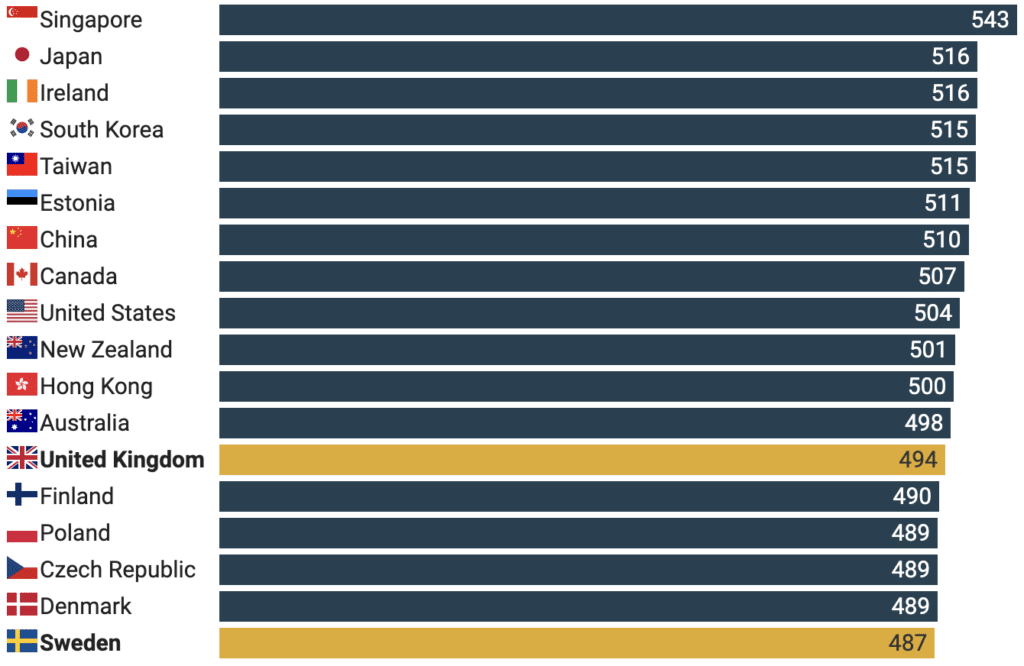
Reading Comprehension and Cognitive Depth
Sweden’s policy adjustment reflects a growing body of research suggesting that reading on paper supports stronger comprehension than reading on screens. Numerous cognitive science studies have found that readers tend to retain information more effectively from printed texts, while digital formats are associated with faster reading but lower recall and reduced depth of processing.
Screen-based environments often involve hyperlinks, multimedia elements and visual distractions that encourage skimming rather than sustained analysis. While such features may enhance engagement, they can also reduce the level of cognitive immersion required for complex reading tasks.
Educators in Sweden have concluded that early learners in particular benefit from physical books, structured texts and reduced digital interruption. The decision marks a significant shift from the earlier assumption that increasing digital exposure would automatically improve educational outcomes.
Attention and Behavioural Concerns
The debate over screens extends beyond literacy. Teachers in the United Kingdom, the United States and other countries have reported growing difficulties in maintaining student focus, particularly in environments where smartphones and tablets are widely accessible.
In response, several governments have introduced or encouraged restrictions on mobile phone use during school hours. The UK Department for Education has issued guidance supporting school-level bans, and multiple US states have moved to limit in-class device use.
Child development specialists have warned that constant exposure to highly stimulating digital platforms may affect attention regulation. Digital media frequently delivers rapid feedback, algorithmic reinforcement and continuous novelty. While these features are not inherently harmful, their cumulative effect may make it more challenging for children to engage in slower, effort-intensive cognitive activities.
The concern is not that technology is incompatible with learning, but that unmoderated exposure to fast-paced digital environments may undermine the sustained concentration required for academic development.
Mental Health and Social Development
Concerns about screen use also intersect with broader trends in adolescent mental health. Over the past decade, rates of anxiety, depression and self-harm among teenagers have risen in several Western countries. Although multiple social factors contribute to these trends, researchers have increasingly examined the role of social media and smartphone use.
Psychologists have pointed to the effects of online social comparison, disrupted sleep patterns, cyberbullying and algorithmically amplified content. The rapid expansion of smartphone access around 2012 closely coincided with rising mental health difficulties among adolescents in the United States and parts of Europe.
While causation remains debated, the correlation has prompted policymakers and researchers to question whether unrestricted digital immersion may carry psychological costs.
Reassessing the Digital “Native” Assumption
Much of the enthusiasm for classroom digitisation was built on the concept of the “digital native,” the idea that children born into the internet era possess intuitive advantages in technology-rich environments.
However, familiarity with devices does not automatically translate into deeper analytical skills or critical thinking. Being able to navigate applications efficiently is not the same as mastering complex texts, constructing arguments or engaging in sustained intellectual effort.
Recent educational reassessments suggest that technological fluency should complement, rather than replace, foundational learning practices such as reading extended prose, writing by hand and engaging in structured discussion.
Long-Term Implications
Neuroscientific research indicates that childhood and adolescence are periods of significant brain development, particularly in areas responsible for executive function and impulse control. Prolonged exposure to fragmented digital environments may influence how attention systems develop, although research in this area remains ongoing.
Beyond cognitive concerns, screen-heavy lifestyles have been associated with reduced physical activity, shorter sleep duration and diminished face-to-face interaction. While technology provides valuable tools and connectivity, excessive reliance may alter behavioural patterns in ways that extend beyond academic performance.
Technology undoubtedly has a place in modern life, but educators and parents alike are right to question whether the integration of digital tools has been sufficiently measured and balanced.
A Gradual Cultural Shift
Sweden’s decision to restore printed materials in early education may signal a broader shift in thinking. It reflects a recognition that innovation must be evaluated against outcomes rather than ideology. Digital devices can support learning when used judiciously, but they do not inherently improve comprehension or attention.
In recent years, several countries have begun reconsidering the scale and intensity of classroom screen use. Policymakers are increasingly acknowledging that educational reform must account for cognitive development, not merely technological capability.
Final Thought
The rapid expansion of screens into nearly every aspect of childhood was widely presented as inevitable progress. Schools digitised their classrooms, governments subsidised devices, and families adapted to a culture of constant connectivity.
However, emerging evidence suggests that some of the promised gains have not materialised, and that unintended consequences may be accumulating. Literacy performance in certain digitised systems has declined, attention-related challenges have increased, and concerns about adolescent mental health persist.
As countries such as Sweden reassess their approach, the broader debate over technology’s role in childhood is entering a more sober phase. The task ahead is not to reject technology outright, but to determine how to use it in ways that strengthen rather than erode the developmental foundations on which future generations depend.
The Expose Urgently Needs Your Help…
Can you please help to keep the lights on with The Expose’s honest, reliable, powerful and truthful journalism?
Your Government & Big Tech organisations
try to silence & shut down The Expose.
So we need your help to ensure
we can continue to bring you the
facts the mainstream refuses to.
The government does not fund us
to publish lies and propaganda on their
behalf like the Mainstream Media.
Instead, we rely solely on your support. So
please support us in our efforts to bring
you honest, reliable, investigative journalism
today. It’s secure, quick and easy.
Please choose your preferred method below to show your support.

Categories: Did You Know?, World News
Critical thinking – ha ha – been a few decades since that was taught in our universities in England, let alone schools.
Good article, thank you Mr Calder!
My opinion the computer screen worked just how they wanted them to work ,, To dumb the kids down , every generation gets dumber and dumber…
Critical thinking is not part of the current indoctrinating curriculum in Australia. the students are presented with one perspective only, one that represents the socialistic/communistic government and students are not encouraged to relate to this critically or ask questions.
On the subject of education from the middle of the 20Th
Century there has been a deliberate DUMBING DOWN OF READING, WRITING AND ARITHMETIC to cause people to be ignorant and easily swayed to fall into subservience to powers of nefarious origen! in the West! Anything Labour or Democrat are the perpetrators of this evil! In NewZealand under National Government (Republican USA, Conservative all the same!) National in New Zealand has for at least a year being teaching THE THREE Rs that is reading, writing and Arithmetic and @ huge upsurge of happy children ,not DUNCES under Dems Labour etc! the latter groups Who are all today MARXIST! over the World!
underb