





Using his personal experience of what has happened to his neighbourhood in Sweden over the decades, Jacob Nordangård describes how mass immigration leads to the Agentic State and a global panopticon.
The Fortress World Scenario is starting to take shape, and the average citizen has been manipulated into embracing it with open arms, he writes.
Let’s not lose touch…Your Government and Big Tech are actively trying to censor the information reported by The Exposé to serve their own needs. Subscribe to our emails now to make sure you receive the latest uncensored news in your inbox…
The Agentic State is a global action platform which assists governments in moving societies towards total digital control using agentic AI, an artificial intelligence system that can accomplish a specific goal with limited human supervision.
A panopticon is a circular building with a central inspection house or tower, a design most famously used for prisons. It has become a metaphor for societal control.
In the Fortress World Scenario, “as the systemic global crisis deepens, powerful international forces are able to impose order in the form of an authoritarian system of global apartheid with elites in protected enclaves and an impoverished majority outside.”
The lesson from Sweden is that these dystopian plans are being imposed on societies after mass immigration has been allowed to take hold.
Swedish Gang Wars Trigger the Construction of the Orwellian Security State
The surveillance state isn’t something coming in some distant future. It is already here and has been gradually implemented over the last couple of decades. But the speed is intensifying and is being justified with a familiar modus operandi (problem–reaction–solution).
In my hometown, Norrköping, a gang war has erupted with its epicentre just a few blocks away from my apartment in a small district nicknamed “Biafra” (after the Nigerian Civil War 1967–70). It used to be a poor working-class district with two-story houses in rendered wood, with only cold running water and a privy in the courtyard. But despite its shortcomings in comfort, it was a small-scale area full of life, with ten grocery stores and a small hat shop.
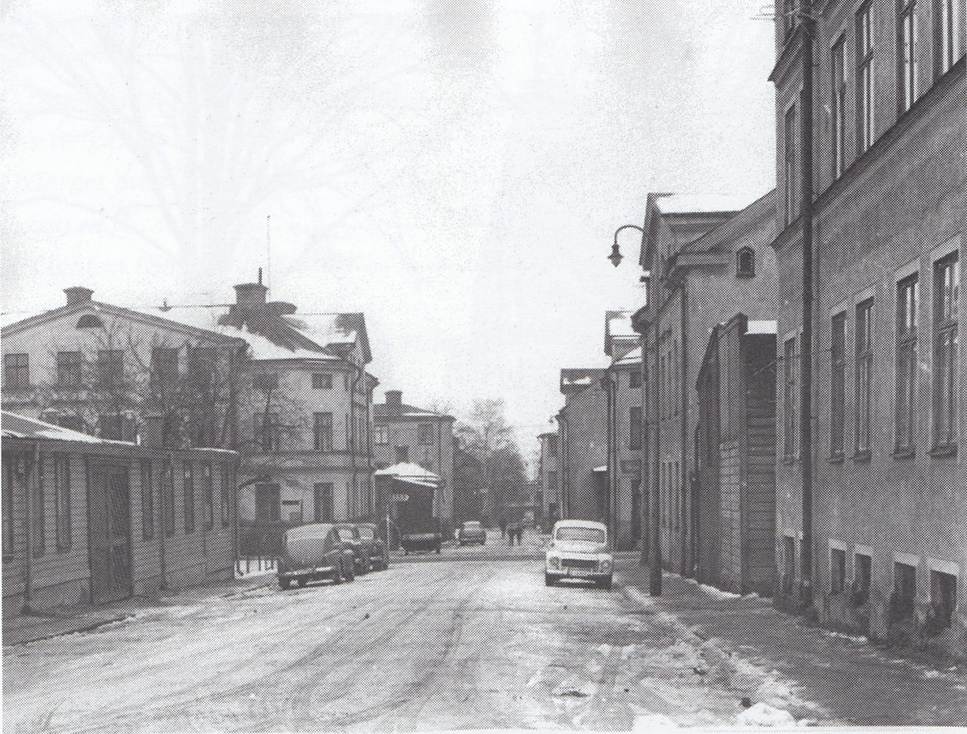
In the mid-sixties, eight blocks were demolished to make way for modernity. Around one hundred houses were replaced by six gigantic residential buildings, a kindergarten and a supermarket. It was a part of the “million programme,” a public housing project implemented by the governing Social Democrat Party with the aim of solving Sweden’s housing shortage and poor living standards. It was built on the idea of large-scale technocratic efficiency and the urban planning philosophies of Swiss-French architect Le Corbusier, with the intent to wipe out almost everything reminiscent of the past.
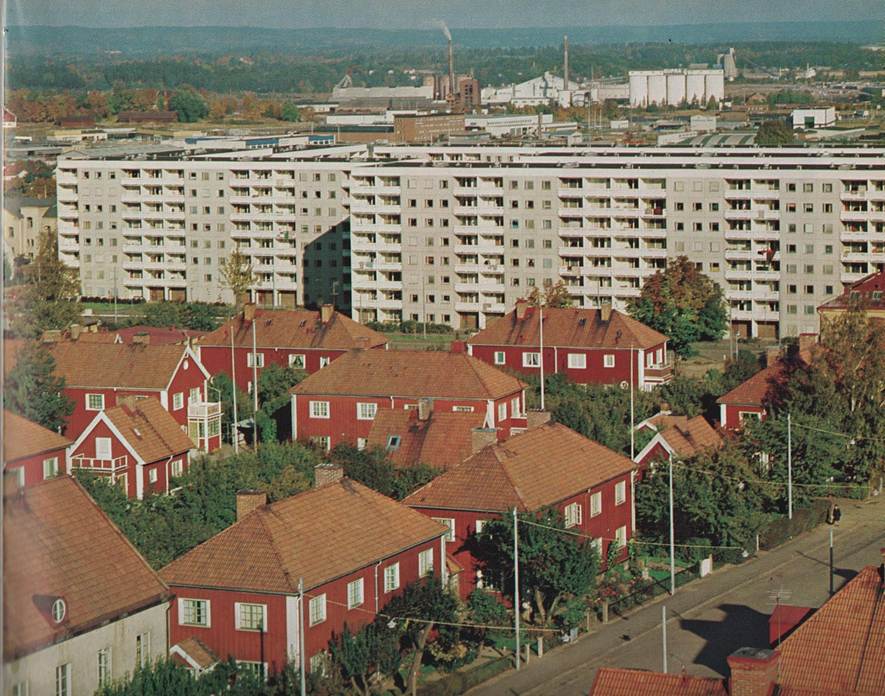
This had a devastating effect on the old cityscape. In the neighbouring “Red Town” (built as emergency housing during the First World War), the area had begun to be expropriated to give room for even larger concrete buildings.
About 80 % of the old city centre in Norrköping was knocked down between 1965 and 1975 and replaced by new sterile modernist buildings and demolition sites/parking lots. It was not uncommon for visiting foreigners to ask if the city had been bombed during the Second World War.
However, the picturesque “Red Town” was saved, and the area is now protected and very popular.
If the oil crisis in the early 1970s hadn’t put a halt to the large-scale plans, coinciding with ever louder protests from local residents, probably nothing would have remained of the older city except for some churches, schools and public buildings.
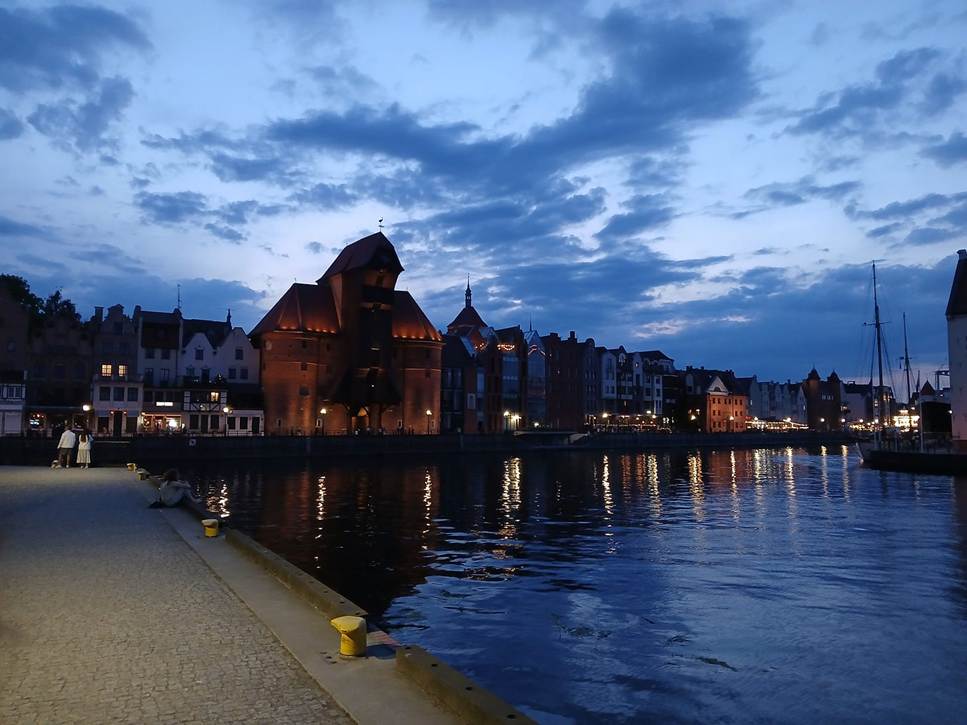
For comparison, I recently visited Gdansk in Poland, where 90% of the city centre was destroyed in the war. However, parts of the city centre were rebuilt in the old style, which today attracts many tourists.
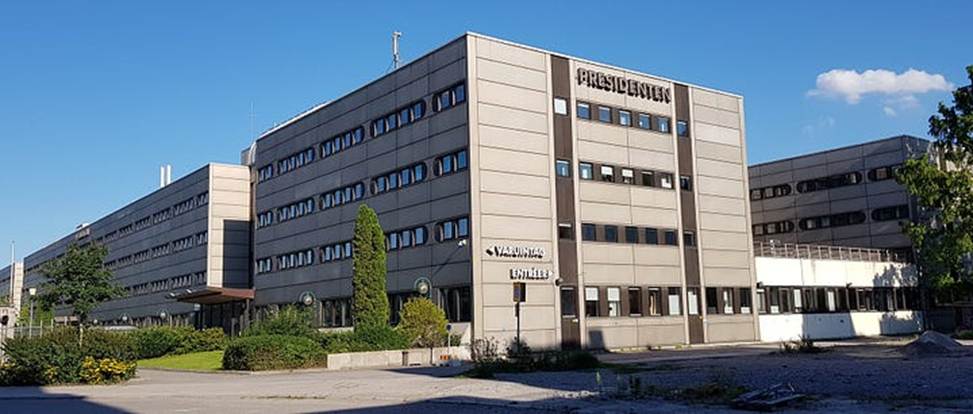
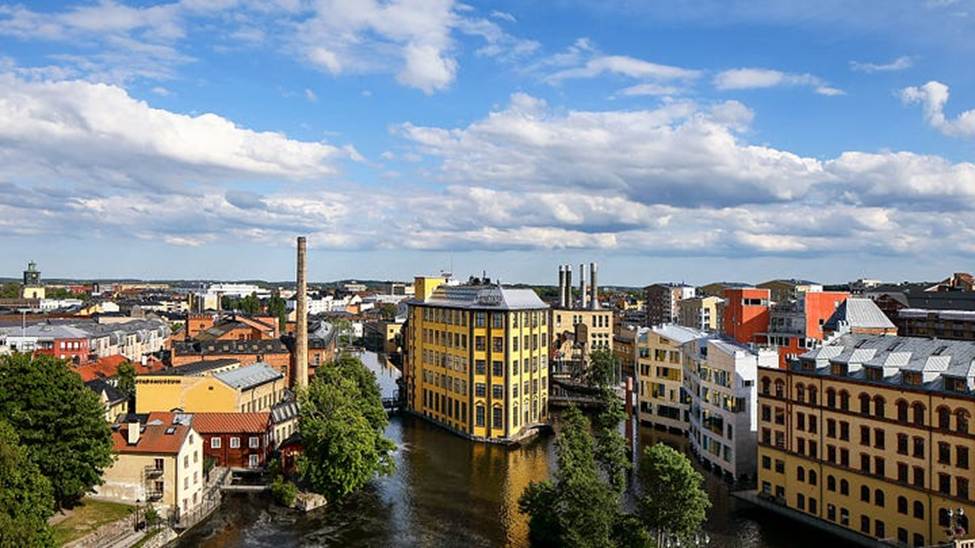
The same cannot be said about Norrköping’s rebuilt cityscape. The tourists mainly visit the old “Industrial Landscape,” comprising late 19th century factory buildings located along the river from the time when Norrköping was a major textile industry (described as Sweden’s Manchester).
As the nickname “Biafra” suggests, the new district soon fell into disrepute. Despite well-planned apartments with a relatively high standard, it was rejected by all who could afford to live elsewhere. Instead, it would become a breeding ground for drug dealing and crime. It became reserved for the less fortunate. Unemployment was rising during the seventies after the closure of the last textile factories.
Le Corbusier’s technocratic utopia was to become populated by alcoholics, drug addicts, people on social welfare, students and refugees. But it wasn’t until the past decade that the district began to make headlines in Swedish media.
In August 2014, Swedish Prime Minister Fredrik Reinfeldt (from the Liberal-Conservative Moderate Party) declared in a speech to the nation that Swedes had to open their hearts to people “fleeing towards Europe, fleeing towards freedom, fleeing towards better conditions.”1 This would leave no room for further reforms as the state budget would be strained.
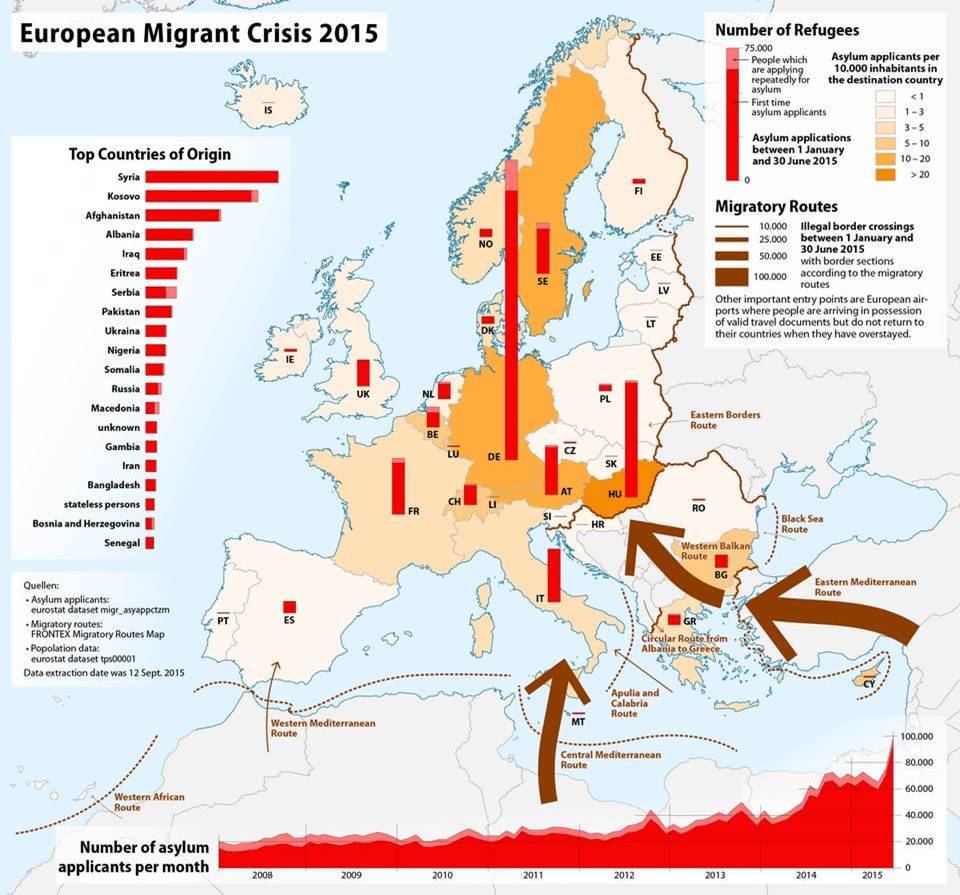
After losing the election in September 2014, Reinfeldt left it to his successors from the opposition to deal with what was to come – the largest and fastest wave of refugees since World War II. In April 2025, it was dubbed “the European refugee crisis.” Sweden was one of the most generous European countries and accepted 163,000 asylum seekers in one year, a large portion of whom came from war-torn countries such as Syria, Iraq, Afghanistan, Eritrea and Somalia.2 A staggering amount for a country with a population of less than 10 million.
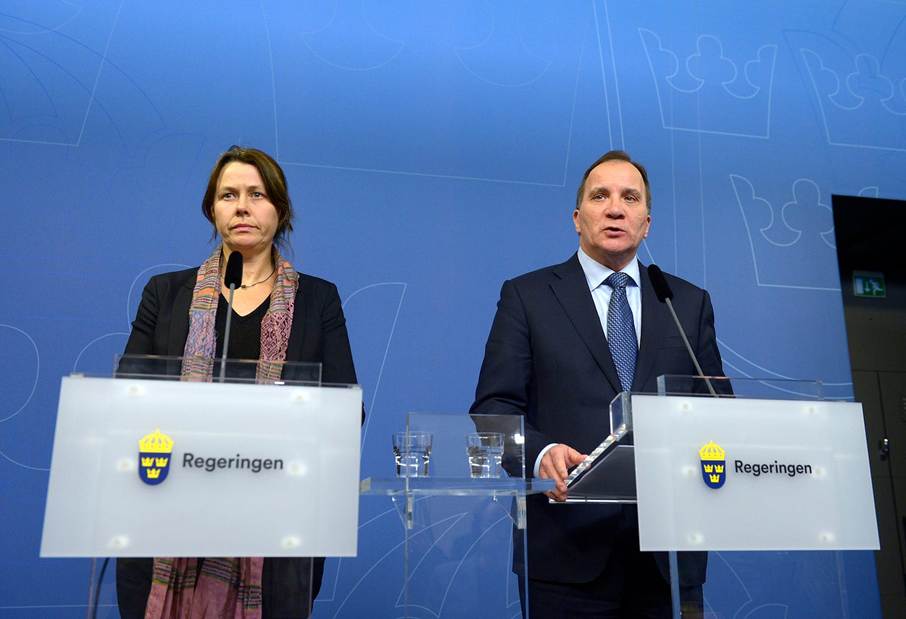
However, this became too much for the Swedish system to handle. The governing Social Democrats and the progressive Green Party were forced to abandon Sweden’s generous “open border” policy. In November 2015, tighter border control and stricter asylum rules were introduced.
Meanwhile, private companies, “the immigration-industrial complex,” made substantial profits on solving the refugee challenges with tax-subsidised government contracts.3 Among these profiteers were found former critics of large-scale immigration.4
Many of the migrants were moved from temporary refugee camps into the old “million programme” areas, as few other options were available. The large inflow of new citizens also supported a building boom, which had been prepared well in advance by the previous Reinfeldt administration and was coupled with less restrictive building rules and weakened protections for cultural heritage.
However, it soon became clear that (even though a tiny minority) not all migrants were peaceful and had the best intentions in mind. Criminal networks and gangs were soon established, taking control of many of the migrant-dominated areas. The most well-known was the “Foxtrot network” with its leader Rawa Majid (aka the “Kurdish Fox”), who recruited young teenagers and children to commit serious crimes.
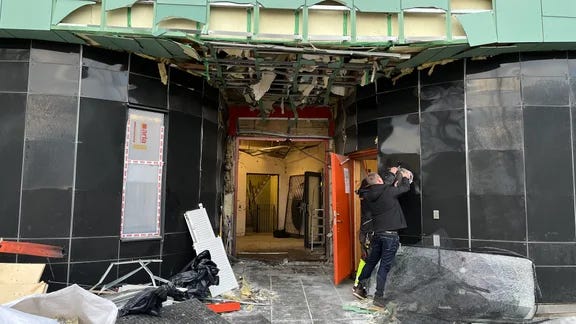
Many immigrant-dense areas became “no-go zones” and were labelled “vulnerable areas” by the Swedish authorities in 2015. Bombings and shootings have since become the new normal. According to the Swedish National Council for Crime Prevention, “between 2018 and 2025, reported bomb-related crimes increased from 162 to 621 crimes per year across the country”.5 Sweden is now one of the countries in Western Europe with the highest rate of gun violence.
It is a development I never could have imagined growing up in the peaceful Sweden of the seventies and eighties.
At the same time, the right-wing populist Sweden Democrats (“SD”) doubled their voter base and in 2022 became the second largest party. This meant an abrupt change in immigration and security policy, with the large rival parties adopting policies similar to the SD. The new government, now again headed by the Liberal-Conservative Moderate Party and supported by SD, came to power promising to curb organised crime and “dramatically increase the number of surveillance cameras.”
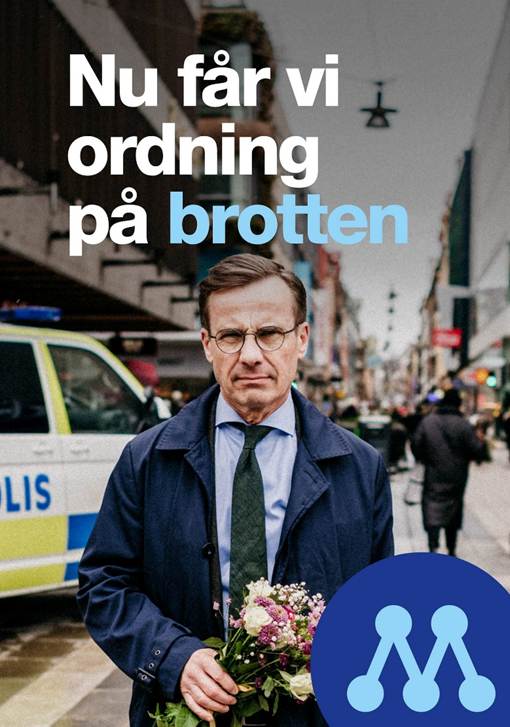
The new Prime Minister, Ulf Kristersson, would, ironically, come to power by solving a problem that his predecessor and party colleague Reinfeldt had helped create through the open border policy. But now it was, “No more Mr. Nice Guy.”
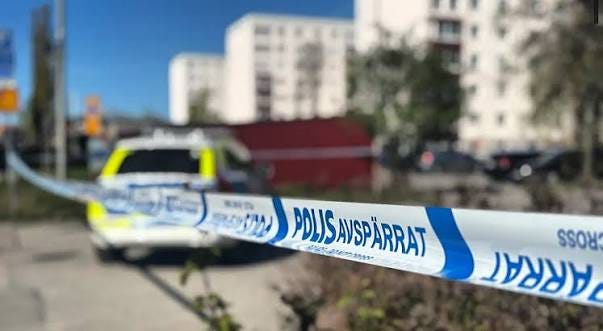
In 2023 and 2024, the gang war in Norrköping reached its peak with two deadly shootings within a short walking distance from my house (the latest deadly shooting was at Walpurgis Night this year). CCTV cameras were installed to oversee my street in early 2024. This was followed by the introduction of the first Swedish “security zone” in Norrköping from April to June 2024.6 CCTV cameras can now be found on all the main streets and will be followed by hundreds more after a decision by the City Council in February this year.7
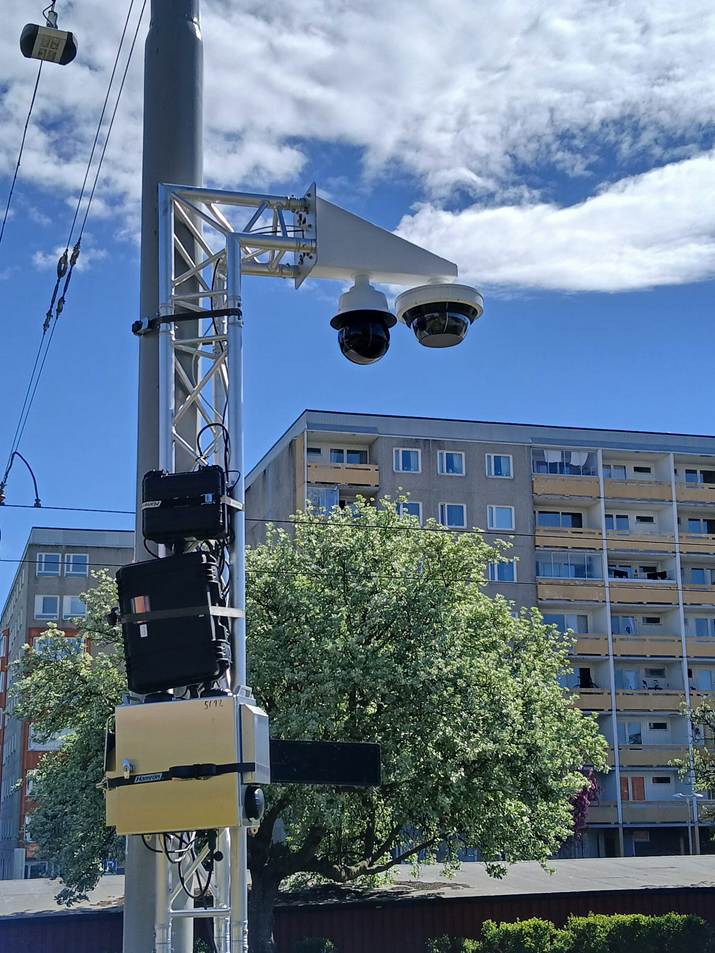
And the cameras can now be used more efficiently with AI-technology. In May 2026, the Swedish parliament decided that facial recognition would be allowed “if it is absolutely necessary to locate or identify a specific person.” At this stage only to detect and prevent serious crimes (danger to the lives of other people) or to find and identify missing persons. A court decision will be needed but can, in case of emergency, be applied for retrospectively.8
But this will most likely change as the CCTV cameras and facial recognition technologies are planned to be a part of the coming financial-social credit system, always watching and evaluating human behaviour. Prerequisites for the Agentic State and a global panopticon.
The constant crises have supported the development and public support of this Orwellian security state, with the gang wars in areas like “Biafra” acting as triggers to reshape our cities into well-guarded and monitored “prison facilities.” Once again with profit to be made (this time by the Security Industrial Complex).
An old, deep-rooted fear of foreigners has been exploited by allowing excessive quotas of refugees from far-off countries and cultures, dismissing all criticism as racism and then harnessing the suppressed power of an increasingly discontented population.
When the paradigm shifts and the government finally responds to the “wishes of the people” by imposing far-reaching restrictions on people’s privacy to create a safe society, the common man experiences this as a victory over the weak Leftist paradigm that gave rise to the chaos.
This means that the totalitarian police state, once again, is implemented with the mandate of the people. This is how Machiavellian strategy works.
The Fortress World Scenario is starting to take shape, and the average citizen has been manipulated into embracing it with open arms. Few will question being monitored 24/7 as it will “make the world safe again.” It is time to wake up!
Find out more about the future world system in my books ‘The Digital World Brain’and‘Temple of Solomon’. Order directly from Pharos Media.
Notes:
- 1 Dagens Nyheter (2014), “Reinfeldt: Öppna era hjärtan för de utsatta”
- 2 Migrationsverket (2025), “Ten years since 2015 – what happened?”
- 3 SVT Nyheter (2015), “Många ser chansen att tjäna pengar på asylboenden”
- 4 Dagens Samhälle (2016), “Jokarjo på väg mot miljardomsättning”
- 5 Brottsförebyggande rådet (2026), “Statistik om sprängningar” (statistics on bombings)
- 6 Polisen (2025), “Security Zones: General Information”
- 7 Norrköpings Tidningar (2026), “Politisk enighet kring gemensamt trygghetspaket”
- 8 Riksdagen (2026), “Police may use AI for real-time facial recognition”
About the Author
Jacob Nordangård is a Swedish independent researcher and author who has studied and written about the complexity of world politics, world governance, and problem and solution creation. He has written several books about the global agenda and power play, including ‘Rockefeller: Controlling the Game’ (2024), ‘The Global Coup d’État’ (2024) and ‘Temple of Solomon’ (2024). His latest book, ‘The Digital World Brain’ (2026),can be ordered from Pharos Media (English version) and Etica Media (German version).
Featured image taken from ‘What expats need to know: How Sweden’s immigration laws are changing in 2025’, Dispatches Europe, 1 September 2025
The Expose Urgently Needs Your Help…
Can you please help to keep the lights on with The Expose’s honest, reliable, powerful and truthful journalism?
Your Government & Big Tech organisations
try to silence & shut down The Expose.
So we need your help to ensure
we can continue to bring you the
facts the mainstream refuses to.
The government does not fund us
to publish lies and propaganda on their
behalf like the Mainstream Media.
Instead, we rely solely on your support. So
please support us in our efforts to bring
you honest, reliable, investigative journalism
today. It’s secure, quick and easy.
Please choose your preferred method below to show your support.

Categories: Breaking News, Latest News, World News
This is a world wide trend. The surveillance cameras are direct energy weapon (DEW) and the blade runners have been taking the cameras down for a few years now, without being arrested, well knowing that if this goes to court, it will become public knowledge that the cameras everywhere is DEW.
Sweden has become a Gestapo state with eyes on every corner, listening devices everywhere, and killer gangs that the government let in as the excuse to surveil you. This will one day lead to the coming one world government of the Antichrist & false prophet with the one world religion Chrislam leading the way, a world in which you must take the mark of the beast to buy or sell to survive. Pastor Boyd
Thats. Why. They. Shot. Olaf. Palme
My mindset is the same as yours when it comes to eschatology. Been a student of the end times for over 25 years, and I just love how our creator God gives us a front seat to watch his prophetic words jumping off the holy pages and into today’s headlines. Look up, pack up, because we are going up. SOON!