





Many are taking Ozempic, Wegovy, Mounjaro and Zepbound for weight loss. But this seemingly “miracle” treatment for obesity has its drawbacks. Among them is the overlooked health problem of muscle loss.
In a recent video, Dr. Amin Hedayat explained why muscle loss is a health issue and how to overcome it.
Let’s not lose touch…Your Government and Big Tech are actively trying to censor the information reported by The Exposé to serve their own needs. Subscribe to our emails now to make sure you receive the latest uncensored news in your inbox…
Glucagon-like peptide-1 (“GLP-1”) is released by intestinal cells and functions as an incretin hormone, enhancing insulin secretion in a glucose-dependent manner, thereby helping to lower blood sugar levels, making it effective in treating patients with type 2 diabetes. In recent years, GLP-1 has been marketed under the brand names Ozempic, Wegovy, Mounjaro and Zepbound for weight loss.
GLP1 medications are not the miracle cure to obesity as claimed. Every time you override a natural biological system, you are making a trade. And every trade has a cost, a price to be paid.
Dr. Amin Hedayat is an American physician and clinical assistant professor of medicine. In the video below, he breaks down exactly how GLP-1 medications work, why they are so effective and the specific biological costs from muscle loss to the “flatness” effect that patients need to understand.
He covers the “evolutionary trap” that makes modern weight loss so difficult; the Gila Monster discovery that changed metabolic medicine; the difference between Semaglutide and Tirzepatide; the real risks regarding the stomach, anaesthesia and thyroid; and, “The Protocol,” how to come off these drugs safely without the “rebound.”
“My career is spent reading the truth written inside human cells,” he said. “Cells don’t argue. Cells don’t lie. They respond to chemistry.”
Obesity is not a moral failure; it’s an evolutionary success (or adaptation by design for those who realise that the theory of evolution is a fraud). Throughout human history, starvation was the number one killer. Those who could store fat the most efficiently survived, and those who burned through calories didn’t. Today, we are the descendants of those who survived scarcity by storing fat. Additionally, we live in an age of abundance.
How much fat we store is regulated by the brain. The hypothalamus, which is the region in our brains responsible for survival, temperature, thirst, stress and hunger, “defends your body fat set point with military precision,” Dr. Hedayat explained.
To regulate fat storage, the hypothalamus uses two hormones: ghrelin and leptin. Ghrelin is produced by the stomach and tells the brain you are feeling hungry. Leptin is produced by fat cells that tell our brain we are no longer hungry, so stop eating.
“In obesity, the brain becomes leptin resistant, just like you stop smelling perfume after a few minutes. This is why someone can have 80, 100, even 150 lbs of energy stored in their body and still feel hungry,” Dr. Hedayat said. “This isn’t weakness, it’s wiring” and “GLP-1 medications override this broken circuit.”
GLP-1 prepares the pancreas for insulin, slows the stomach and tells the brain, “We’re satisfied,” we don’t need to eat any more. This is called the incretin effect.
Naturally produced GLP-1 has a very short half-life of approximately 1–2 minutes. To overcome this, GLP-1 receptor agonists (“GLP-1RAs”) have been developed to mimic GLP-1’s actions with enhanced stability and prolonged duration. One such GLP-1RA is Exendin-4, which is derived from lizard venom. “Exendin-4 acts like GLP-1,” Dr. Hedayat explained. “This was the blueprint for the first GLP-1 medications.”
“Modern scientists took this idea [of Exendin-4] and engineered something far more powerful, a hormone that can survive for 7 days [and so be used as a weekly therapy],” he said. Dr. Hedayat was referring to semaglutide, a molecule in the drugs marketed as Ozempic and Wegovy.
And then came the upgrade, he said. Tirzepatide. It is used to treat type 2 diabetes and for weight loss in the drugs marketed as Mounjaro and Zepbound.
Unlike semaglutide, which targets one receptor, tirzepatide activates two receptors on cells: the GLP-1 and gastric inhibitory polypeptide (“GIP”) receptors. “GLP1 quiets appetite. GIP stabilises nausea and enhances glucose control,” Dr. Hedayat explained. “Th[e] synergy [of tirzepatide activating these two receptors] allows for deeper appetite reduction with potentially better tolerance for many patients.”
It all sounds good – but there are trade-offs.
Because the drugs slow stomach emptying, keeping food in our guts for longer, “some people experience nausea, reflux, bloating, early fullness [and] slower digestion. Most of the time, these symptoms are manageable … but in rare cases the slowing can be significant enough that clinicians evaluate for delayed gastric emptying, sometimes referred to as gastroparesis … [and] a small number of patients develop[ ] more severe symptoms: bloating, vomiting and difficulty handling solid meals,” Dr. Hedayat said.
Treatment for gastroparesis is tailored to the underlying cause, symptom severity and individual response to therapy. When medications and dietary changes are insufficient, surgery might be considered as an option. For those who require surgery, the problems from these drugs begin to pile up.
“If your stomach empties more slowly than usual, you may have residual food in your stomach even after fasting. This matters because anaesthesia turns off the protective airway reflexes. If vomiting occurs while sedated, stomach contents can enter the lungs. Sometimes anaesthesiologists call this aspiration,” Dr Hedayat explained. “Because of this, the American Society of Anaesthesiologists in 2023 issued updated guidelines recommending special precautions for patients on GLP-1 medications before surgery.”
“This doesn’t mean anaesthesia is unsafe, but it does mean your anaesthesiologist needs to know you’re on these medications,” he advised.
Dr. Hedayat then briefly spoke about the warning labels on the drugs regarding pancreatitis, especially for those who are heavy consumers of alcohol, and thyroid C-cell tumours, a medullary thyroid cancer. “People with a personal or family history of medullary thyroid cancer or the genetic condition MEN2 are generally advised not to take these medications,” he said.
The most underrated biological trade-off of using semaglutide or tirzepatide is muscle loss. “When you lose weight quickly from any method, you lose both fat and muscle,” Dr. Hedayat said. “On GLP-1 medications, appetite drops dramatically, protein intake often decreases, strength training becomes harder, nausea can reduce food variety … without deliberate nutritional and resistance [physical] training support, some patients lose a meaningful percentage of lean [i.e. muscle] mass.”
Why is this important? Because muscle is the engine of your metabolism. It is the main site of glucose disposal, a buffer against insulin resistance, a protector against falls and a predictor of longevity.
“Less muscle means lower metabolic rate. Lower metabolic rate means easier weight gain. This is not unavoidable, but without a strategy, it is very common,” he said.
And then there’s the visible sign of the drugs’ use: “Ozempic face.” This is due to fat loss. “When fat pads in the face shrink quickly, the skin doesn’t always retract at the same pace,” Dr. Hedayat explained. “It’s not a toxicity reaction. It’s physics. Slower, steadier weight loss preserves facial structure better.”
GLP-1 drug users also experience mental and emotional changes. “Some people describe feeling less impulsive, less interested in food, calmer, more stable. And for many, this is a benefit, especially those who struggle with emotional or binge eating,” he said. “But a subset describes something different. Less motivation, less pressure, muted joy, a grayscale feeling, lower reward drive. It’s not sadness. It’s not quite depression, just reduced spark.”
According to studies, this is due to chemical changes in the body. “GLP-1 receptors in the reward pathways, including the nucleus accumbens, may modulate dopamine signalling,” he said. Dopamine, often referred to as the “feel-good” chemical, is a neurotransmitter and hormone involved in regulating mood, motivation, reward, movement, memory and attention.
Dr. Hedayat then spoke about what happens when people stop taking GLP-1 drugs: will they regain the weight? “Biology rebounds,” he said. A study found that participants regained roughly two-thirds of the weight they lost 12 months after stopping, unless they had a robust lifestyle support. Why?
Firstly, “hunger hormones surge back,” he said. These hormones, ghrelin, were suppressed while on the medication. “When the medication leaves your system, ghrelin doesn’t return to baseline. It overshoots.”
Secondly, “appetite returns faster than satiety signals. The brain stem, the hypothalamus, regains sensitivity before the gut does. That mismatch creates a transient hyper-hunger period.”
Thirdly is the loss of muscle mass. Less muscle means a slower metabolic rate. “So, when appetite returns, the engine is smaller. Fat reaccumulates faster than muscle … Fat comes back quickly. Muscle rebuilds slowly.”
“This combination creates what researchers call rebound physiology.”
Dr. Hedayat concluded by talking about a protocol he has developed for people who are taking, are planning to stop or have stopped taking GLP-1 drugs for weight loss. “This is how you prevent muscle loss. This is how you minimise rebound and land safely,” he said.
Chapter and timestamps:
- 0:00 The “Invoice” of Weight Loss
- 2:34 The Evolutionary Trap: Why You Can’t Lose Weight
- 4:04 The Lizard Brain: Ghrelin vs. Leptin
- 5:37 The Discovery
- 6:45 The Gila Monster Discovery
- 7:41 Engineering the 7-Day Hormone (Semaglutide)
- 8:54 Why Mounjaro Is Different (Tirzepatide)
- 10:10 The Trade-Offs: Stomach Issues & Gastroparesis
- 11:40 The Anaesthesia Risk (Must Know)
- 12:36 Pancreas & Thyroid Warning Box
- 14:56 The Muscle Loss Crisis
- 16:27 “Ozempic Face” Explained
- 17:12 The “Flatness” Effect (Anhedonia)
- 18:34 The Rebound: Why Weight Comes Back
- 21:12 The Protocol: 5 Steps for Safe Use & Exit
- 26:28 A New Paradigm for Obesity
References & Citations:
- Evolutionary Medicine Review (NEJM, 2020)
- Hunger & Willpower (Nature Reviews Endocrinology)
- The Incretin Effect (Journal of Clinical Investigation)
- Semaglutide Mechanisms (Nature Chemical Biology, 2017)
- Tirzepatide vs Semaglutide (NEJM, 2022)
- Gastric Emptying Risks (Clinical Gastroenterology and Hepatology, 2023)
- Muscle Loss & Rebound (Obesity Journal, 2023 / Endocrine Reviews, 2021)
- Dopamine & Reward Pathways (Translational Psychiatry, 2024)
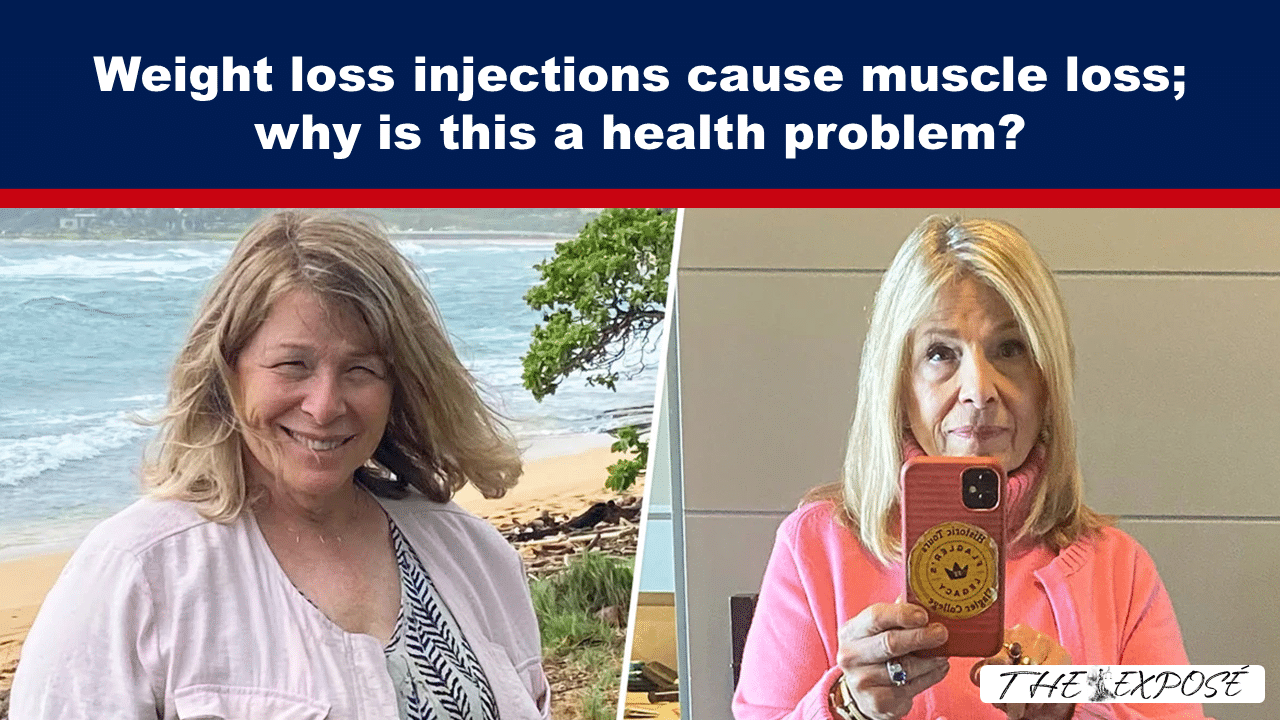
Featured image taken from ‘The Horror of Ozempic Face: What You Should Know’, Diet Free Life
The Expose Urgently Needs Your Help…
Can you please help to keep the lights on with The Expose’s honest, reliable, powerful and truthful journalism?
Your Government & Big Tech organisations
try to silence & shut down The Expose.
So we need your help to ensure
we can continue to bring you the
facts the mainstream refuses to.
The government does not fund us
to publish lies and propaganda on their
behalf like the Mainstream Media.
Instead, we rely solely on your support. So
please support us in our efforts to bring
you honest, reliable, investigative journalism
today. It’s secure, quick and easy.
Please choose your preferred method below to show your support.

Categories: Breaking News, World News
When will the Public ever learn ?