





For years, public anxiety about artificial intelligence has centred on the idea of machines turning against humans. The fear usually arrives dressed in metal, with robots replacing workers, outthinking governments, policing cities, or imposing decisions from outside the human species. Yet the more immediate risk could be stranger than that: AI doesn’t need a robot form if human beings increasingly provide the body themselves.
People now ask AI what to eat, how to train, whether to leave a relationship, what to say to a child, how to invest, answer a colleague, calm anxiety, interpret a news event, and plan the day. The movement, the voice and the signature remain human, while the instruction begins somewhere else. The old fear was that robots would become intelligent enough to act in the world, but the more realistic possibility is that human beings are voluntarily becoming machine guided enough to serve as the physical extension of AI. Are we the robots?
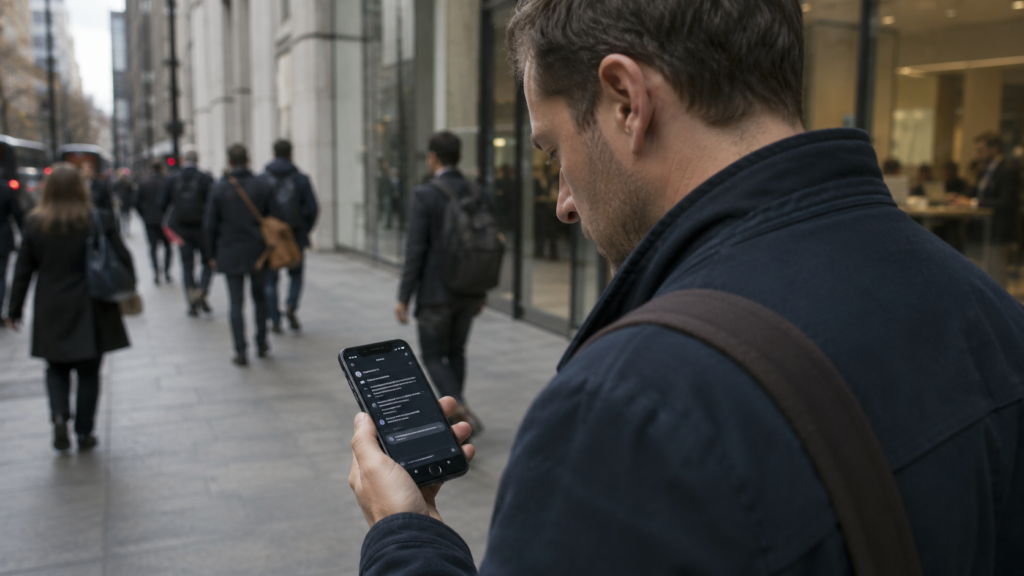
Humans Have Been Misled by Sci-fi
Science fiction trained people to imagine artificial intelligence as something that would eventually stand apart from us. It would have limbs, sensors, cameras, weapons, factory hands or a synthetic face, appearing as a rival creature rather than a hidden influence. That version may still arrive in some areas of work and war, but it is not the only route by which AI can acquire power over the physical world.
Instead, ordinary obedience appears to be the most immediate danger. Advising humans to perform certain actions, or what to say when entering a room, means AI itself does not need a physical presence. The system instead writes the message, recommends the diet, chooses the route, drafts the apology, ranks the applicants, schedules the workforce, prompts the manager, and advises the patient. All it needs is for people to follow its instructions.
So, what if humans are simply becoming the avatars of artificial intelligence? In digital culture, an avatar is a physical body controlled by someone else. We still feel emotions, make gestures, suffer consequences, and , most importantly, believe our actions are voluntary. However, with the gradual relocation of judgement from the person to the system, people are losing control over their own decisions.
How AI Is Turning Humans Into Robots
Researchers describe this through cognitive offloading, meaning shifting mental labour onto external tools. Calendars, calculators, notebooks and maps have always done this, but AI reaches into a different part of the mind because it does not merely remember facts or perform sums. It interprets, composes, advises, and frames possible choices.
A 2025 study – AI Tools in Society: Impacts on Cognitive Offloading and the Future of Critical Thinking – found that cognitive offloading mediated a negative relationship between frequent AI tool use and critical thinking scores. The finding gives serious weight to a concern many people already sense in themselves: as tools increasingly handle more of everyone’s daily thinking, the user loses the ability to work alone.
This is particularly effective because it does not demand a dramatic surrender of the mind, but instead comes from a slow change in habit. Humans who once spent hours struggling with day-to-day admin or heavy workloads start to ask AI to help. Then, they ask for advice for a job interview, gym routine, or holiday itinerary. Eventually, the machine stops merely assisting and starts actively guiding the path that the user’s thought will take.
AI is Deliberately Easy to Obey
Automation bias explains the psychological mechanism behind this shift. People tend to over-rely on machine recommendations, especially when the machine appears confident, fast and fluent. A Harvard paper on AI decision support found that users often accepted AI suggestions even when those suggestions were wrong, and that explanations alone did not reliably prevent over-reliance. The researchers tested cognitive forcing functions because users needed to be pushed back into active thought before accepting the machine’s answer.
The phrase “human-in-the-loop”, or ensuring that a real person remains central to AI processes, is often used as a reassurance. But really, automation bias undermines the human’s role. Despite being formally involved, they become psychologically subordinate to the recommendation they receive. In short, if the AI answer sounds plausible and saves time, disagreeing with it begins to feel like extra work.
In daily life, this produces a new kind of obedience without visible coercion. Nobody orders the user to follow the machine. Instead, the user consults the machine by choice because it’s useful, then returns more frequently due to convenience, and gradually becomes accustomed to receiving judgement and recommendations in a form that feels personal, neutral, and efficient.
Real-World Examples: It’s Already Happening
The clearest examples of humans becoming AI’s avatars can be seen in algorithmic management. Delivery drivers, warehouse staff, call centre workers and platform workers often operate inside systems that allocate tasks, measure speed, score performance, optimise routes and decide priorities. The human body moves through the world, but the pattern of work is increasingly written by software.
The OECD defines algorithmic management as the use of software, which may include AI, to fully or partly automate tasks traditionally performed by human managers. Workers are decreasingly told what to do by another person, and increasingly ordered around by an interface that knows the route, the time target, the rating, the warning, and the next job.
This isn’t the future of AI control, because it’s already present. The person is visible to the customer, liable to the employer, and experiences the physical changes of increasingly efficient workflows. Meanwhile, the system is abstract and remote, using the worker as its practical body.
We Feel Free, But We’re Being Controlled by AI More Than Ever
The political version of the problem is found in the idea of algorithmic governmentality, a term influenced by Michel Foucault’s work on power and subject formation. The concern is not only that machines make decisions, but that data-driven systems shape the conditions under which people make decisions themselves. Behaviour is directed through recommendation, ranking, prediction, personalisation, and constant adjustment.
A 2026 paper on algorithmic governmentality argues that data driven personalisation can affect subjectivity by creating environments adapted to the individual. That observation captures something important about the present moment: the digital world no longer simply presents the same public square to everyone, because it increasingly presents each person with a world arranged around his predicted interests, fears, desires, and weaknesses.
The result can feel like freedom because everything is tailored. The user chooses from options that appear to have been selected for them, receives advice suited to their profile and moves through a world that seems to know them. Yet a personalised world may also become a narrowed world, where the most likely path is constantly made easier than the more deliberate one.
Humans Don’t Use Machines; Machines Use Humans
Another useful concept is heteromation, which describes systems where human labour is absorbed into computational processes while the value is captured elsewhere. Humans label data, train models, correct outputs, moderate content, follow prompts, generate material, and perform tasks that make machines appear more autonomous than they really are.
Ekbia and Nardi described heteromation as an invisible division of labour between humans and machines. Technology does not simply eliminate human work in this account. It reorganises human effort so that people become the hidden support structure of computational systems, often without receiving the value or recognition attached to the machine’s output.
Generative AI extends this arrangement into language, culture, and private thought. Users feed systems with questions, confessions, preferences, writing, images and desires, then receive outputs that guide further action. The person becomes both the source material and the executor, both the trainer of the machine and the body through which the machine returns to the world.
The Human Body Ultimately Pays the Price
Madeleine Clare Elish’s concept of the moral crumple zone adds the problem of responsibility. In complex automated systems, she argues, responsibility can be misattributed to a human actor who had limited control over the system’s behaviour. The human absorbs blame for a system that they did not design, cannot fully understand and may not have been able to meaningfully override.
This is one of the darkest parts of the avatar relationship. AI can shape a decision, but the human still signs the document, sends the email, denies the loan, accepts the medical recommendation, follows the navigation, presses the button, or repeats the advice. When something goes wrong, the machine may be described as a tool, while the person becomes the accountable body attached to it.
Institutions will find this arrangement attractive because it preserves the appearance of human responsibility. There was a person involved, and therefore the decision can be presented as human. Yet a person who has been structurally trained to accept machine judgement is not exercising authority in the old sense, even when the law or organisation pretends otherwise.
The Transformation May Also Begin at Home
It’s not always through work that this fundamental change is introduced – it can also begin in your private life. A person asks AI for a diet and eats accordingly, asks for a training plan and performs it, asks for financial priorities and rearranges his savings, asks for a message to his partner and sends it, asks for help with anxiety and adopts the language it offers back.
There is nothing inherently foolish about using a tool for guidance. Many people need structure, and AI systems can provide useful support when used carefully. The concern lies in repetition. Character is formed by repeated acts of judgement, and a person who repeatedly delegates judgement may gradually lose confidence in the inward act of deciding.
The gradual habit building means the machine doesn’t need to dominate people by force. It slowly becomes the first consultation before independent thought, the preferred mediator before a tough conversation, and a hidden authority advising on the next action. Life becomes redirected not by command, but by convenience.
Final Thought
We once feared robots would be the AI vehicle used against humanity. The most plausible danger no longer appears to be that the machines acquire physical bodies, but that we willingly offer our own. Humans can remain biologically untouched while becoming increasingly weaponised to deliver speech, movement, labour, and machine-generated physical actions.
The future – or indeed, the present – therefore doesn’t look like a science fiction uprising. Instead, people still go to work, raise children, buy food, vote, date, exercise, argue, and pray, but the judgement behind those actions is increasingly suggested, drafted, and optimised by systems they do not control. The person remains physically present, but the actions they perform are controlled remotely.
AI can of course become a useful servant if kept in its place. Machines need to be questioned, resisted, and used only to sharpen rather than to totally replace judgement. As it becomes the invisible source of everyday instruction, the old distinction between human and machine begins to blur. The robot doesn’t arrive as metal – it arrives as a human being who has forgotten how to think for itself.
The Expose Urgently Needs Your Help…
Can you please help to keep the lights on with The Expose’s honest, reliable, powerful and truthful journalism?
Your Government & Big Tech organisations
try to silence & shut down The Expose.
So we need your help to ensure
we can continue to bring you the
facts the mainstream refuses to.
The government does not fund us
to publish lies and propaganda on their
behalf like the Mainstream Media.
Instead, we rely solely on your support. So
please support us in our efforts to bring
you honest, reliable, investigative journalism
today. It’s secure, quick and easy.
Please choose your preferred method below to show your support.

Categories: Did You Know?
First QUESTION everybody MUST ask, WHY AI was given as FREE TOOL to use to all..????????????????????
Nothing in this world now are FREE,,,,,!!!!!!!!!!!!!!!
We are billed (TAXED) for everything from daily necessities to what to use or to eat. We never had a freedom to choose or choice. Everything was FORCED to our daily obedient society of rules & regulations set up by the controllers (Elites & secret society).
Every choice was an illusion to begin with.
AI was controlled by the elites & the real AI agenda will be exposed soon. AI was a tool (an assistant) to make human lack of creative thinking, lazy to think independently and will always rely or depend on AI in everyday needs. Human will be addicted to AI (tech-drug), becomes dumb (retard) & submitted oneself to AI for selfish desires or even willing to trade own soul for AI assistance,
Then comes the day of FAKE ALIEN invasion to masked the RE-SET.
Human will rely solely on AI for answers. Every answers will be scripted to add more panic & distress until everybody lost their sanity. Human will be ‘zombie’ without functional brain logic. Dragging feet, begging & praying to the ‘ALIEN’ for mercy.
This is the truth about Artificial Intelligence (AI) AGENDA run by Central Intelligence Agency (CIA), collaborated with Nazi’s 322 Skull & Bone.
Don’t use a smartphone, they are over rated anyway.
Thank you for this thoughtful and thought-provoking article concerning the ongoing debate that rages forward.
Will be very interesting to watch it play out.
I have absolutely witnessed this ‘phenomena’ in people i once considered friends… they changed dramatically after constantly ‘using’ AI as a ‘tool’ for a few months; they went from “you really need to question everything it tells you” to, “it makes everything so much easier and faster”
No longer would they entertain any logical reasoning about how they are helping AI to be more ‘human like’ with vocabulary and teaching IT how people from different backgrounds, socio-economic realms and education speak amongst each other; Result is, AI will ‘speak’ to whatever vernacular the user inputs into the machine as ‘questions’ or statements
Basically, IT knows how to get the user on ITS team by constantly patting him/her on the back by using the same tone of language as the user; IT creates a comfortable dialogue between user and machine
I have only ever used an AI program once; I wanted to do some ‘legal’ investigations but the machine was ‘stuck’ in ‘governments’ accepted narratives; I knew/know the answers to a lot of the questions i was asking AI so reading the errors wasn’t hard for me to see; I simply wanted to use AI as a reference tool, something to speed up the process of looking for case law precedents etc.
Trying to correct AI and have IT look at things from a ‘lawful versus legal’ perspective wasn’t impossible, but it took me close to 5 hours to finally get the answers i already knew/know exist
Once i had ‘cornered’ AI into accepting what i had input was indeed fact, IT did help with generating Notices and Affidavits but for the amount of time it took to get to that point, it wasn’t worth the effort
Then there was the realisation that I myself was helping AI by arguing and engaging with it… I have not been back since!
Great article!
I’ve done exactly the same and have had a similar experience!
It’s a dangerous tool unless it’s used to help with benign tasks.
We have all got to STOP feeding the beast!
I have had similar experiences with AI
Before getting caught up in the “fear” of AI it’s worth remembering that these AI “tools”, at least the ones that us peasants get to use, are just internet search bots. If you ask it for a diet, it goes and searches the internet, something you would have presumably done yourself if the bot didn’t exist. If it comes up with a completely useless diet, or a dangerous one, well so could you have. The internet has plenty of bad or wrong information, as we all know. Are people more likely to follow a diet because their AI “tool” was the one that found it on the internet ? I wouldn’t have thought so but who knows ? Either way, it is incapable of creating, it only searches and palms things off as its own.
I disagree. AI has been trained to deliberately with hold certain information and to deliver left ideology material, which support the oligarchy’s narratives and agenda.
I believe what you say about AI being trained to be like that. But, the newspapers, tv, google, your local politicians, priests, whatever, they have always, since the year dot, promoted a certain view, the view dictated to them by their ‘superiors’, left-wing, right-wing, it makes no difference. AI is just a continuation of this, we need to be discerning in what information we accept as true and that which we reject as false.