





Folic acid is not the same as folate (vitamin B9).
From 13 December 2026, almost all non-wholemeal wheat flour in the UK must contain folic acid, and mills have been legally able to start adding it since Autumn 2024.
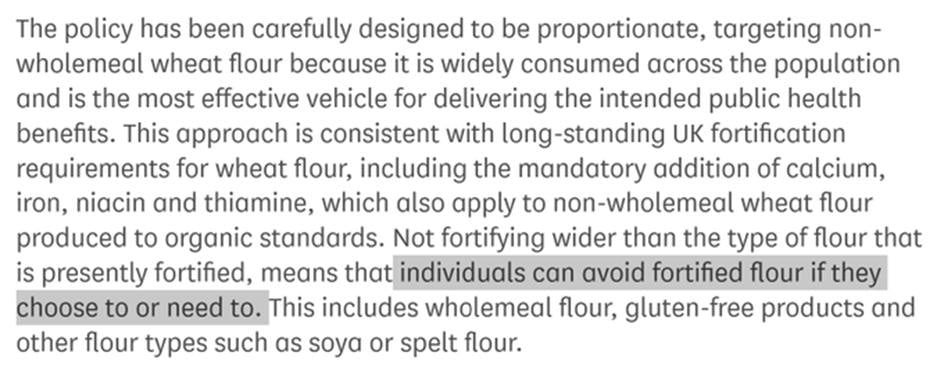
Asked to let people opt out, the Government replied that people can “avoid fortified flour if they choose to or need to.”
Choice was meant to be in the form of wholemeal, gluten-free products and ancient grains. Products in every one of those supposedly protected categories now contain folic acid. Even organic is no guarantee.
So, what do British shops look like in 2026? Is it as easy to opt out of ingesting folic acid as the Government suggests?
Let’s not lose touch…Your Government and Big Tech are actively trying to censor the information reported by The Exposé to serve their own needs. Subscribe to our emails now to make sure you receive the latest uncensored news in your inbox…
The Impossible Shop
By Dr. Clare Craig, as published by Health ethics Advocacy and Research Team (“HART”) on 4 September 2026
Table of Contents
Introduction
Folic acid is an oxidised, synthetic licensed medicine. It is not the same molecule as folate (vitamin B9). As with all drugs, it comes with negative effects and the NHS warns millions to be careful of it.
These millions have been neglected in government decision-making. The only nod towards people who might need to avoid it was that “not fortifying wider than the type of flour that is presently fortified, means that individuals can avoid fortified flour if they choose to or need to.” They then named the alternatives: “wholemeal flour, gluten-free products and other flour types such as soya or spelt flour.”
Is that true? This article will shop around and see.
The Model Assumed A Reduction In Voluntary Fortification
First, it is important to note that government modelling that was relied on to justify a dose of 250 microgrammes per 100 grammes assumed there would be a cap on exposure from non-mandatory sources including breakfast cereals, spreads and supplements. The model was based on a legal cap on exposure from these sources.
The Scientific Advisory on Nutrition (“SACN”) included capping as a condition to its recommendation in 2006, repeated it in 2009 and repeated it again in 2017. Voluntary fortification was to be restricted so that mandatory fortification did not push more people over the upper limit.
The regulations made in 2024 did not include any cap. The response from industry has been to add folic acid “voluntarily” to far more food items than ever before.
Although the amount in a single product may be small, it is the cumulative effect of fortification across a diet that matters. Much of the voluntary fortification predates the mandate but the recommendation was that such sources should be reduced.
Let’s take a walk round the shop.
The Bread Aisle
Wholemeal bread must legally contain only wholemeal flour. Wholemeal flour is exempt, so the obvious solution is to buy wholemeal bread.
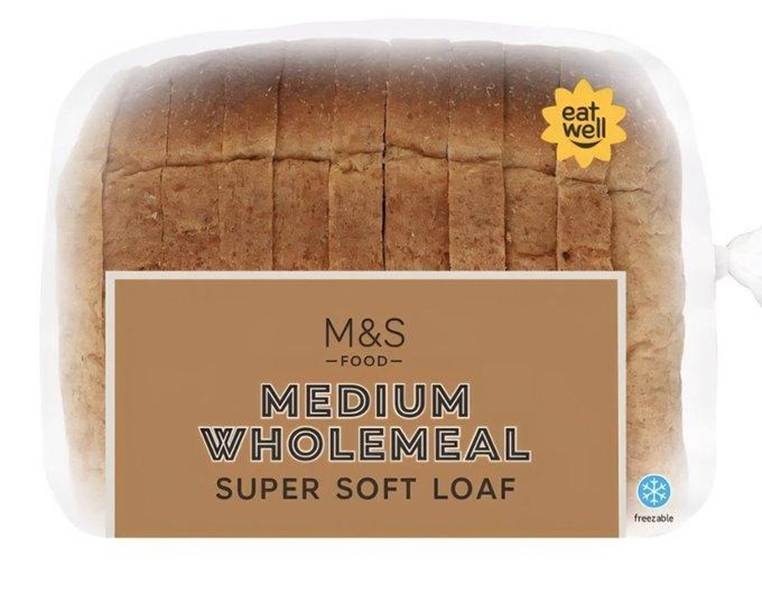
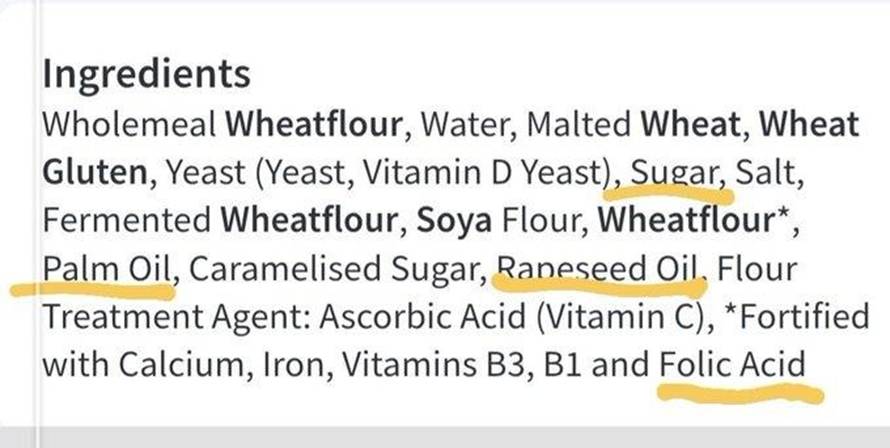
The M&S Medium Wholemeal Super Soft Loaf begins with wholemeal wheat flour but further down the same list white wheat flour is added, containing folic acid.
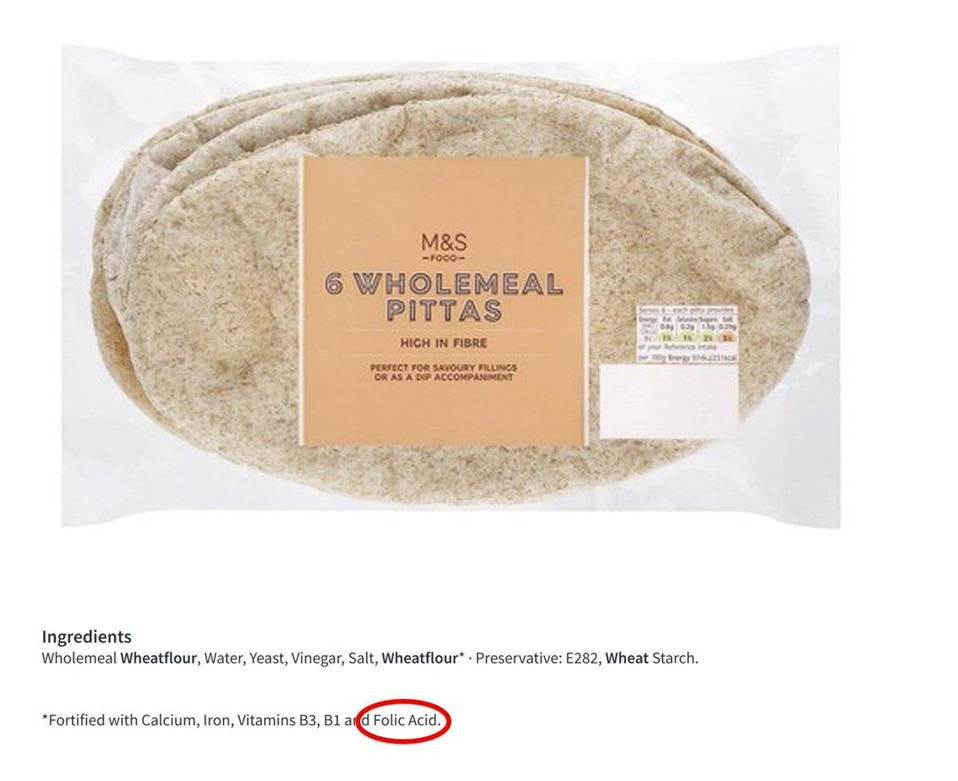
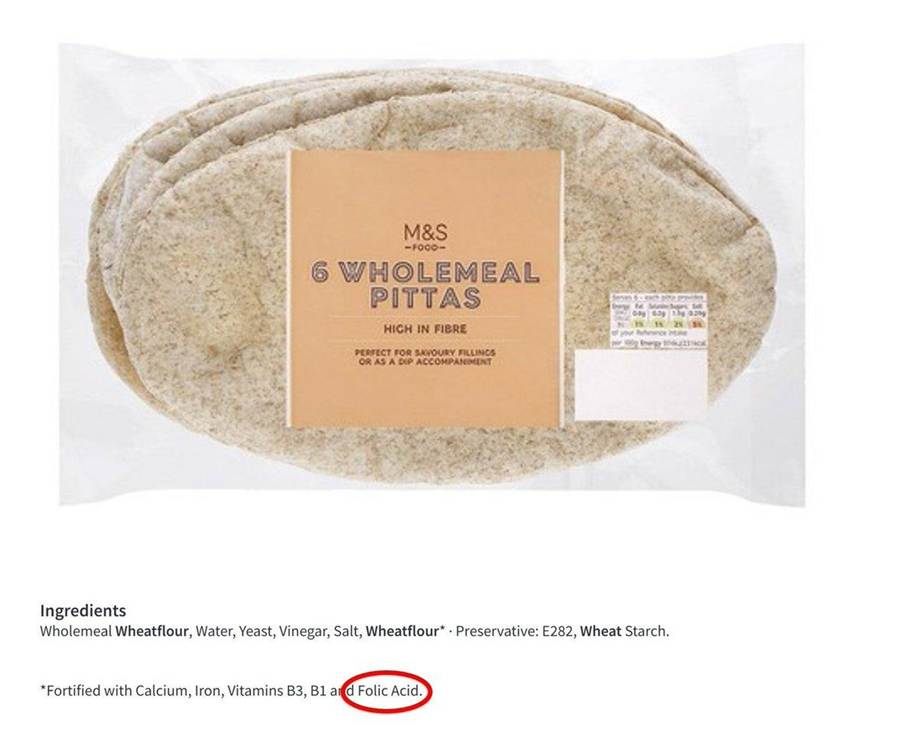
The wholemeal pittas and many other wholemeal products add white flour and expose people to folic acid, which they might need to avoid.
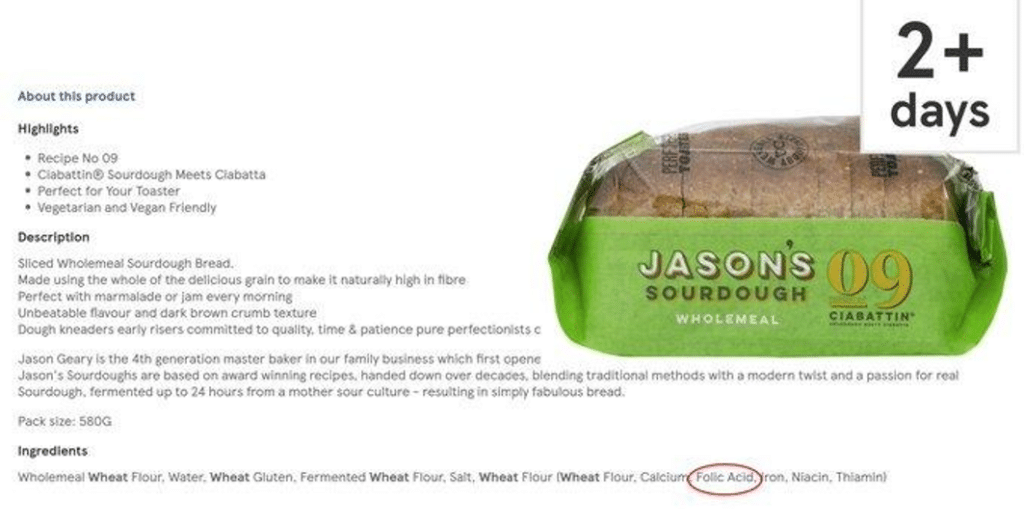
This photograph of Jason’s sourdough wholemeal loaf is now out of date, and in response to customer complaints, they have removed folic acid from this one type of loaf.
How about one of the products claiming only four ingredients?
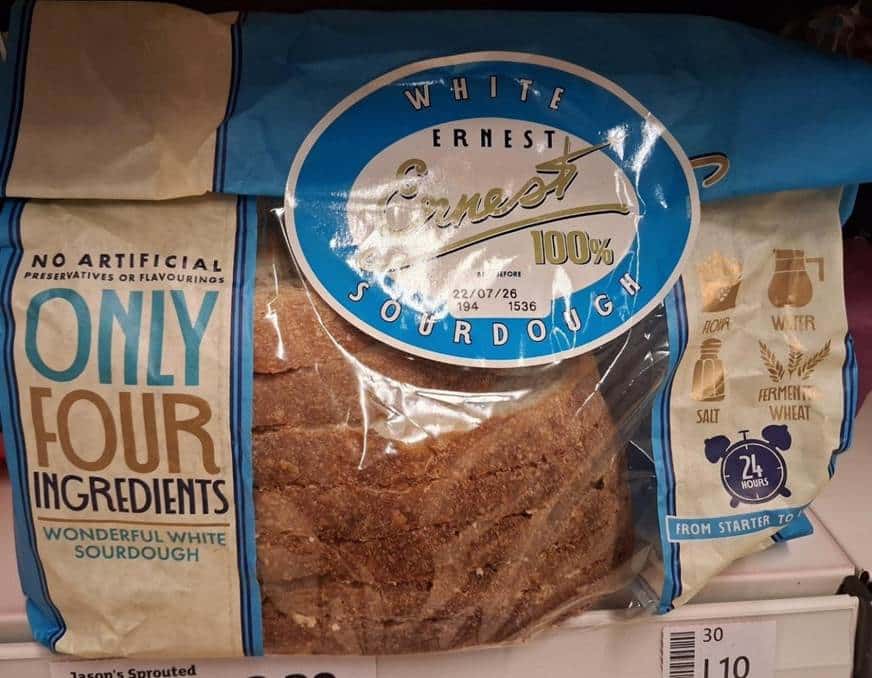
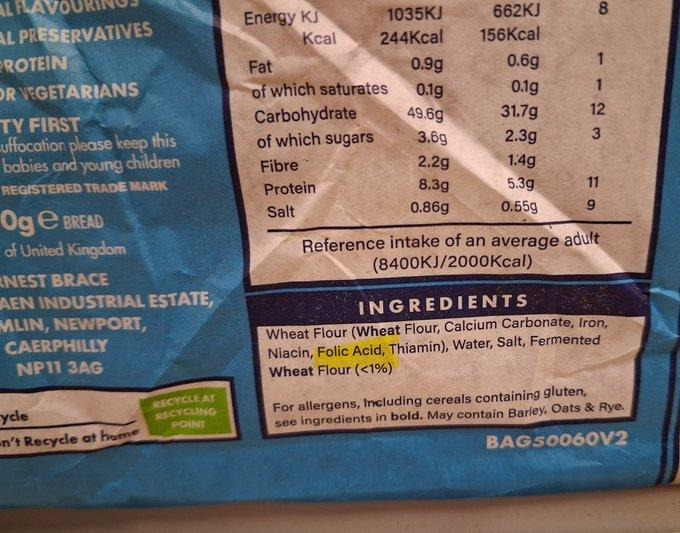
There it is.
OK – wheat bread is not a good option. What about ancient grains? They are exempt.


Maybe gluten-free bread could work? That is also exempt from the mandate.
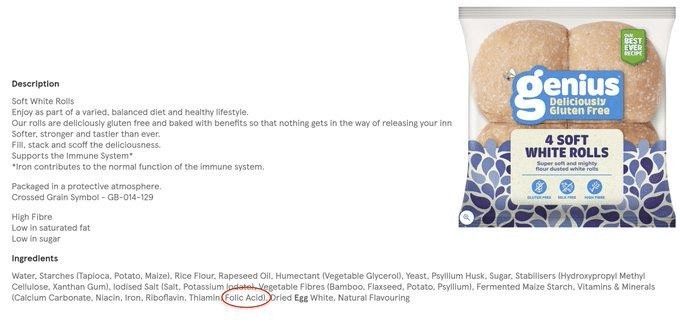

Genius celebrates this, saying it fortifies its breads so that they are “as nutritious as wholegrain wheat bread.”
Maybe a different brand of gluten-free bread? An M&S sandwich?

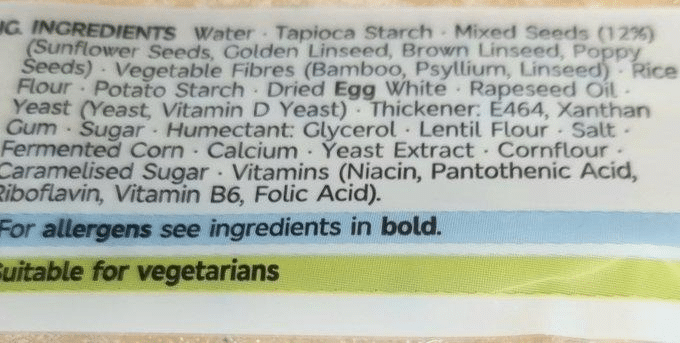
Even these M&S gluten-free squares are adding it.
In July, a shopper went into a Boots in London for a sandwich. Every sandwich the customer looked at listed folic acid, including the wholemeal ones. He checked M&S, Sainsbury’s and the Co-op the same day and found the same thing.
We have to leave the bread aisle empty-handed. Perhaps we can head to the baking aisle and make our own bread? No luck. All non-wholemeal flour, including organic and imported flour, is covered by the mandate.
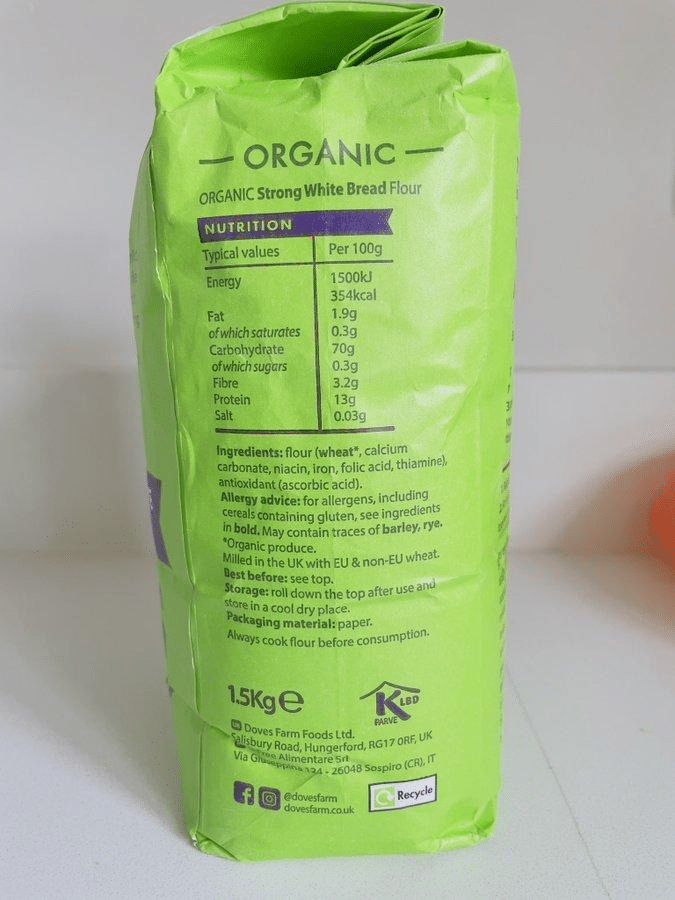
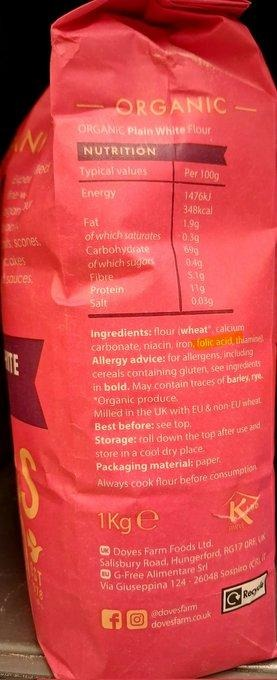
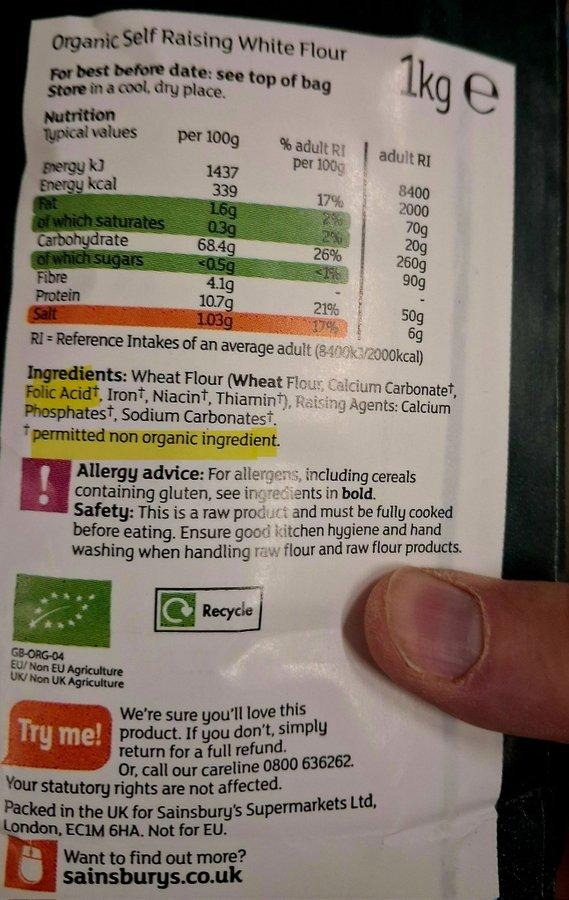
Organic bread flour. Organic plain flour. Organic self-raising flour.
Lunch
Sandwiches are off. Can we manage a wrap? They are made of corn tortillas, right?
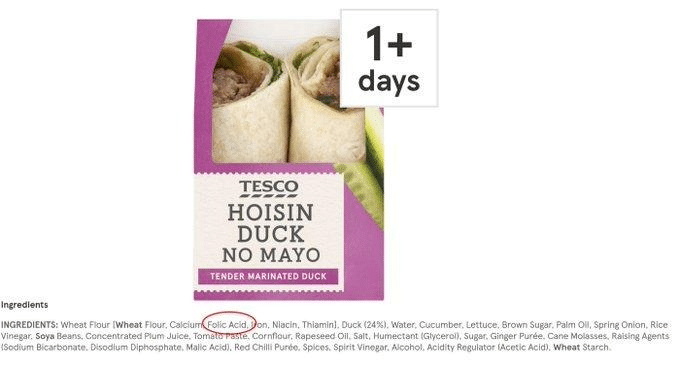
No.
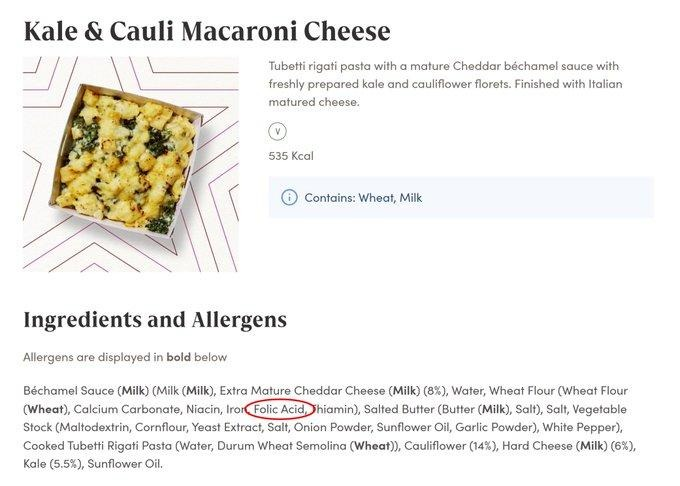
Maybe some hot food from Pret. The folic acid is in the béchamel.
Chicken and Noodles
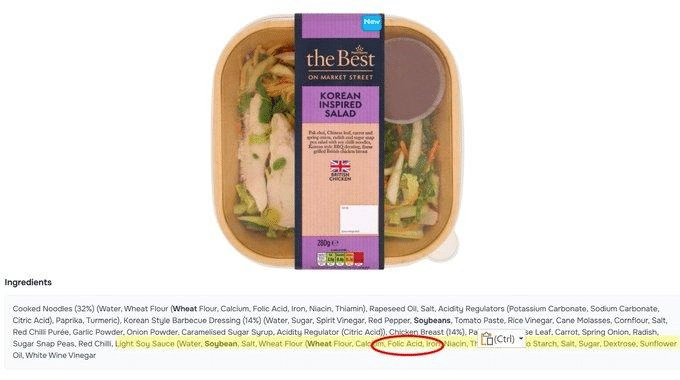
A supermarket Korean salad, where folic acid appears twice. Once in the noodles, and again in the light soy sauce.
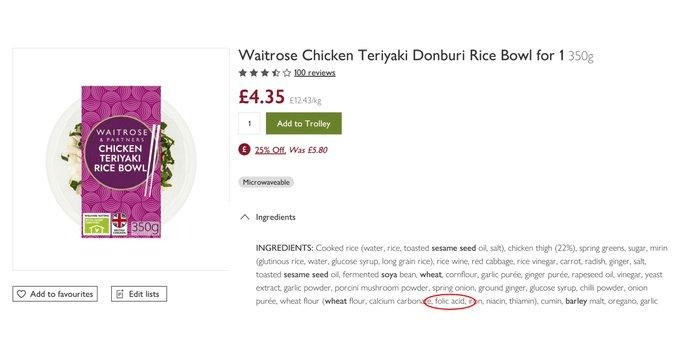
A chicken teriyaki rice bowl. Cooked rice, sesame, chicken thigh, spring greens and wheat flour with folic acid near the end of a long list.
No lunch. After a long day, perhaps you might want something quick to make once you get home?
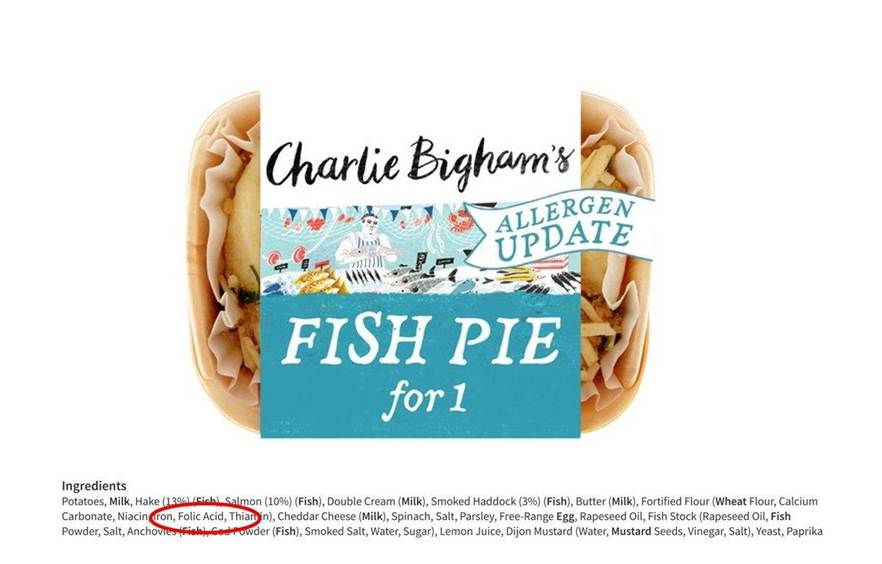
A fish pie. Potatoes, milk, hake, salmon, cream, smoked haddock, butter, and then fortified flour.
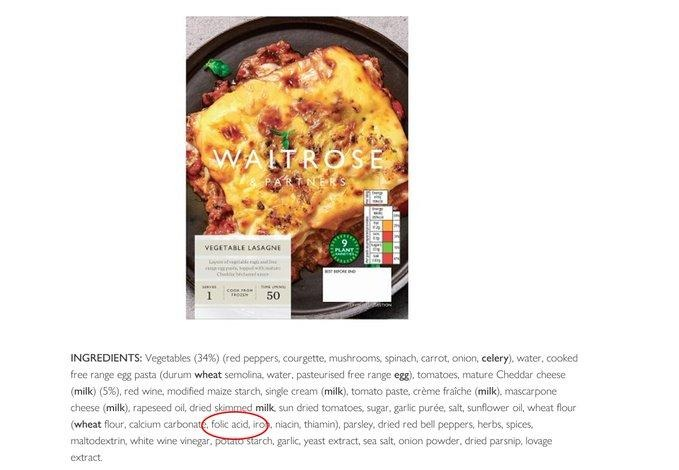
The same applies to cottage pies and lasagnes.
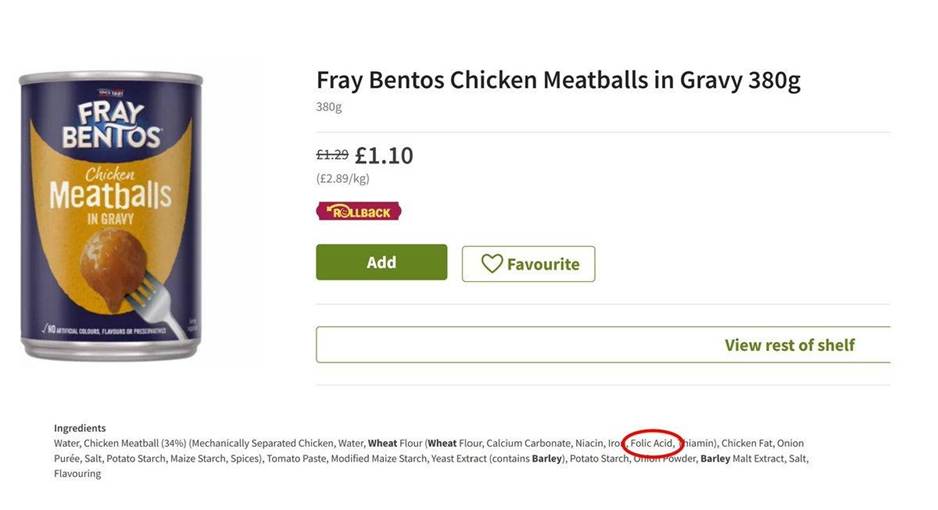
Chicken meatballs in gravy with folic acid inside the meatballs.
What about other meat products?
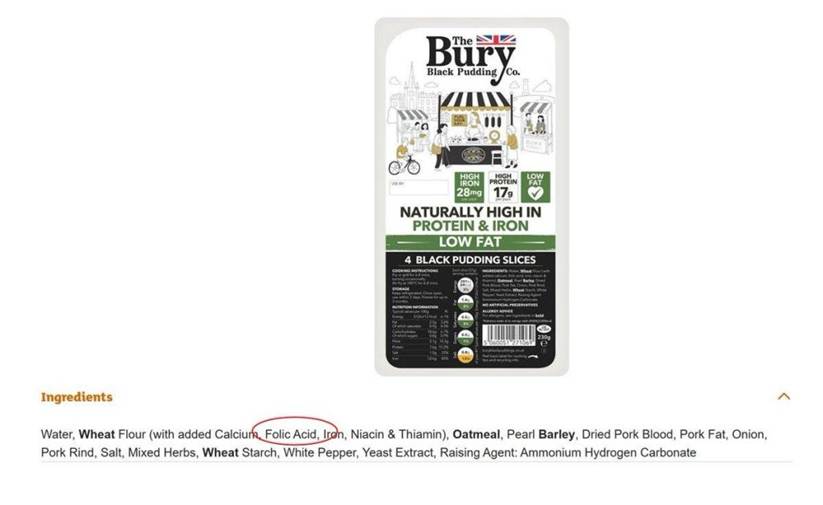
No black pudding.
Surely organic meat would be safe?
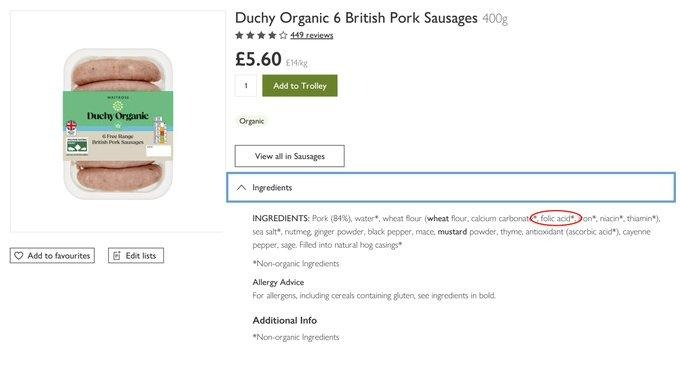
Organic pork sausages. Sausages need a binder and the binder is … fortified wheat flour.
Perhaps vegetarian sausages would be a better bet?
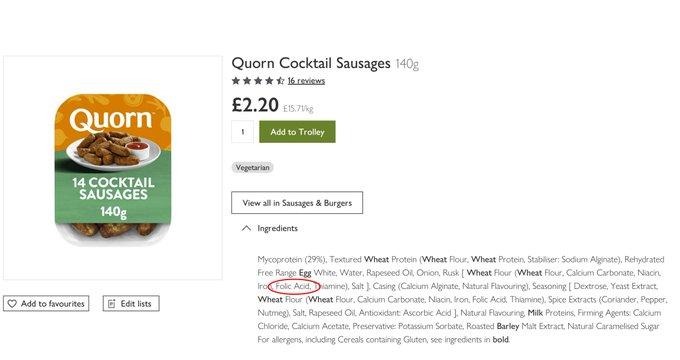
The meat-free version is no different. In Quorn cocktail sausages, fortified wheat flour appears three separate times, in the textured wheat protein, in the rusk and in the seasoning.
The Store Cupboard
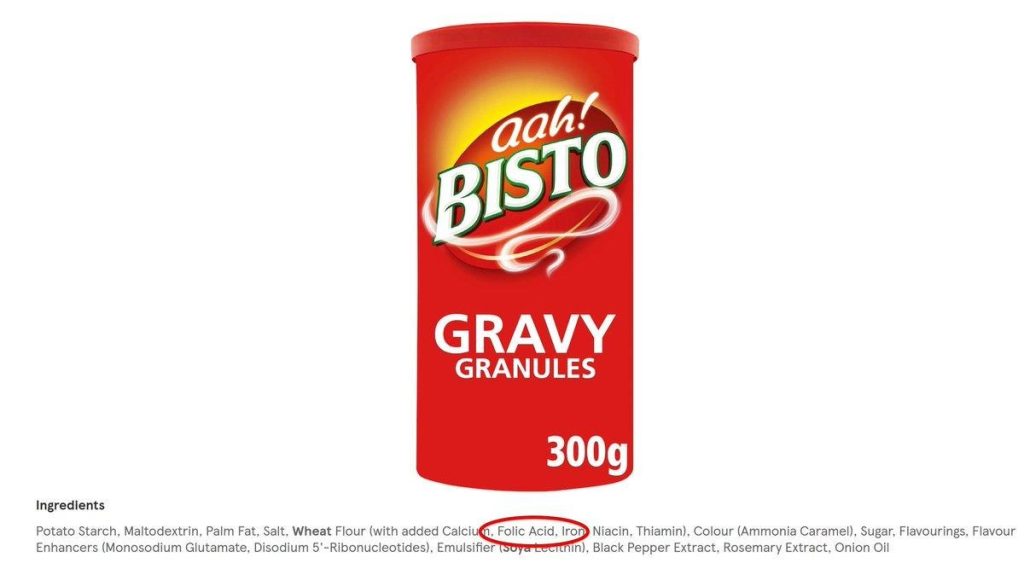
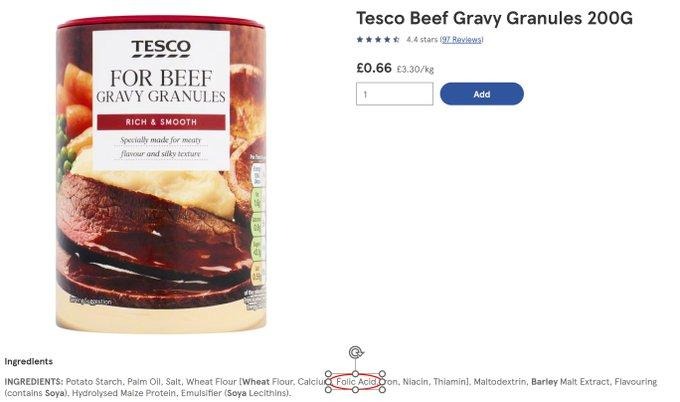
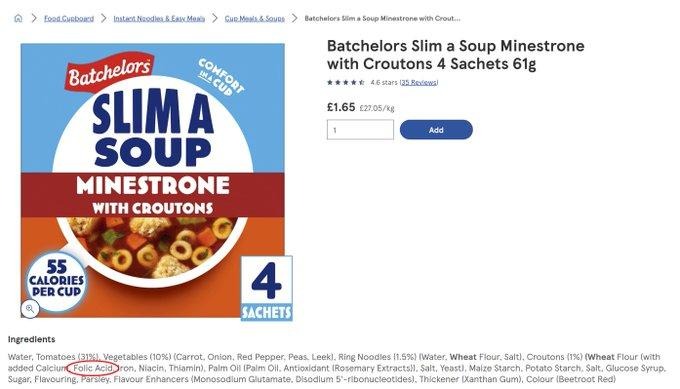
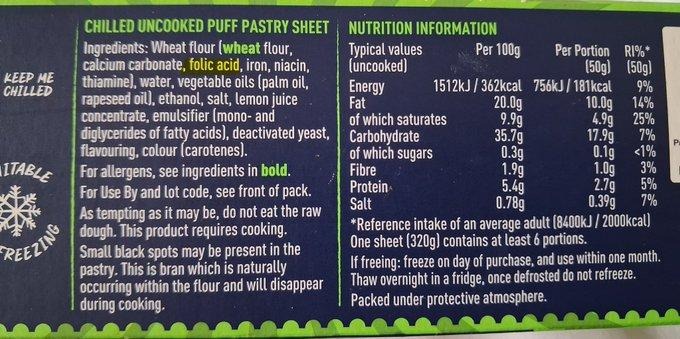
By now the shopper is resigned to cooking from scratch with ingredients that must each be checked. Even this is a huge problem. Ingredients where they may never think there was an issue contain it.

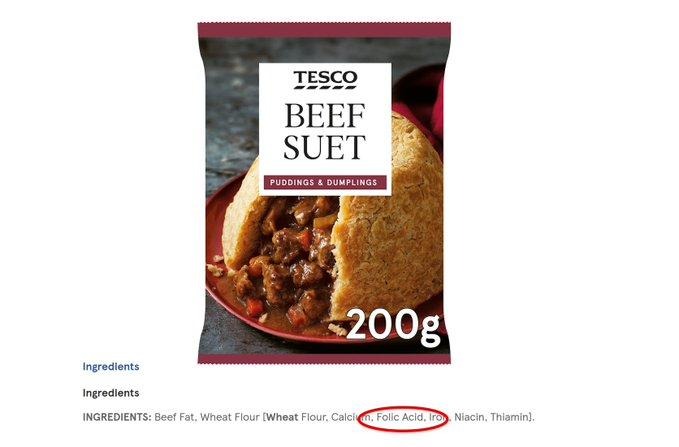
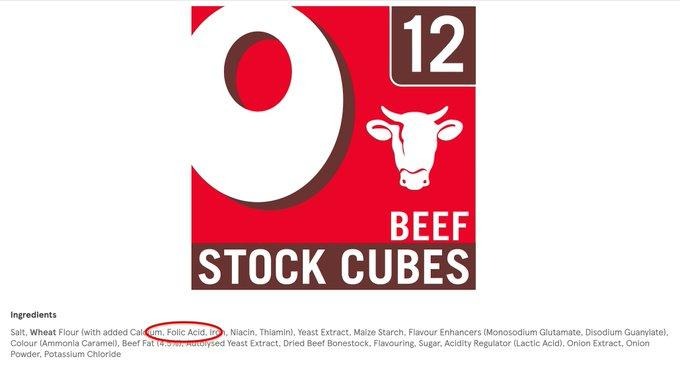
Mustard. Beef suet. Stock cubes.
Snacks
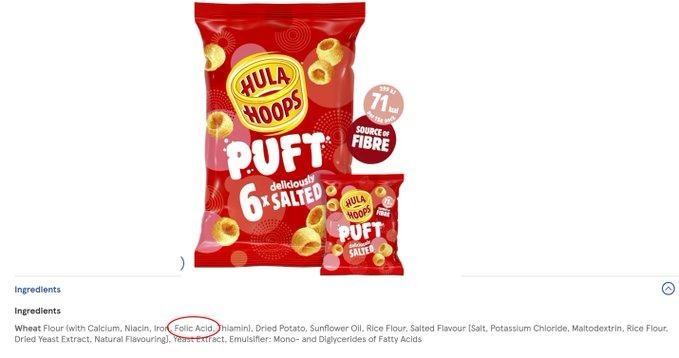
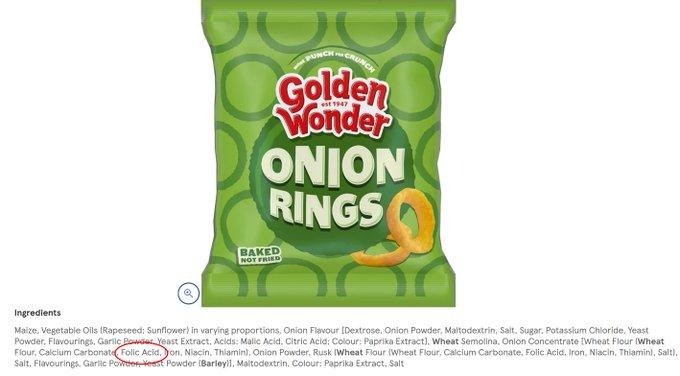
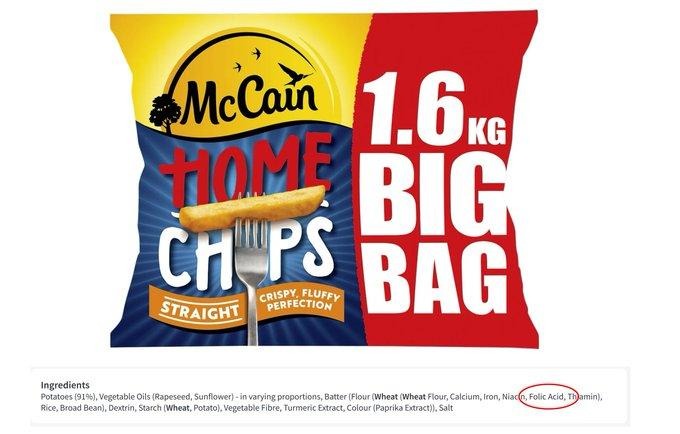
Oven chips, where the folic acid is in the batter on the chip.
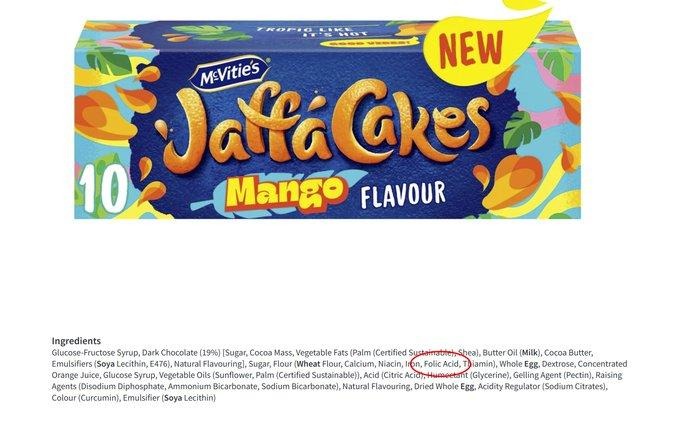
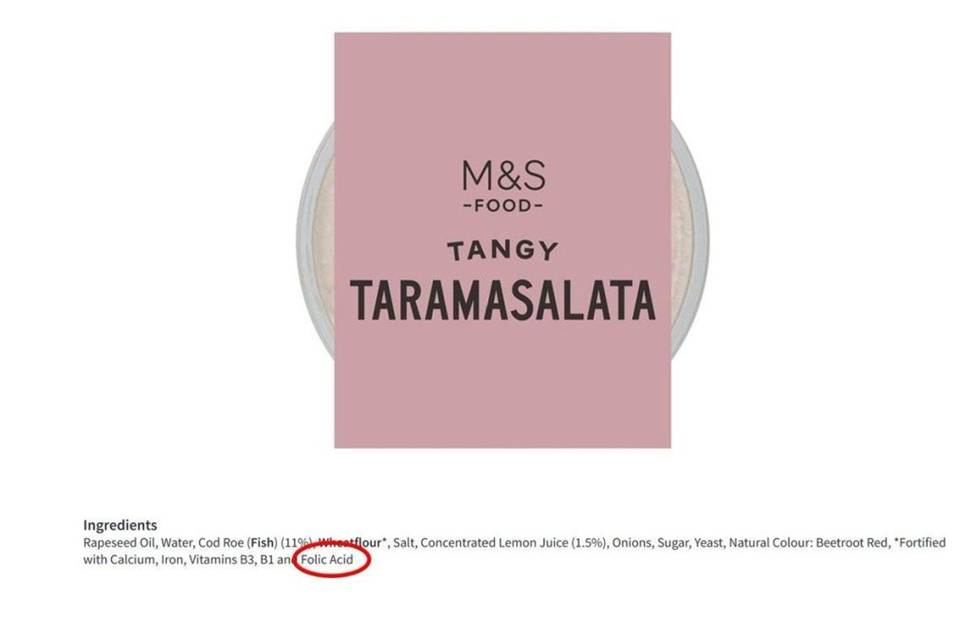
Jaffa Cakes. Taramasalata.
The exemptions have failed to provide the promised consumer escape route. Someone trying to avoid folic acid now has a very restricted diet.
Breakfast and Bedtime
There are multiple sources of exposure that existed before the mandate. It is surprising how much is being added.

Rice Krispies is eaten overwhelmingly by children. The upper limits used for children were not derived from studies in children. They were extrapolated from adult data, and no upper limit has been set for children under one.
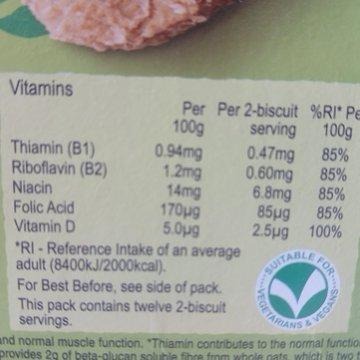
Oatibix contains 170 microgrammes of folic acid per 100 grammes, and 85 microgrammes in a two-biscuit serving. The daily upper limit estimated for a one- to three-year-old is 200 microgrammes. Children are starting the day at 40 per cent of their estimated safe upper limit.
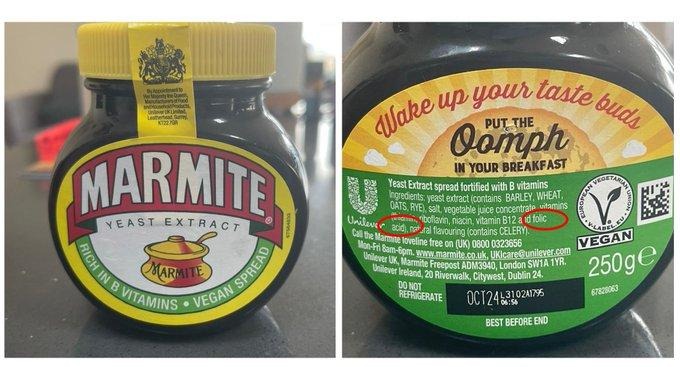
Marmite contains plenty of natural folate. Lucy Wills in 1938 showed that anaemia of pregnancy could be treated using Marmite. For some reason, the manufacturers are adding 1,250 microgrammes of synthetic folic acid per 100 grammes. One serving of 8 grammes is 100 microgrammes, or half a toddler’s limit for the day – before anything else is eaten.
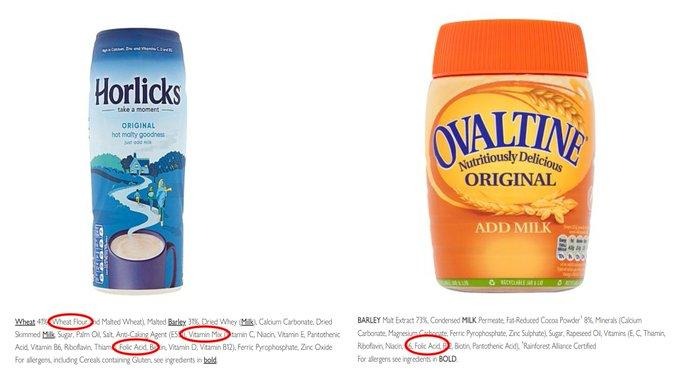
Horlicks and Ovaltine both contain it. Ovaltine is made from barley malt extract and contains no wheat flour at all. These drinks are traditionally consumed by older people. Around a fifth of people over 60 have low vitamin B12, often undiagnosed. High folic acid intake can correct the anaemia of B12 deficiency while the neurological damage continues, delaying diagnosis. That is the harm on which the adult upper limit was decided.
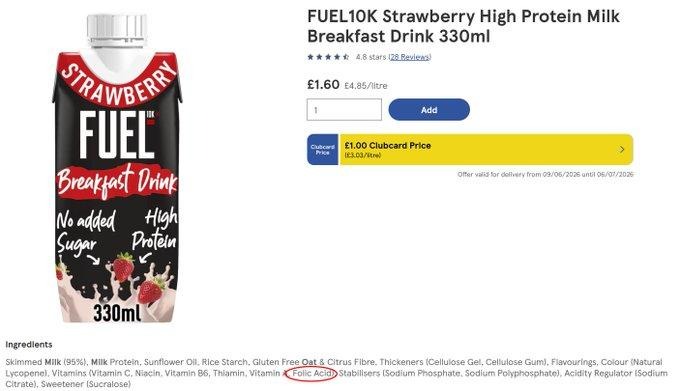
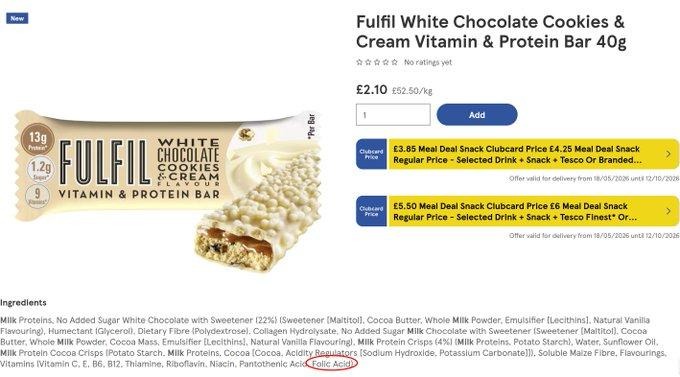
If grabbing breakfast on the go, look out for the flavoured milk drinks and protein bars. Neither contains flour. Both have folic acid added directly.
The Baby Aisle
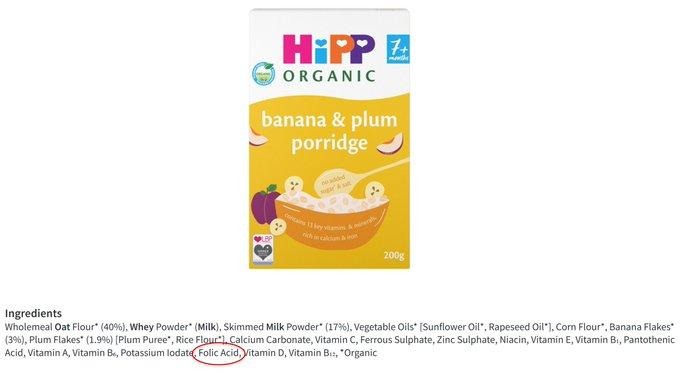
This is an organic baby oat porridge to which folic acid has been added.
The Government’s own modelling estimates that 4.37 per cent, or 1 in 23, of one- to three-year-olds will exceed their upper limit once flour is fortified and nothing else is capped, compared to 0.63 per cent of the population overall. That calculation excludes children under 18 months altogether, on the stated assumption that they “eat very little flour.”
For children under one, no upper limit for folic acid has ever been set.
Conclusion
The Government claims people who choose or need to avoid folic acid can do so. Looking only at what was exempted, that might sound plausible, but in the supermarket the reality is very different.
Wholemeal products, gluten-free products and ancient grain products all contain folic acid. Organic flour is even fortified. Even someone who managed to avoid our staple food altogether would be faced with folic acid that has snuck into sauces, sausages, stock cubes, noodles, oven chips, breakfast cereals, drinks and even baby food.
Technically, it may still be possible to avoid folic acid. You can cook largely from scratch and carefully examine every ingredient list. But that is not the easy choice the Government described.
The Government’s own modelling assumed that other sources of folic acid would be restricted, not increased. The dosage implications are obvious.
If the millions that the NHS warns to take care with folic acid are to be told that they can avoid it “if they choose to or need to,” then that choice needs to exist in practice, not just on paper.
Related: Folic acid is in the food but not on the label
About the Author
Dr. Clare Craig is a British Diagnostic Pathologist and medical researcher who worked in the NHS for 15 years before becoming a Consultant Pathologist in 2009. She is best known for her covid-19 research. She has worked pro bono since May 2020 to analyse covid pandemic data and distil evidence for lay audiences.
She is the author of two books: ‘Expired: Covid the untold story’ (2023) and ‘Spiked: A shot in the dark’ (2025).
Since January 2021, she has co-chaired the Health ethics Advisory and Research Team (“HART”) with Dr. Jonathan Engler, providing independent expert information on covid issues. She contributes to HART in a personal capacity.
The Expose Urgently Needs Your Help…
Can you please help to keep the lights on with The Expose’s honest, reliable, powerful and truthful journalism?
Your Government & Big Tech organisations
try to silence & shut down The Expose.
So we need your help to ensure
we can continue to bring you the
facts the mainstream refuses to.
The government does not fund us
to publish lies and propaganda on their
behalf like the Mainstream Media.
Instead, we rely solely on your support. So
please support us in our efforts to bring
you honest, reliable, investigative journalism
today. It’s secure, quick and easy.
Please choose your preferred method below to show your support.

Categories: Breaking News, Latest News, UK News
People can now order their own countertop mill to make their own flour, which is better than getting it from mills, at least here in the USA, because mills take lots of nutrients out of the flour
Same here, mine came from Germany, proper electric mini-mill with stones, I used it back a lot to make our own bread, but since we switched a low-carb, almost carnivore diet I use it rarely. Cost was around 300£ but worth every penny.
Foliate – folic-acid debate. All goes back to the idiotic – sorry – vegetarian diet. Liver is full with foliate, organic liver is a huge vitamin bomb, cod-liver is even more.
I kindly suggest to everyone to watch a youtube video of Barry Growes, Homo Canivorous, while it was shared till the level you can find at least 10 re-uploaded versions, youtube tries to hide it – surprise… not. The basic info is this, mammals convert their food into around 60-70% SATURATED fat, 10-20% protein, even cows and gorillas do it, but there is a difference in theirs and our gut system, they can convert veggies to fat and protein and we don’t as our human gut system is closer to the strictly carnivores like cats and dogs. Without the idiotic, ruining vega movement it wouldn’t be even an issue. Eat animals with fat and nose-to-tail.
Awaiting for approval for what exactly?
Sorry, I failed to give useful info to help you, my comments are awaiting approval.
I busted this site – back then when I thought it was genuine with nice amounts but they are not genuine, they are UK intelligence laughing on us, and preventing useful comments to be published.
Hi GPala123, you have jumped to conclusions which are entirely incorrect. It would be appreciated if you would ask why your comment was not posted rather than falsely accuse and disparage The Expose.
We use a computer programme to filter out and stop spam, if we didn’t about 80% of the comments posted under our articles would be spam. For some reason one of the many comments you have posted of late was flagged by the automatic filter as requiring approval. We are not on site 24/7 to monitor comments so if a comment is flagged, it may be some time before one of us logs on and releases comments flagged as requiring approval.
Your comment has now been approved and should be showing, but I deleted the two duplicates as I figured you didn’t want all three to be posted.
The other comment you left calling us “a con” etc in an attempt to ruin our reputation and discourage others from supporting us has been deleted. Any other such comments you post will be also be deleted. We shouldn’t have to tolerate you spreading falsities and rumours about us based on nothing but that you were feeling frustrated that one of your many comments was flagged as potential spam and so was not posted immediately.
In the US you have to bake your own bread, and you have to take a magnifying glass to read all the ingredients of everything, because otherwise you get poisoned. I hope ALL the ingredients are on the few things that I buy. Back in the old country there was still a mill, where every other week we could buy freshly milled single or multi grain flour. And as to the argentina meat – I do not know when the poison is added. But the cows there graze in the sun, on real green grass. American cows get fed corn and kibble in a closed stable, the lucky ones now and then catch a glimpse of sky, before deported to a feed lot, where they stand with 2000 on a space for 100, knee deep in mud and their own poop, and they are injected with everything possible… when opening the Argentina meat, it smells like fresh meat and it tastes like it. when opening American meat it smells like dung and I fed it to the dog.
Thank you for sharing this. Companies like M&S who charge a lot for their products need shaming on the crap they put in their food. Rapeseed oil, chemical additives like folic acid – shame on them.
It’s almost like they WANT everyone to get bowel cancer isn’t it ? It’s known that the incidence of bowel cancer goes through the roof when people take in high levels of synthetic folic acid. Is that why they’re sending out all the testing kits ? After all, the treatment is very lucrative.
excellent comment and observation, you are spot on! i thought the same thing when the kits came through the post, something is afoot as I never hear from them otherwise (not that i bother with them) and straight in the bin! whatever there pushing i am not buying
I have always read that B vitamins are water soluble and you will therefore piss off what your body does not absorb. Not the same with oil soluble, which can accumulate but harm only occurs in extremely huge doses which is unlikely to occur unless someone is really careless. Well being is not what Big Pharma likes, so strange things are put out to discourage you from taking supplements and getting healthy.
Eggs area good source of the B Vitamins , B3 , B6 B9.
Folic acid is generally safe at recommended doses (400 µg/day for adults, 600 µg in pregnancy), but exceeding the Tolerable Upper Intake Level of 1,000 µg/day from supplements and fortified foods carries several risks, ranging from mild to serious.
1. Masking Vitamin B12 Deficiency (Most Clinically Significant)
This is the best-established harm. Both folate and B12 deficiencies cause megaloblastic anaemia. High folic acid intake can correct the anaemia — making blood tests look normal — while the neurological damage from B12 deficiency continues unchecked. B12 is essential for maintaining the myelin sheath around nerve fibres; without it, progressive and potentially irreversible nerve damage occurs. Symptoms that can develop silently include:
Numbness or tingling in hands and feet (peripheral neuropathy)
Difficulty with balance and coordination
Memory problems and cognitive decline
Depression, irritability, mood changes
Vision problems (optic nerve damage)
A 2024 clinical review in Nutrition in Clinical Practice noted that folic acid may not merely mask but exacerbate or accelerate the neuropathological progression of B12 deficiency, as excess folic acid increases the body’s demand for B12 and worsens the metabolic block caused by its absence.
Key point: A normal complete blood count in someone on high-dose folic acid does not rule out B12 deficiency. Serum B12, methylmalonic acid, and homocysteine should be checked.
2. Cognitive Decline in Older Adults
A prospective cohort study (Chicago Health and Aging Project, n = 3,718, age >65) found that high folate intake was associated with a faster rate of cognitive decline over 6 years, particularly in those also taking folic acid supplements above 400 µg/day. The risk appears amplified when B12 status is simultaneously low. A 2024 UK Biobank study of 466,224 participants reinforced the concern, linking high folic acid to elevated dementia risk, partly through the mechanism of unmetabolized folic acid (UMFA) reducing natural killer cell activity.
Chicago Health and Aging Project study folic acid cognitive decline UK Biobank study UMFA
3. Cancer Risk
The evidence is mixed but concerning in specific contexts:
Cancer recurrence: Some studies suggest high folic acid may increase the risk of colorectal cancer recurrence and possibly accelerate prostate and breast cancer progression.
Precancerous lesions: Excess folic acid may promote the growth of pre-existing preneoplastic cells (e.g., in the colon), while simultaneously reducing the body’s ability to detect them (see immune effects below).
Genetic susceptibility: Women with a 19 bp deletion polymorphism in the DHFR gene show an increased risk of certain cancers (including breast cancer) with high folic acid intake.
The NIH ODS notes that folic acid at recommended doses before cancer develops may be protective, but the risk-benefit profile changes after precancerous lesions are present.
4. Immune System Suppression
A clinical trial found that 5 mg/day (five times the upper limit) for 90 days reduced both the number and cytotoxic activity of natural killer (NK) cells in postmenopausal women. NK cells are a critical part of the innate immune response and help identify and destroy abnormal or cancerous cells. The combination of promoting cell growth (folic acid’s role in DNA synthesis) while weakening NK surveillance is a particularly concerning dual mechanism.
5. Unmetabolized Folic Acid (UMFA)
Synthetic folic acid must be converted to its active form by the enzyme dihydrofolate reductase (DHFR). When intake exceeds the body’s capacity to process it, unmetabolized folic acid accumulates in the bloodstream. This has been linked to:
Reduced NK cell activity
Allergic disease and airway inflammation (particularly in offspring)
Cognitive impairment
Increased insulin resistance
People with MTHFR gene variants (affecting ~10–15% of some populations) have a reduced ability to process folic acid, making UMFA buildup more likely.
6. Gastrointestinal and General Side Effects
More common at higher doses (up to 15 mg/day):
Symptom Notes
Nausea, loss of appetite Mild, usually self-limiting
Bloating, gas, stomach cramps GI discomfort
Bitter or unpleasant taste Oral
Confusion, trouble concentrating Neurological
Sleep disturbances, insomnia Neurological
Mood changes (depression, irritability) Psychiatric
Impaired judgment Neurological
7. Allergic Reactions
Rare but reported, including skin rash, urticaria, and in extreme cases anaphylaxis. These are more likely at very high doses (≥15 mg, ~35× the RDA) or in individuals sensitive to excipients in the supplement.
8. Pregnancy-Related Risks
A 2025 systematic review found that excess folic acid during preconception and pregnancy (generally ≥800 µg/day or high RBC/serum folate levels) is associated with:
Increased risk of gestational diabetes (particularly at ≥800 µg/day)
Gestational hypertension / pre-eclampsia (RR ≈ 1.33 at ≥800 µg/day)
Large for gestational age infants
Adverse neurodevelopment in offspring: >1,000 µg/day peri-conception linked to deficient attentional function, poor working memory, and increased likelihood of autism spectrum disorder
Increased risk of allergic disease in offspring
Increased insulin resistance in offspring
9. Drug Interactions
Anticonvulsants (e.g., phenytoin, carbamazepine): Folic acid can reduce their effectiveness, potentially increasing seizure risk.
Methotrexate (used for rheumatoid arthritis and cancer): Folic acid can reduce methotrexate’s efficacy by competing for the same metabolic pathway.
Levodopa (for Parkinson’s): May reduce absorption.
10. Insulin Resistance and Metabolic Effects
Excess folic acid has been linked to insulin resistance, particularly in offspring of mothers with high folate status during pregnancy. This may contribute to increased risk of type 2 diabetes.
Who Should Be Most Cautious?
Older adults (>60): Higher baseline risk of B12 deficiency, greater cognitive vulnerability, and more likely to harbour undetected precancerous lesions.
Vegans/vegetarians: Higher risk of B12 deficiency that folic acid can mask.
Cancer survivors: Should discuss folate intake with their oncologist.
People with MTHFR variants: Reduced capacity to process synthetic folic acid.
Anyone taking >1,000 µg/day: Requires medical supervision.
I eat a lot of bread and bakery and have been suffering from itchiness and rashes in fact I have all of the symptoms below and now I know why! They should not just add these chemicals. People can choose to buy a supplement you cannot take it out of the food and I see from your article it is more than just bakery. I am going to write to my MP about this .
7 Key Symptoms of Folic Acid Toxicity
Too much folic acid can cause health problems. When we take more than the daily limit, we might face serious issues. Knowing these symptoms helps us catch and treat folic acid toxicity early.
Digestive Disturbances: Nausea, Bloating, and Abdominal Pain
Folic acid toxicity often shows up as stomach problems. You might feel nausea, bloating, and abdominal pain. These issues happen because too much folic acid bothers the stomach, causing discomfort.
Sleep Disruptions and Insomnia
Folic acid toxicity can mess with our sleep. It can cause insomnia and other sleep issues. Too much folic acid can disrupt our natural sleep cycle, making it hard to fall or stay asleep.
Irritability and Mood Changes
Too much folic acid can also affect our mood. It can make us feel irritable and lead to mood swings. These changes can be mild or severe, affecting our daily life and relationships.
Skin Reactions and Rashes
Another sign of folic acid toxicity is skin problems. You might get rashes, itchiness, or other skin issues. How bad these symptoms are depends on how much and for how long you’ve had too much folic acid.
The following table summarizes the 7 key symptoms of folic acid toxicity:
Symptom Category
Specific Symptoms
Digestive Disturbances
Nausea, Bloating, Abdominal Pain
Sleep Disruptions
Insomnia, Sleep Disturbances
Mood Changes
Irritability, Anxiety, Mood Swings
Skin Reactions
Rashes, Itching, Dermatological Issues
Other Symptoms
Fatigue, Weakness, Neurological Issues
I have found exactly the same. I cannot find a good wholemeal/sourdough loaf of bread – even organic, that does not contain folic acid. The Government need to know this information as they are being sold lies by someone!
Pxxat5
3 minutes ago
Manufactured Folic acid used in flour and many other products, will not allow natural folate (B9) to cross the blood brain barrier, where it is very essential to the brains housekeeping cleaning functions. Folic acid can occupy folate receptor alpha (FR) gatekeepers on the blood-brain barrier… thus blocking natural 5-MTHF folate from entering, which is necessary for the brains cognitive functions. It is thought to be very useful, but ca
Hi Pssat5, you posted your original comment under a different article. I’m guessing by stating “3 minutes” in your comment you are indicating that the first comment was made 3 minutes before and hadn’t been posted. But perhaps it is simply a case of because you posted it under an another article, you thought it hadn’t been posted when you looked for it under this article. See https://expose-news.com/2026/09/04/governments-sold-their-nations-into-debt-slavery/#comment-195242
I have left your original comment as per the link above, plus the duplicate I’m responding to, but I have deleted the the third time you posted it.