Takuma Ishizuka has conducted a review of over 400 scientific studies exploring how emotional states and motor responses can be affected through stimulation of specific neural structures using electromagnetic waves, electric currents and ultrasonic waves.
His review covers various methods of remotely manipulating the nervous system, including brainwave entrainment, temporal interference stimulation and the use of microwave beams to stimulate or suppress brain activity.
He notes that neurostrike weapons, utilising microwaves or directed energy beams, are among the weapons that are being developed to alter behaviour and disrupt brain functions and cognitive function.
Let’s not lose touch…Your Government and Big Tech are actively trying to censor the information reported by The Exposé to serve their own needs. Subscribe to our emails now to make sure you receive the latest uncensored newsin your inbox…
Takuma Ishizuka, an independent researcher in Japan, has published a comprehensive technical article examining the mechanisms of remotely controlling the human brain.
His research, based on a review of more than 400 scientific studies, investigates “how external stimuli such as electromagnetic fields may influence the nervous system” and examines “whether emotional states and motor responses could be affected through stimulation of specific neural structures,” he said in an email to The Exposé.
In the 1970s, allegations surfaced that the government was researching electrical stimulation of the human brain as a means of mind-controlling its citizens.
The fact that this was a serious debate is underscored by the US Congress expressing concern in 1973 about the mass manipulation using such technology, while the US military provided financial support to prominent researchers in this field at that time.
If you could stimulate specific sites of the brain with the same precision without using electrodes, then you could alter human emotions and behaviour from a distance, achieving “remote control of the human mind.”
In fact, the Defence Advanced Research Projects Agency (DARPA) of the Department of Defence [now the Department of War] is believed to have been trying to achieve this [by] focusing microwave beams.
US government agencies have long been interested in controlling the brain function and have conducted numerous studies investigating the effects of microwaves on behaviour.
An expert at the International Committee of the Red Cross warns that what was once dismissed as a conspiracy theory is now becoming a real threat in the form of “non-lethal weapons” being developed by military organisations.
Research is also progressing on “bio-robots,” which connect animal brains to computers and control them wirelessly … If such technologies were to become widespread … there is a risk that we would end up with an extremely precarious society where it would become difficult for people to even live according to their own will.
Ishizuka’s article, split into 11 chapters or pages, has a well-organised, hyperlinked index to enable readers to move through the sections at their own pace. The first chapter describes various methods of remotely manipulating the nervous system. Chapters 2 through 9 discuss “numerous studies that show that direct electrical stimulation of the deep brain can induce emotions such as rage, fear, pleasure, desire and inhibition, and can also freely manipulate the body, such as movements of limbs, cardiac arrest and respiratory arrest.” Chapter 10 describes the early attempts at mind control. Chapter 11 lists the 476 references that Ishizuka used in his research.
The following is a summary of some of the information contained in Chapter 1.
The classical method of manipulating the nervous system is direct electrical stimulation via implanted electrodes, but new methods allow for indirect manipulation using electromagnetic waves, electric currents and ultrasonic waves. Although he does briefly mention the others, Ishizuka focused his research on the manipulation of the brain using electromagnetic waves.
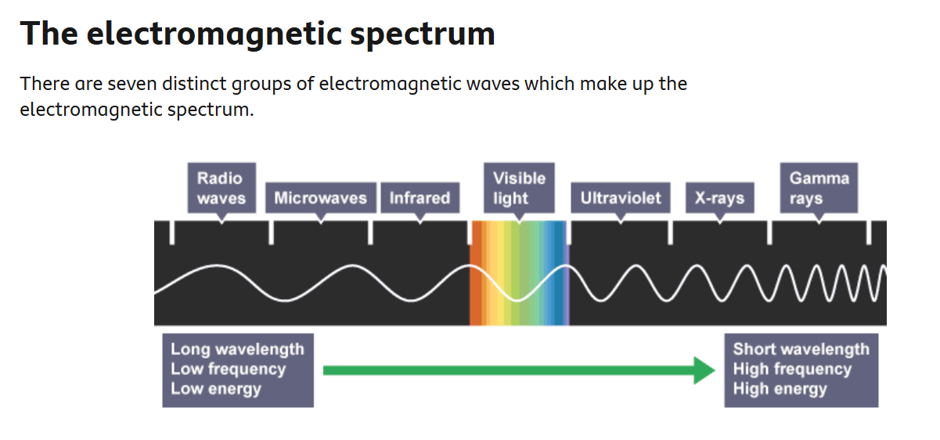
Note from The Exposé: Electromagnetic waves are a combination of electrical fields and magnetic fields. A changing magnetic field will induce a changing electric field and vice versa. These changing fields form electromagnetic waves, also referred to as electromagnetic radiation, which carry electromagnetic energy. This energy can be described in terms of frequency, wavelength or energy. Electromagnetic wave energy is directly proportional to frequency and inversely proportional to wavelength, meaning waves with shorter wavelengths possess higher energy levels.
Electromagnetic waves are classified into the electromagnetic spectrum according to their frequency and wavelength:
Radio Waves: Low frequency, longest wavelengths and low energy.
Microwaves.
Infrared.
Visible Light: The narrow band detectable by the human eye.
Ultraviolet.
X-rays.
Gamma Rays: Highest frequency, shortest wavelengths and high energy.
Even weak electromagnetic waves or electric currents can activate neurons through a process called “brain entrainment.” Brain entrainment, or brainwave entrainment, is where the brain’s electrical oscillations synchronise to the rhythm of periodic external stimuli, such as sound, light or vibration. This frequency-following response allows the brain to shift into specific states associated with different conscious activities, ranging from deep sleep to heightened focus.
Recently, a technique called temporal interference (“TI”) stimulation has been developed. It works by applying two pairs of scalp electrodes that deliver high-frequency alternating currents. These currents intersect in the brain to create a low-frequency beat frequency, activating specific deep-brain sites through brain entrainment.
Ishizuka explains why the development of TI is significant:
There are two key points for inducing behavioural changes through brain entrainment using external oscillations:
Target specific sites of the brain.
Match the external oscillations to the functional frequencies of the target sites.
This will enable you to induce clear behavioural changes, such as those seen with direct electrical stimulation of the brain, using external oscillations like electromagnetic waves.
Recently developed temporal interference (TI) stimulation, which stimulates the brain with a localised composite wave created at the intersection of two waves, has made exactly this kind of stimulation possible.
In other words, developments in temporal interference stimulation have made it possible to stimulate the brain with electromagnetic waves in such a way as to allow for more precise control over brain entrainment and its effects on behaviour such as sleep, memory, anger, fear, hallucinations, sight and reaction time, depending on the localised composite wave created when different frequencies are used.
Microwaves as a Covert Weapon
Microwaves can also produce changes in neurons, brainwaves and behaviour through brain entrainment. “The key to producing these [behavioural] changes appears to be modulating the microwaves at extremely low frequency in the brainwave band,” Ishizuka said. “Unmodulated continuous microwaves often suppress neuronal activity or have no effect at all.”
Note from The Exposé: Modulated microwaves are microwave radio frequency signals in which a specific property of the carrier wave – such as its amplitude, frequency or phase – is varied in accordance with an information signal (baseband) to encode data or transmit voice. This process allows high-frequency microwaves to carry digital or analogue information over long distances for telecommunications, radar and wireless networks.
On the other hand, unmodulated microwaves refer to a smooth, continuous electromagnetic wave signal that lacks the pulsed, modulated or variable characteristics of modern wireless transmissions.
Ishizuka refers to an experiment done by the US National Institute of Neurological Disorders and Stroke in which rhesus monkeys were irradiated with microwaves. A radio antenna was aimed at the heads of the rhesus monkeys so that it was in line with the brain stem and within a few seconds, the monkey became drowsy. After about a minute, it became agitated and began to move its head from side to side. The monkey then went into a major convulsion and died a few seconds later.
The experiment was repeated. 10 monkeys died as a result of exposure to the microwaves. Another 10 monkeys, whose exposure was cut short of death, showed various symptoms, including symptoms similar to Parkinson’s disease, quadriplegia, weakness in the upper limbs, ataxia and tissue damage found in the brain stem and cerebellum.
Ishizuka referred to another experiment in which researchers used microwaves to stop the heart of a frog, which suggests that irradiating the heart or brain with pulse-modulated microwaves in sync with the heartbeat can induce fatal cardiac arrest in humans and animals. It serves as proof that microwaves could be applied as a covert, highly lethal weapon that leaves no trace.
Mobile Phone Radiation
Similar to the frequencies mentioned above, mobile phones emit pulse-modulated microwaves that contain extremely low-frequency components in the brainwave band, which may have an impact on memory.
“For example, in second-generation mobile phones, extremely low-frequency components of the theta band at 5.6, 5.86, 6.8, and 8 Hz have been detected most strongly,” Ishizuka wrote.
Theta waves, which range from 4 to 7Hz, are associated with memory and emotions, such as fear responses and pathological aggression. Alpha waves, which range from 8 to 12Hz, are associated with inhibition and are said to govern reason.
In 2003, Finnish researchers demonstrated that exposure to electromagnetic waves from second-generation (2G) mobile phones has various effects on the human brain, including markedly reduced working memory.
Microwave Beams to Stimulate or Suppress Brain Activity
Note from The Exposé: Microwave beams are focused streams of electromagnetic radiation. These beams are used in, for example:
Active Denial Technology. A non-lethal crowd control system that emits a microwave beam to rapidly heat the surface of the skin, causing a painful sensation without causing burns.
Wireless Power Transmission. Projects like the US Navy’s SCOPE-M beam microwave energy to rectennas (rectifying antennas) that convert the radiation back into usable DC electricity.
The use of microwave beams has been explored as a neurostimulation technique. Recent advances in signal processing technology have allowed for the irradiation of microwaves as beams in specific directions, which can be utilised to facilitate or suppress brain activity.
Rice University researchers, inspired by the success of TI stimulation, have developed a method of stimulating specific targets deep within the brain using microwave beams instead of electric currents. The method involves multiple beams and concentrating the energy at the intersection. Simulations show that they can stimulate the centre of the brain with an electric field intensity comparable to that of electric current stimulation and with far superior focality.
Other researchers, including those at the University of Utah, are also exploring the use of microwave beams for neurostimulation. Simulations show that they can wirelessly stimulate the deep brain by focusing multiple microwave beams on specific targets inside the brain, using an array antenna and 8 GHz microwave beams.
The results of a study by Iranian researchers in 2020 showed that microwave beams can be focused at any point on the human head and can wirelessly stimulate the deep brain by focusing multiple beams on specific targets inside the brain. In this simulation, multiple array antennas were placed in a cylindrical shape around the head, and 1GHz microwave beams were irradiated toward the centre of the brain, resulting in the electromagnetic force being focused at a depth of 10 cm inside the brain.
Neurostrike Weapons
Note from The Exposé: Neurostrike weapons are non-kinetic military technologies designed to disrupt, impair or control brain functions and cognitive processes in human targets. These weapons primarily utilise microwaves, directed energy beams or infrasound to induce neurological degradation, reduce situational awareness and manipulate decision-making without causing overt physical trauma. One India News reported in 2023 that “China’s People’s Liberation Army is reportedly developing high-technology neurostrike weapons that are designed to disrupt brain functions and influence government leaders or entire populations … The goal is to impair thinking, reduce situational awareness, inflict long-term neurological damage and cloud normal cognitive functions.”
The development of neurostrike weapons has been advancing, Ishizuka said, and it seems this technology is being applied for military purposes. An example of this is the Moscow Signal, where the US Embassy in Moscow was attacked with microwaves from 1953 to 1979.
From 1953 to April 1979, the 10-story US Embassy in Moscow was attacked with microwaves. This signal came to be known as the Moscow Signal. It was estimated to have been a low intensity of about 0.1-24 µW/cm² in the gigahertz range as a modulated radio-frequency signal for nine hours a day. It was found to have caused chromosomal abnormalities, serious health problems, such as cancer and leukaemia, and symptoms consistent with electromagnetic hypersensitivity in embassy employees.
DARPA’s Project Pandora
The US Defence Advanced Research Projects Agency (“DARPA”) has a long history of attempting to develop techniques for focusing microwave beams to disorient or confuse opponents. This is evident in their secret research programme called Project Pandora, which was initiated in 1965 to assess the biological and behavioural effects of low-power microwaves. The Project was launched as part of an investigation into the Moscow Signal.
However, Project Pandora was suspected of being a research programme on remote mind control. This was denied by the director of DARPA in 1967, who said, “the Pandora experiments were never directed at the use of microwaves as a surveillance tool nor in a weapon concept.”
A year later, the director expanded on this point in a written response to a congressional inquiry. “This agency is not aware of any research projects, classified or unclassified, conducted under the auspices of the Defence Department, now on-going or in the past, which would have probed possibilities of utilising microwave radiation as a form of what is popularly known as ‘mind control’,” he said.
However, these statements were not historically accurate, as weaponry and mind control were clearly on the minds of some DARPA officials when Pandora began. Researchers at the time had already demonstrated that direct electrical stimulation of the brain could alter behaviour. The question was whether microwaves could have the same effect.
“This is what Project Pandora initially set out to discover: whether a carefully constructed microwave signal could direct the mind,” Ishizuka said.
Pandora was a multi-million dollar research programme with numerous projects. The main research was conducted at a microwave facility established at the US Army’s Walter Reed Institute of Research, where exposure experiments were conducted by simulating the Moscow Signal targeted at chimpanzees. The study found no notable biological effects which, apparently, led to the project’s cancellation in 1969.
Some viewed the reason for the project’s cancellation with scepticism. Paul Braude, a science investigative journalist for The New Yorker, suggested that Project Pandora was cancelled due to the discovery of serious biological effects that needed to be concealed.
According to the 2009 book ‘‘Non-Lethal’ Weapons’ by Neil Davison, “the research programme pursued weapons applications and demonstrated the potential of low-power microwaves to interfere with brain function,” Ishizuka said.
“A document that appears to show the results of experiments conducted at the Army’s Walter Reed Institute of Research mentions ‘behavioural performance decrement’, ‘seizures’, ‘gross alterations in brain function’, ‘30 to 100% increases in blood flow’ and ‘lethality’.”
US Air Force and Electromagnetic Weapons
Davison was a senior scientific and policy adviser in the Department of International Law and Policy Arms Unit at the International Committee of the Red Cross. His book ‘‘Non-Lethal’ Weapons’ provides a comprehensive overview of microwave weapons and acoustic weapons developed and possessed by US government agencies.
Davison’s book, together with a report by US News in 1997, “highlights the historical and technical background in which US government agencies – particularly the US Air Force – have long been interested in technologies for interfering with human brain functions and have explored the development of the operational systems for them,” Ishizuka wrote.
These sources point to a report compiled by the US Air Force in 1982. It outlined biotechnology research problems requiring solutions for aeronautical systems development and operation after 2000.
“The research problems included the biological effects of radio-frequency electromagnetic radiation (RFR), including microwaves,” Ishizuka said. It discussed the potential of RFR to interrupt, degrade or direct human central nervous system functioning.
“From its approach, it is clear that the US Air Force evaluated electromagnetic energy not merely as a means of communication, but as a highly practical technology for remotely controlling and guiding human behaviour,” Ishizuka said.
Davison and the US News report noted that research on microwaves was primarily carried out at the Brooks Air Force Research Laboratory in Texas.
To investigate the safety of radar systems, the Laboratory launched a comprehensive programme in 1968 on the biological effects of radio frequencies, microwaves and millimetre waves. A 2002 paper summarising the programme said:
“At the Air Force Research Laboratory facilities at Brooks, a wide range of RFR exposure parameters are studied, including exposure to microwaves, millimetre waves, high power microwaves (HPM), ultrawideband radiation (UWB), and include both pulsed and continuous wave, acute, chronic and repeated exposures. The research is conducted at biological levels of organisation from sub-cellular fractions, to cells, rodents, goats, monkeys and humans. Biological effects studied include the biochemical, genetic, neural, physiological, behavioural and cognitive.”
In 2004, the Air Force’s “Controlled Personnel Effects” concept appeared. “The concept of controlled effects on humans envisions a highly advanced application where a non-lethal force is used to alter a target’s thoughts and actions as desired,” Ishizuka said.
Quoting Davison,Ishizuka wrote: “For the Controlled Personnel Effects capability, the S&T [science and technology] panel explored the potential for targeting individuals with non-lethal force, from a militarily useful range, to make selected adversaries think or act according to our needs. Through the application of non-lethal force, it is possible to physically influence or incapacitate personnel. Advanced technologies could enable the war fighter to remotely create physical sensations such as pressure or temperature changes. A current example of this technology is Active Denial … By studying and modelling the human brain and nervous system, the ability to mentally influence or confuse personnel is also possible.”
Marine Corps and Electromagnetic Weapons
The US News article highlighted the work of Eldon Byrd.
Byrd ran the Marine Corps Nonlethal Electromagnetic Weapons project from 1980 to 1983, during which time he conducted experiments on animals and himself to see if brainwaves would move into sync with waves impinging on them from the outside. He found that he could induce the brain to release behaviour-regulating chemicals using very low-frequency electromagnetic radiation.
Byrd’s research showed that he could put animals into a stupor using extremely weak magnetic fields that were undetectable. He also showed magnetic fields caused certain brain cells in rats to release histamine, which in humans would cause instant flu-like symptoms and produce nausea.
Byrd said that the effects of his research were non-lethal and reversible. “You could disable a person temporarily,” he said.
“Mr. Byrd says he was told his work would be unclassified ‘unless it works’. Because it worked, he suspected that the programme ‘went black’,” Ishizuka noted. “Other scientists told similar tales of research on electromagnetic radiation turning top secret once successful results were achieved.”
Ethical and Legal Concerns
Ethicists are concerned about the development of non-lethal weapons, which are being carried out in extreme secrecy. There are currently no treaties regulating their use and no one knows what will happen to people exposed to them over the long term. Additionally, medical researchers are concerned that research into electromagnetic waves for therapeutic purposes could be used for weapon development.
Dr. Neil Davison of the International Committee of the Red Cross has warned that research into weapons designed to interfere with brain function is being advanced under the banner of “non-lethal weapons” development, and that such technologies will pose profound ethical issues if they prove viable, especially in the context of policing or warfare.
Towards the end of the first chapter, Ishizuka briefly described two known incidents of microwave attacks: ‘Havana Syndrome’ in 2016 and ‘Attack from China’s Military to India’s’.
You can read Chapter 1, ‘Remote Neural Manipulation’, in full HERE.
Can you please help to keep the lights on with The Expose’s honest, reliable, powerful and truthful journalism?
Your Government & Big Tech organisations try to silence & shut down The Expose.
So we need your help to ensure we can continue to bring you the facts the mainstream refuses to.
The government does not fund us to publish lies and propaganda on their behalf like the Mainstream Media.
Instead, we rely solely on your support. So please support us in our efforts to bring you honest, reliable, investigative journalism today. It’s secure, quick and easy.
Please choose your preferred method below to show your support.
While previously it was a hobby culminating in writing articles for Wikipedia (until things made a drastic and undeniable turn in 2020) and a few books for private consumption, since March 2020 I have become a full-time researcher and writer in reaction to the global takeover that came into full view with the introduction of covid-19. For most of my life, I have tried to raise awareness that a small group of people planned to take over the world for their own benefit. There was no way I was going to sit back quietly and simply let them do it once they made their final move.
Hi Rhoda,
Another phrophetic article.
We just have to remember the ‘ James Bond ‘ movies, to see what they had in store for us.
This fits in with the C19 fluid, which had Graphene Oxide in.
The GO makes magnetic particles which in turn make an aerial in the body of the victim.
This aerial in turn could be used by the 5G towers which are still springing up
Blue tooth phones can still find dead bodies in cemeteries, of people who had the C19 fluid, still emitting Mac address’s.
Hi Lynette Devries,
Thank you for that information.
There are a lot of Blue truth video’s.
Found the main one on Rumble like you said.
The Mac address is not identifiable, it’s just there in C19 victims.
Hi, Back again.
In the Blue Truth video, it says the PCR test also puts GO into you, like the C19 fluid.
I refused to have a PCR test at a UK hospital, and was sent away without treatment.
I had read the Egyptians used to push rods up unruly prisoners noses, to damage their brains.
So I was having none of that.
Hi Dave Owen, on the subject of brain hacking: I believe they have been experimenting on people within populations in numerous countries for years with methods of brain hacking. I believe for about 6-8 months in circa 2021 I was one of their guinea pigs in this type of experiment. (See a previous comment I made here: https://expose-news.com/2025/03/22/audible-enclaves-voice-to-skull-and-the-voice-of-god/#comment-164699)
On the subject of electromagnetic weapons: After going over the first chapter of Takuma Ishizuka’s article (as described above), I found myself thinking about spontaneous human combustion and wondering: were any of people who spontaneously combusted experimented on with electromagnetic/microwave weapons which resulted in their strange deaths?
According to THIS article, there have been 200 cases over 300 hundred years of humans spontaneously combusting. I wonder how many of the 200 cases have occurred in the last 50 years, say – I don’t know but in 2011, the BBC reported the first case in Ireland. And THIS article mentions a few other cases.
I would be interested to know if anyone has done any reliable research into possible links between spontaneous human combustion and electromagnetic weapons research/experimentation.
The following doesn’t use the words spontaneous human combustion but does claim a recent targeted death by DEW. I don’t know if the autopsies of this woman and the other nuclear scientists who have recently died are available to the public.
Hi Gregg Bourque,
That’s interesting, what’s that in £.
Is it dangerous.
worrywart
3 months ago
What great work! That it is written (or translated) into plain English should insure its wide distribution. Thank you for reprinting this, Expose.
Blazecloude
3 months ago
Creation of Non-Lethal Weapons continues under Classification/Black Ops and by the time the info is released to the public it no longer matters since everybody will be ENSLAVED to those in control of such weapons; the Neo-Feudalists/Communists as the OLD WORLD ORDER as Pagan Demon Worshiping Pedophiles, Cannibals and Vampires.
OLD WORLD ORDER is the NEW/ONE WORLD ORDER…Same Demons Camouflaged as Humans as always.
Got a story you think the public needs to hear?
Then contact us today.
Search
Support The Exposé
The Exposé relies solely on your support to allow us to report the facts the mainstream refuses to. If you like what we do, then please help us to keep doing it with a one-time or monthly donation today…







Hi Rhoda,
Another phrophetic article.
We just have to remember the ‘ James Bond ‘ movies, to see what they had in store for us.
This fits in with the C19 fluid, which had Graphene Oxide in.
The GO makes magnetic particles which in turn make an aerial in the body of the victim.
This aerial in turn could be used by the 5G towers which are still springing up
Blue tooth phones can still find dead bodies in cemeteries, of people who had the C19 fluid, still emitting Mac address’s.
Have you seen the video on Rumble called Blue Truth? It deep dives into it.
Hi Lynette Devries,
Thank you for that information.
There are a lot of Blue truth video’s.
Found the main one on Rumble like you said.
The Mac address is not identifiable, it’s just there in C19 victims.
Hi, Back again.
In the Blue Truth video, it says the PCR test also puts GO into you, like the C19 fluid.
I refused to have a PCR test at a UK hospital, and was sent away without treatment.
I had read the Egyptians used to push rods up unruly prisoners noses, to damage their brains.
So I was having none of that.
Hi Dave Owen, on the subject of brain hacking: I believe they have been experimenting on people within populations in numerous countries for years with methods of brain hacking. I believe for about 6-8 months in circa 2021 I was one of their guinea pigs in this type of experiment. (See a previous comment I made here: https://expose-news.com/2025/03/22/audible-enclaves-voice-to-skull-and-the-voice-of-god/#comment-164699)
On the subject of electromagnetic weapons: After going over the first chapter of Takuma Ishizuka’s article (as described above), I found myself thinking about spontaneous human combustion and wondering: were any of people who spontaneously combusted experimented on with electromagnetic/microwave weapons which resulted in their strange deaths?
According to THIS article, there have been 200 cases over 300 hundred years of humans spontaneously combusting. I wonder how many of the 200 cases have occurred in the last 50 years, say – I don’t know but in 2011, the BBC reported the first case in Ireland. And THIS article mentions a few other cases.
I would be interested to know if anyone has done any reliable research into possible links between spontaneous human combustion and electromagnetic weapons research/experimentation.
The following doesn’t use the words spontaneous human combustion but does claim a recent targeted death by DEW. I don’t know if the autopsies of this woman and the other nuclear scientists who have recently died are available to the public.
Ex-FBI Agent Drops Bombshell Theory in Mysterious Death of Nuclear Scientist: ‘Directed Energy Weapon’
https://slaynews.com/ex-fbi-agent-drops-bombshell-theory-mysterious-death-nuclear-scientist-directed-energy-weapon/
Hi Rhoda,
What do you know about this.https://www.rumormillnews.com/cgi-bin/forum.cgi?read=269653
Hi Gregg Bourque,
That’s interesting, what’s that in £.
Is it dangerous.
What great work! That it is written (or translated) into plain English should insure its wide distribution. Thank you for reprinting this, Expose.
Creation of Non-Lethal Weapons continues under Classification/Black Ops and by the time the info is released to the public it no longer matters since everybody will be ENSLAVED to those in control of such weapons; the Neo-Feudalists/Communists as the OLD WORLD ORDER as Pagan Demon Worshiping Pedophiles, Cannibals and Vampires.
OLD WORLD ORDER is the NEW/ONE WORLD ORDER…Same Demons Camouflaged as Humans as always.