





The pharmaceutical industry has significant power and influence over governments, media and universities, shaping vaccine regulation and policy.
The history of vaccine regulation dates back to the 19th century, with the Biologics Control Act of 1902 being a key turning point. This Act was actually pushed by the pharmaceutical industry itself to eliminate competition and boost public confidence in biologics.
The industry’s hold on the US government was cemented with the National Childhood Vaccine Injury Act of 1986, which granted a liability shield to vaccine manufacturers, and the Bayh-Dole Act of 1980, which allowed for the privatisation of patents.
Let’s not lose touch…Your Government and Big Tech are actively trying to censor the information reported by The Exposé to serve their own needs. Subscribe to our emails now to make sure you receive the latest uncensored news in your inbox…
How Long Has Industry Captured Vaccine Regulation?
By Jeffrey A. Tucker, as published by Brownstone Institute on 23 December 2025
Among the many incredible revelations over the past five years is the extent of the power of the pharmaceutical companies. Through advertising, they have been able to shape media content. That in turn has affected digital content companies, which responded from 2020 onward by taking down posts that questioned the safety and efficacy of covid vaccines.
They have captured universities and medical journals with donations and other forms of financial control. Finally, they are far more decisive in driving the agenda of governments than we ever knew. Just for example, we found out in 2023 that the US National Institutes of Health (“NIH”) shared thousands of patents with pharma, with a market value approaching US$1-2 billion. This was all made possible by the Bayh-Dole Act of 1980, which was pushed as a form of privatisation but only ended up entrenching the worst corporatist corruptions.
The hold over governments was cemented with the National Childhood Vaccine Injury Act of 1986, which granted a liability shield to the makers of products that appear on the childhood schedule. The injured are simply not permitted to fight it out in civilian courts. No other industry enjoys such sweeping indemnification under the law.
Pharma today arguably competes with the military munitions industry in its hold over power. No other industry in human history has managed to close the economies of 194 countries to force most of the world’s population to wait for its inoculation. Such power makes the East India Company, against which the American founders revolted, look like a corner grocery by comparison.
There is ample talk about how much pharma has suffered since its vaunted product flopped. But let’s not be naive. Their power is still ubiquitously on display in every sector of society. The fight at the state level for over-the-counter therapeutics – and for medical freedom for the citizenry – reveals the scope of the challenges ahead. The reformers who now head agencies in Washington are fighting daily through a thicket of influence that goes back many decades.
Just how far in the past does this power extend? The first federal effort to push vaccination – however primitive and dangerous – was from President James Madison. ‘The Act to Encourage Vaccination’ of 1813 required that smallpox vaccines be given away for free and properly delivered to anyone who requests them. As injury and death piled up, and amidst cries of profiteering and corruption, Congress acted decisively in 1822 to repeal the act.
The turning point in public opinion was what came to be known as the Tarboro Tragedy. The most reputed vaccinologist in the country and the official guardian of the vaccine, Dr. James Smith, had accidentally sent material containing live smallpox virus instead of the cowpox vaccine to a physician in Tarboro, North Carolina. This caused a local smallpox outbreak, infecting around 60 people and resulting in approximately 10 deaths. This error damaged public and Congressional trust in the federal programme’s ability to safely handle and distribute vaccine matter.
The great promise of vaccination, which seemed to raise the possibility of the scientific eradication of deadly disease under the guidance of elite healers, had fallen into disrepute.
Even so, when the Civil War broke out in 1861, there was a push to get all soldiers vaccinated to stop deadly smallpox outbreaks. With that came a slew of injuries and deaths. Historian Terry Reimer writes:
Unfavourable results from vaccination, or spurious vaccinations, were all too common. Even pure vaccine, obtained from official Army dispensaries, sometimes caused complications. Sometimes, faulty preservation of the crusts could have compromised their effectiveness. As is the case even with modern vaccines today, occasionally, the vaccine did not take, failing to produce the major reaction at the vaccination site that was expected. In other cases, the site of the vaccination became overly sore and swollen, and abnormal pustules developed, leaving surgeons to question whether those vaccinations had been effective.
Complications from using a scab from a recently vaccinated adult were even more deleterious. Since many vaccinations took place in hospitals, crusts from men who were sick with other conditions were occasionally used unintentionally, spreading disease rather than preventing it. Often, soldiers in a hospital or prison didn’t get vaccinated until smallpox had already appeared in the facility, increasing the risks for some who might not have otherwise been exposed to the disease.
Perhaps the worst, and unfortunately common, form of spurious vaccination was the use of scabs that were syphilitic in nature. This occurred both in the hospitals and among the soldiers who self-vaccinated. Misdiagnosing a scab or harvesting crusts from the arm of a soldier who had syphilis would spread this disease to everyone vaccinated from that source. In one notable case, two brigades were affected by a vaccination infection that was thought to be syphilitic in nature. The men were so sick that the brigades were unfit for military service. The epidemic was traced to a single soldier who had obtained vaccination material from a woman who likely had syphilis.
The Confederate Medical Department attempted to prohibit soldier-to-soldier vaccination to limit these damaging effects. Even civilians were discouraged from self-vaccination, as the consequences of spurious vaccine had spread to the general population as well, leading to a mistrust of the vaccination process.
At this point in history, we were a century and a half deep into the vaccine experience, and certainly with mixed results owing to unsafe methods and spurious products. But there was no giving up. Quite the contrary. The medical journals of the late 19th century were filled with optimism about the capacity of medical science to cure all diseases and even grant eternal life, provided the mixtures and administration were improved.
“There is apparently no inherent reason why man should die,” editorialised American Druggist in 1902, “except our ignorance of the conditions governing the reaction going on in his protoplasm.” This problem can be fixed by “the artificial synthesis of living matter,” with vaccination on the front lines of finding the fix for mortality itself. Yes, there has always been a religious dimension to the ethos of this industry.
The turning point came in 1902 with the Biologics Control Act, the first true intervention by the federal government during the Progressive Era that set the stage for the regulation of all food and medicine. Indeed, this act came four years before Upton Sinclair’s novel ‘The Jungle’ that inspired the passage of the Federal Meat Inspection Act of 1906.
In popular lore, the meat act was passed by Congress to reign in a dangerous industry and bring strict safety standards to bear in a way that protected public health. But as Murray Rothbard has proven, the real power behind the passage of the act was the meat cartel itself, which not only favoured cartelisation that crushed smaller competitors but dealt a fatal blow to the traditional practice of farmers slaughtering and processing their own meat. Even to this day, the meatpackers wield all the regulatory power.
Not much has been written about the same efforts undertaken in the vaccine and pharmacology industries four years earlier. But it’s a reasonable assumption that the same forces were at work here, too. It took some time, and AI did not help at all, but eventually we found the definitive article on the topic that goes to primary resources to discover precisely what was going on. Sure enough, the Biologics Control Act of 1902 was entirely an industry creation, pushed by the dominant players in the market to crush the competition and passed to shore up public scepticism.
The article in question is ‘Early Developments in the Regulation of Biologics’ by Terry S. Coleman, appearing in Food and Drug Law Journal, 2016. This extraordinary piece demonstrates that the hidden hand behind the law was industry itself. The act was not restraining trade but rather giving it a much-needed credibility boost.
The kick-off for the act was a slew of well-publicised deaths from vaccines in 1901. In Camden, New Jersey, there were 80 infections and 11 deaths from tetanus that were traced to a single poisoned vaccine. In addition, there were other such incidents in Philadelphia, Atlantic City, Cleveland and Bristol, Pennsylvania.
The reputation of the industry was in free fall. Something had to be done to bolster market share. The industry ran to Washington and pulled out all the stops to get regulated, posing as the business that hated regulation but was willing to acquiesce.
“Histories of the 1902 Act generally describe it simply as a congressional response to the St. Louis and Camden incidents as if the law was the outcome of some routine congressional process.” In actual fact, “the 1902 Act was an initiative of the large biologics manufacturers, and it was enacted with the secret cooperation of the Public Health Service.”
The biologics industry sought passage of the 1902 Act primarily because it feared that the contamination incidents would cause additional state and local health departments to make their own vaccines and antitoxins, wiping out the commercial biologics business … Some medical publications also called for governmental inspection and licensing of biologics manufacturers. The Journal of the American Medical Association editorialised that “[i]f necessary, legislation should be had forbidding the sale or use of any antitoxin not. . .tested and certified by some competent authority.” The New York Times called for more intensive inspection and supervision of commercial biologics producers. In October 1902, the Conference of State and Provincial Boards of Health of North America recommended that vaccine should be produced either by governments or by private producers “under the closest supervision of qualified government officials.”
Early Developments in the Regulation of Biologics by Terry S. Colman, Food and Drug Law Journal, Vol 71, 2016, pgs. 551 and 550
The leading manufacturer that pushed for the law was Parke-Davis. This is the company that sought to “reduce competition by establishing strict governmental standards that small producers would have difficulty meeting.” Shortly after the law was enacted, Parke-Davis wrote to the Public Health Service with suggestions for regulations, stating, “As you are perhaps aware, the regulations cannot be too stringent for us.”
Coleman comments: “It is impossible to disentangle the desire for strict regulations to boost public confidence in biologics from the desire for such regulations to eliminate competitors, but it is noteworthy that several biologics producers went out of business because they were unable to pass PHS inspections.”
The agency assigned the task of regulating vaccines after 1902 was the Hygienic Laboratory within the Public Health and Marine Hospital Service. In 1930, this became the National Institutes of Health, today headed by Jay Bhattacharya, with the mandate to untie the agency’s mission from industry capture.
As for Parke-Davis, it was acquired in 1970 by Warner-Lambert. In 2000, Pfizer acquired Warner-Lambert in a $90 billion merger, the largest in pharmaceutical acquisitions in history at the time. This brought Parke-Davis under Pfizer’s umbrella, where the company remains today.
Then, in 1905, the industry received the greatest possible gift from the Supreme Court. In Jacobson v. Massachusetts, the court blessed forced vaccination on the grounds that public health must always trump the freedom of conscience. Here we are 123 years later, and the implications of this 1902 act are still being felt, complete with the overwhelming influence of industrial cartels that drive federal regulatory efforts.
The events of 2020-2023 have once again raised profound questions about the power of this industry, along with triggering concerns about injury and death from injection mandates. Unlike 1813, 1902, 1905 or 1986, the public today has access to new information sources and best-selling books that detail all the ways in which industry has played fast and loose with science and public health to bolster its financial standing.
The industry tried mightily to stop this flow of information using brutal tools of censorship that labelled all vaccine doubt as disinformation, misinformation and malinformation. These efforts succeeded for a while until First Amendment challenges caused digital companies to relent. The cat is now out of the bag.
In addition, the public lives with the deep wounds and lasting trauma of the covid period, knowing full well of the industrial interests that pushed for the shocking policies that throttled human rights and wrecked social functioning, all in the interest of pushing an inoculation that not only failed but has caused suffering without precedent. At long last, and after such a long struggle for the freedom to choose, it appears that finally some degree of accountability is coming for an industry that has relied on government backing since its inception.
About the Author
Jeffrey Tucker is Founder, Author, and President at Brownstone Institute. He is also Senior Economics Columnist for Epoch Times, author of 10 books, including ‘Life After Lockdown’, and many thousands of articles in the scholarly and popular press.
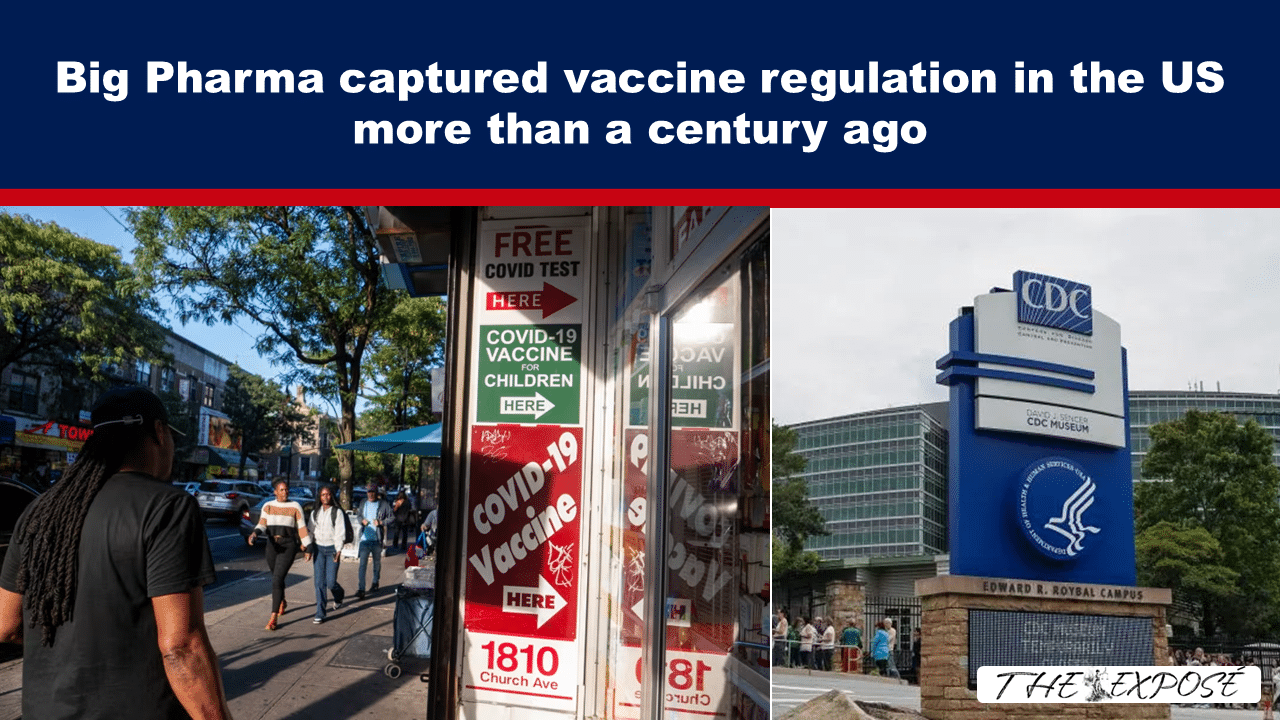
Featured images taken from ‘Covid-19 vaccination substantially lowered risks for children last season, CDC report says’, CNN, 11 December 2025 and ‘CDC updates vaccine schedule, changes covid-19 shot policy’, Straight Arrow News, 7 October 2025
The Expose Urgently Needs Your Help…
Can you please help to keep the lights on with The Expose’s honest, reliable, powerful and truthful journalism?
Your Government & Big Tech organisations
try to silence & shut down The Expose.
So we need your help to ensure
we can continue to bring you the
facts the mainstream refuses to.
The government does not fund us
to publish lies and propaganda on their
behalf like the Mainstream Media.
Instead, we rely solely on your support. So
please support us in our efforts to bring
you honest, reliable, investigative journalism
today. It’s secure, quick and easy.
Please choose your preferred method below to show your support.

Categories: Breaking News, US News
Hi Rhoda,
The same happens in the UK.
A friend of mine had a job which was to go round all the doctors practice’s in the area.
He would call in, and recommend which drugs to use in the practice.
If they agreed to what he said, he would give them money for a holiday.
Same most likely happens today.
Hi Dave Owen, yes, you’re right. Dr. Vernon Coleman and others have been warning of this for years.
For example, read:
1. Why have so few doctors dared to tell the truth about covid and its vaccines?
2. Rishi Sunak, Thélème and Moderna
3. MP’s Heavily Invested in Pharmaceutical Industry
4. How Bill Gates has influenced education, public health, “climate change” and agriculture
6. Bill Gates is the primary funder of the MHRA & owns major shares in both Pfizer & BioNTech
6. During covid, the MHRA failed and allowed the biggest assault on civil liberties and economic prosperity in my lifetime, Rupert Lowe MP said
Virology is the greatest scam on medical issues. Virusses have never been isolated and the proof of their excistence is very questionable. But it was very conveniant for scaring people, making money and inject the people with poison.
Read the papers off mr. Antoine Bechamp!!
the best method of control is fear . Galen Winsor u s nuclear development on fear ..
I guess the nations meat supply will be fine , the white man looses his beef thou . mmmm https://www.youtube-nocookie.com/embed/IfYRYzIB11U
[Xi Chi Stigma = 666) —————> in Concordance #G5516 in
Research # 5480 CHARAGMA in Concordance, Revelation 13:16-18 for MARK OF THE BEAST = – scratch stamp or etching. Quantum Dot Tattoo and Microneedle on images on google lead to many science journals about it.
Charagma comes from charax, to sharpen to a point like a palisade.
Stigma is related- PUNCTURE/BADGE OF SERVITIDECharagma – scratch stamp or etching. PUNCTURE/BADGE OF SERVITIDE Look at Quantum Dot Tattoo images on google Xi Chi Stigma = 666)
Dig in Concordance for # G5516, STIGMA – PUNCTURE/BADGE OF SERVITIDE Revelation 13:16-18 for MARK OF THE BEAST ,= Charagma – scratch stamp or etching.
Look at these JPG images from different concordances. I hope this is not too many links, but it is of just JPGs and not articles.
The links are JPGs. The Patch, which leaves a Quantum Dot Tattoo, can be applied to the forehead (one of the mandatory options in Rev. 13:16),
https://www.youtube-nocookie.com/embed/jYZksdzVxic This should help cement it