





When MPs voted down a proposed ban on social media for under-16s, Labour was not resisting some eccentric, obscure backbench crusade. It was defying a policy backed by 74% of the public, approved by the House of Lords by 261 votes to 150, and supported by more than 60 Labour MPs before the Commons even got its turn. On 9 March, ministers still told MPs to reject it, and the amendment fell by 307 votes to 173.
A pattern has well and truly emerged. Keir Starmer’s government keeps finding itself on the wrong side of public opinion, ignoring the majority, then sheepishly turning back when the backlash becomes impossible to ignore. It happened on winter fuel payments, on the farm inheritance tax row, on the grooming gangs inquiry, and now it has happened again on online child safety.
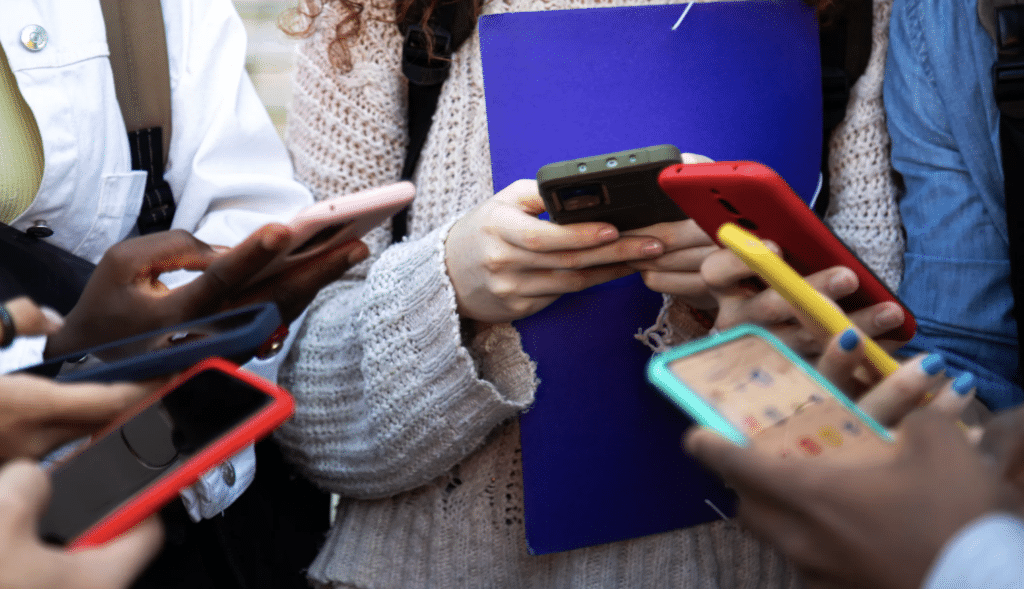
Social Media Ban Broadly Supported, Labour Still Says No
The proposed ban was not politically marginal. A YouGov poll published on 2 December 2025 found that 74% of Britons supported banning children under 16 from having social media accounts. The measure then passed the Lords in January, giving Labour a ready-made chance to claim it was taking online harms seriously. Instead, ministers opposed it.
That alone would’ve looked weak. But what makes it worse is that Labour wasn’t battling against opposition benches – the party was internally misaligned. More than 60 Labour MPs had urged Starmer to support the ban before the Lords vote, and when the Commons vote finally came, 107 Labour MPs abstained. That is not a sign of a settled governing party. It is a sign of ministers forcing through a line many of their own MPs did not want to defend.
The government tried to excuse itself by claiming a blanket ban might push children to less regulated parts of the internet, instead insisting that a consultation would produce a better response. It sounds sophisticated, but most parents know it’s just another delay.
The Grim Numbers Supporting the Ban
Labour’s caution looks even weaker when set against the evidence on what heavy social media use is doing to children. The U.S. Surgeon General’s 2023 advisory said adolescents who spend more than three hours a day on social media face double the risk of poor mental health outcomes, including symptoms of depression and anxiety. The same advisory warned that adolescence is a particularly sensitive period of brain development and said there is not yet enough evidence to conclude social media is sufficiently safe for children and teenagers.
It’s not just about low mood, either. The Surgeon General’s review found a consistent link between social media use and poor sleep quality, reduced sleep duration, sleep difficulties, and depression among young people. It also reported that 46% of adolescents aged 13 to 17 say social media makes them feel worse about their body image. Separate Ofcom research on cyberbullying in the UK found practitioners linking prolonged online bullying to self-harm, suicidal ideation, and eating-disorder-related behaviour, with children describing online abuse as more pervasive because it follows them constantly rather than ending at the school gate.
International data all points in the same direction. The World Health Organization reported in 2024 that 11% of adolescents showed signs of problematic social media behaviour, with girls worse affected than boys, and said problematic users reported lower mental and social well-being along with higher levels of substance use. At the same time, Ofcom found that despite most major platforms having a minimum age of 13, 55% of British children aged 3 to 12 were already using at least one social media app or site in 2024.
So, while Labour flounder under the guise of consultation, they are simultaneously ignoring the numbers. The damage online platforms are doing to our children is thoroughly documented worldwide – it is not a speculative problem.
Australia Proves the Point with Social Media Restrictions
Labour’s hesitation looks even thinner when set against Australia, which became the first country to enforce a national social media ban for under-16s on 10 December 2025. Reuters reported that the move was welcomed by many parents and child advocates, even as technology firms objected. Within the first month, Australia’s eSafety Commissioner said platforms had deactivated, removed or restricted about 4.7 million under-16 accounts to comply with the law.
Of course, the policy isn’t flawless. Some teenagers have found workarounds, and critics say enforcement remains uneven. But the central point is obvious enough. Australia acted, and the policy had an immediate effect on account numbers at scale. Communications minister Anika Wells called it “a huge achievement” and said that even at an early stage, every account taken down could mean “one extra young person with more free time to build their community and identity offline.”
Free Speech Infringement, or Finally Drawing a Line?
Opponents of an under-16 ban will argue that it restricts young people’s access to information, debate, and online communities, and there is a legitimate civil-liberties point buried in that objection. UNICEF has warned that some measures designed to keep children safe online can also undermine children’s rights to freedom of expression if they are drafted too broadly. Ofcom has made a similar point in its own online-safety work, saying protections for children must be balanced against rights including freedom of expression and privacy. That concern should not simply be waved away, particularly when governments have a habit of reaching for blunt instruments.
However, the overwhelming majority of public support points to a preference for stronger protection. Giving children full access to pornography, gambling, or harmful substances might technically mean they have liberty – but it would also mean allowing them to come to obvious harm. Supporters of the under-16 social media ban draw these very comparisons. Ofcom says the new online safety rules are intended to create “a safer generation of children online,” while UNICEF’s more recent work has called for stronger legislation and greater accountability from digital platforms to protect children from bullying, abuse, and harmful content.
Framed that way, an under-16 ban looks less like censorship and more like an overdue recognition that childhood should not be handed over to an industry built on addiction, exposure, and behavioural manipulation.
Final Thought
Labour had the public behind the ban, the Lords behind the ban, mounting concern from its own MPs, and a growing body of evidence linking heavy social media use to anxiety, depression, bullying, self-harm, and wider developmental harm among children. It still chose hesitation. Ministers can dress that up as balance, consultation, or caution, but it looks far more like a floundering government once again misreading the public and shrinking from a decision that was both politically defensible and morally serious. The more this debate unfolds, the harder it becomes to argue that an under-16 ban is some radical overreach. It is beginning to look like one of the few proportionate responses left.
The Expose Urgently Needs Your Help…
Can you please help to keep the lights on with The Expose’s honest, reliable, powerful and truthful journalism?
Your Government & Big Tech organisations
try to silence & shut down The Expose.
So we need your help to ensure
we can continue to bring you the
facts the mainstream refuses to.
The government does not fund us
to publish lies and propaganda on their
behalf like the Mainstream Media.
Instead, we rely solely on your support. So
please support us in our efforts to bring
you honest, reliable, investigative journalism
today. It’s secure, quick and easy.
Please choose your preferred method below to show your support.

Categories: UK News
Trouble is, most people don’t understand the wider implications of the social media ban, sounds like a step forward for child safety, but the reality will be to open the doors for necessitating a Digital ID to allow people access to the internet. The Government’s hesitation feels to me like a ruse, but in reality they will eventually push ahead with the ban anyway as the end goal is Digital ID.
You’ve hit the nail on the head. A lot of erosion of rights by small increments – much of it wrapped up in the guise of “protecting the children”
great
Actually, very little has changed here in Australia in regards to the Age Verification laws.
All of the social media sites that were accessible before are still accessible now without verification.
Apparently that’s all part of the plan…to have the system fail so that they can then enforce their demonic Digital ID system which of course would do a much better job.
We ALL want children to be safe online.
This is not about child safety, it is about CONTROL.
It’s about TRACKING, SURVEILLANCE, DATA MINING, HARVESTING OUR ENERGY, 6G, THE INTERNET OF BODIES, THE INTERNET OF THINGS, THE WIRELESS BODY AREA NETWORK (WBAN)…
Their agenda…TRANSHUMANISM.
The proof is EVERYWHERE, just check the Epstein Files, Dr. Ana Maria Mihalcea on Substack, Maria Zeee (ZeeeMedia.com) ReeseReport.com TheCrowhouse.com Brighteon.com NaturalNews.com DustinNemos.com TheSerapeum.com…
For those with eyes to see and ears to hear…
We are in a SPIRITUAL war.
This goes far above and beyond Labor and Liberal, Red and Blue, Left and Right.
There is no remedy in Politics.
THEY are the problem!
They are ALL involved in this agenda. Every single one of them at the top of every institution in EVERY nation in our world.
Corrupt and evil to the core.
Dismiss them all.
Mass non-compliance.
And above them, all of those hiding in the shadows – the secret societies, Illuminati, Freemasons, the Bankers, Rothschilds, Rockerfellers, Royalty, the Boodlines, the Vatican, the Pope, the Jesuits, above them – the covens, black magik, Satanism, Luciferianism…
WE ARE IN A SPIRITUAL WAR.
Better get right with God.
Hi Nicole,
I agree with you … It’s A Spiritual Battle / War ,
Just wanted to say hello and hi because it’s very rare now adays where a person Understands ,
Ps
I also agree with Both of your comments,
And
I believe in Jesus, I died for 30 minutes at the age of 9 years old and anyway I’m Sixty years old in 2026 and need no convincing God and Jesus are real….
Was enjoyable reading your post…
Thankyou Jimmy for saying hello and for your kind words.
Yes Jesus certainly is real and so incredible that He saved you and that you’re still here to celebrate your 60th this year!
It’s all being laid bare for us to see and we’re in for some very tough times. Faith and courage have never been more mportant.
I guess we just continue to do our best and there’s nothing to fear when the end comes and we will (hopefully!) be with our heavenly Father and Jesus again.
Take care and God bless,
Nicole : )
Hola Nicole
Tu Fe es grande , maravilloso
Saludos desde Chile
Hi Nicole ,
I have to charge But Just wanted to Pass This on
A Link with a video of an
ex-freemason
It’s worth watching ,
5 hours and some odd minutes , probably half hour , so 5 1/2 But it’s Simply amazing he hasn’t been killed for what he says on the video,
IF you subscribe to the website of the video , it’s informative except the writer doesn’t believe The Devil had Lineage ( Yeah have to keep that in mind , Yeah I am one of those believer’s sorry if you’re not…)
https://rumble.com/vhgzmp-insider-exposes-freemasonry-as-worlds-oldest-religion-and-luciferian-plans-.html
From my perspective this is one of the very few things Labour has got right. There’s far too much intrusion into free speech and too much erosion of parental rights and responsibilities. Parents if you want to ban social media for YOUR kids then do so ….but it’s not alright for you decide for mine. And btw don’t spend my tax money on monitoring and enforcing such a ban
Support censorship? Nope. That’s what this is. You will be censored next.
They came up with this idea not long after declaring 16 year olds should vote. It is up to parents to do their job properly and manage their children’s time online. Banning under 16’s from social media coerces some kind of digital ID and shelters them from the alternative points of view and discussions that would help inform them in voting. For goodness’ sake, even most MP’s communicate via Twitter etc nowadays! I am not one of the “74%” and was never asked for my view. The only person I knew who agreed with this changed her mind after I pointed out the above to her! The trouble is, most parents I see around are so busy glued to their own phones (even as they push prams!), their interest in their children’s wellbeing is evidently low.
You’re so right on this Rosie! According to the late Arthur Firstenberg on page 386 of his The Invisible Rainbow, I quote;
“…and your baby’s diaper will tell your phone when it needs to be changed.”
Such is the way things are ‘progressing’.
Hi ,,
IT’S A TROJAN HORSE ! ! !
The under age internet for social media is Going to CONNECT EVERY DIGITAL Device to The World Wide Surveillance System….. No matter what your age in order to use internet on cellphone you will have to press a continue button and
Then once you press continue put in your Birth Date ,, it sounds simple and safe ,
Problem is This will Lead to ALL DIGITAL Devices connecting and ,,
It’s the beginning Stage of a Control Grid ,
Here’s a Short ten minutes video clearly and easily explains the dangers….
Watch this video and Really Learn What’s Going On…..
Video is Done by a Computer expert who understands the ramifications that will happen to society / the public.
https://youtu.be/hI9oy0t4JUU?si=GgkAXfwIP0VAmJFH
Great video Jimmy, very informative – thankyou.
Hi Nicole,,
Thank you for watching it , it’s a short 12 minutes video ,, I used to share videos and articles often but I noticed a few got censored when I posted on other websites, and I mean censored off the internet 100% ,
I can’t even open the links to certain articles anymore,,
And Thanks for your kinds words in the previous up above comment.
Jimmy,
Hi ,,
Another way to say it is :
This age verification Law Will Make It Legal to Turn a Cellphone into Spyware Spy-Ware used against the Public…..
ALL iPhone and Google who owns Android cellphones , and Microsoft , this is the beginning Stage of a Control Grid ,
Supposed to Roll out in united states by January 2027 ,
Except some iPhone are already asking user’s to do the age verification click and once clicked your cellphone is connected to so many other internet and digital things gathering every thing (Every Thing You Click On)
This will be like the NSA national security agency playing God.
No longer is it just phone calls being listened to or emails read ,, this will include so much more and Data Centers are being built for this surveillance grid , have a computer screen in your fridge to order groceries well now the government can monitor your fridge, and cellphone, any digital device will be listened in on…
They are Setting The Stage….
The Anti-Christ isn’t all knowing so that’s why the surveillance is happening….
Hello Jimmy!
Whilst the antichrist is certainly not “all knowing”, he will be super human.
Sounds like you may have read Firstenberg’s book?
There is a lot of well researched info in the above mentioned book. Sad that he wasn’t a Christian.