





The following is a collection of recent articles about Henry Nowak’s murder.
The public’s sentiment is overwhelmingly not to blame a single police officer for how the police responded. Instead, the blame is directed towards institutionalised racism against white people. A racism that began with an incident in America in 2020 and led to many ideologues in the UK taking the knee to Marxist “anti-racism training.”
The public has called it correctly: Since 2020, this racist identity politics, born out of Critical Social Justice and Critical Race Theory, has infested UK public institutions and indoctrinated public servants, culminating in the loss of a young man’s life.
Related: How to Talk to Your Employers About Anti-Racism, New Discourses, 21 July 2020
Let’s not lose touch…Your Government and Big Tech are actively trying to censor the information reported by The Exposé to serve their own needs. Subscribe to our emails now to make sure you receive the latest uncensored news in your inbox…
Table of Contents
- The Murder of Henry Nowak
- Henry Nowak: The Footage We Were Never Meant to See
- Police Bodycam Footage From Henry Nowak’s Murder
- Killer’s Brother Makes 999 Call
- Henry Nowak: A Victim of Anti-White Racism
- Henry Nowak: How Anti-Racism Gave You Racism
- Henry Nowak: We Must Demand Accountability
- Henry Nowak and the Police Guide to Arresting the Bleeding Man
- Institutional Racism, Reversed: Henry Nowak and the Fatal Consequences of Racialised Policing
- Listen to the Words of Henry Nowak’s Father
- “I Don’t Think You Have, Mate”
The Murder of Henry Nowak
Piecing together the details of what happened on the night of Wednesday the 3rd of December 2025 on Belmont Road in Southampton might be pointless – we know the gist – but still, it is interesting to do.
Henry Nowak: The Footage We Were Never Meant to See
The true tragedy of Nowak’s death is not just the callous indifference of those involved, but what the response says about Britain, its governing class, and how far we have fallen as a nation.
That Hampshire Police have finally bowed to public pressure to release the footage (or were instructed to do so), is, I think, something of a victory. It’s worth noting, however, that the footage is incomplete. Currently circulating in the media are the first three minutes following Hampshire Police’s arrival at the scene. It stops at the point where officers realise Nowak’s pupils are not responding to a flashlight. This selective exposure itself raises uncomfortable questions: what exactly was omitted (presumably the administration of CPR), and why?
The footage is almost unbearable to watch. It captures Nowak’s final moments in horrifying clarity. He lies motionless on the ground, pleading repeatedly: “I’ve been stabbed … I can’t breathe.” He uttered variations of “I can’t breathe” around nine times. Yet an officer responds with dreadful disdain: “You’ve been stabbed? Whereabouts?… I don’t think you have, mate.”
Police Bodycam Footage From Henry Nowak’s Murder
Viewer discretion is advised.
Killer’s Brother Makes 999 Call
The brother of Vickrum Digwa made a misleading 999 call to police, claiming Henry Nowak had ‘racially attacked’ the Sikh killer.
This led to police arriving on scene at Southampton’s Belmont Road, and putting the dying 18-year-old student in handcuffs, as he drowned in his own blood.
Henry Nowak: A Victim of Anti-White Racism
With the release last night of audio from a 999 call and some bodycam footage, many of us are feeling what Nigel Farage called “Pure. Cold. Rage.” Much of that rage will be directed at Gurpreet Digwa, the brother of Vickrum Digwa, the man who murdered Henry Nowak. In his 999 call, Gurpreet said …
Henry Nowak: How Anti-Racism Gave You Racism
Cast your mind back exactly 6 years. It is the summer of 2020 and Britain is undergoing what its commentariat breathlessly described as a “reckoning.” The murder of George Floyd by a Minneapolis police officer sent hundreds of thousands of British people into the streets. Statues were toppled. Corporations issued grovelling statements. Police officers – British police officers, in British cities, policing British people – took a knee before protesters. The message, repeated endlessly by politicians, journalists and institutions of every kind, was unambiguous: racism kills, and we will do whatever it takes to make sure it never happens again.
Six years later, an 18-year-old student named Henry Nowak was stabbed five times on a Southampton street. As he lay bleeding, he told the police officers who arrived at the scene exactly what had happened: he had been stabbed by Vickrum Digwa, who was standing nearby. Digwa, for his part, told the officers something else: that he had been the victim of a racist attack.
The officers believed Digwa, and handcuffed Nowak.
Henry Nowak: We Must Demand Accountability
The ideology behind the treatment of Henry Nowak, and sadly, now a growing list of state failures in the name of anti-racism, is – of course – a political one.
The most uncomfortable thing about the police footage of Henry Nowak’s arrest is the apparent disregard for his life. “I don’t think you have, mate,” an officer replies after Henry tells him he has been stabbed. It reflects the immediate profiling of a likely drunk, white racist who, in the eyes of the police, had abused a respectable Sikh family and therefore was not worth listening to. You can see the prejudice of the police operating in real time.
Henry Nowak and the Police Guide to Arresting the Bleeding Man
There are many ways in which you might identify the victim at the scene of a stabbing. You could begin with the person who has holes in his chest. You could look for the young man collapsed on the pavement, covered in blood and saying, with the sort of clarity usually unavailable in an emergency, that he has been stabbed. You could perhaps notice that he cannot breathe properly, which, outside the metropolitan seminar room, is generally regarded as a clue that all is not well.
Or, apparently, you can listen to the man who stabbed him, accept the allegation that the bleeding white boy was a racist aggressor, place the dying victim in handcuffs and read him his rights while his lung fills with blood.
Institutional Racism, Reversed: Henry Nowak and the Fatal Consequences of Racialised Policing
18 months ago, I reported on Critical Race Theory being trained in a British Police Service, I warned that the consequence would be an institutional culture of anti-white racism.
Henry told the officers he had been stabbed. He told them he could not breathe. Instead of immediately treating him as a possible stabbing victim, they handcuffed him behind his back while he was dying in the street. By the time the reality of the situation was understood, it was too late.
The police have, quite properly, placed the moral guilt for Henry’s death where it belongs: with the murderer. But that cannot be the end of the matter. The force’s initial defence, that officers had been lied to, is not enough. Police officers are lied to every day. Murderers lie, witnesses lie, bystanders misunderstand, relatives panic, and suspects construct narratives designed to save themselves. The whole point of policing is that officers are meant to assess the evidence in front of them, not simply accept the first story that fits an institutional expectation.
Having worked in Human Resources for 30 years, I recognise institutional culture when I see it. It rarely announces itself in slogans. It appears in assumptions, defaults, reflexes, hesitations, silences and priorities; rather, it appears in the way one person’s words are believed and another’s are discounted; in how an allegation is treated as dispositive before the facts have been established. It appears when the ‘right’ narrative arrives and professional judgement seems to switch off.
Listen to the Words of Henry Nowak’s Father
“I Don’t Think You Have, Mate”
By Laura Dodsworth, 2 June 2026
The “banality of evil” is probably Hannah Arendt’s most famous phrase.
In 1961, she sat in a Jerusalem courtroom and watched Adolf Eichmann – the Nazi bureaucrat who had overseen the logistics of the Holocaust – answer for his crimes. She had expected a monster, but what she found was a small, self-important, thoroughly ordinary man. He spoke in clichés. He was, she wrote, almost boring.
Arendt didn’t say Eichmann was not evil – he plainly was. What she said was that the evil he represented was thoughtless. He didn’t look at the human beings in front of him and calculate that their suffering didn’t matter. He simply never looked at them as human beings at all. He had a category – Jews, enemies of the Reich – and the category did all the thinking for him. The individual disappeared and the person ceased to exist.
Once that disappearing act is complete, almost anything becomes possible. This is what she called the banality of evil. She warned it was spreading like fungus. And perhaps she was right.
On 3 December 2025, Henry Nowak was stabbed. He was just eighteen years old, a first-year student, walking home from a night out with friends. He had been at the Hobbit Pub. This young man had his whole life ahead of him. His father would later describe him as his “beautiful son.”
At some point on that walk home, Henry crossed paths with Vickrum Digwa, a 23-year-old man carrying a kirpan – a Sikh ceremonial knife with a 21cm blade. During a confrontation, Digwa stabbed Henry five times. One wound went into his chest and Henry’s lung began to fill with blood. Henry ran and was found lying face down on a gravel driveway when police arrived. A bystander pointed out he was bleeding.
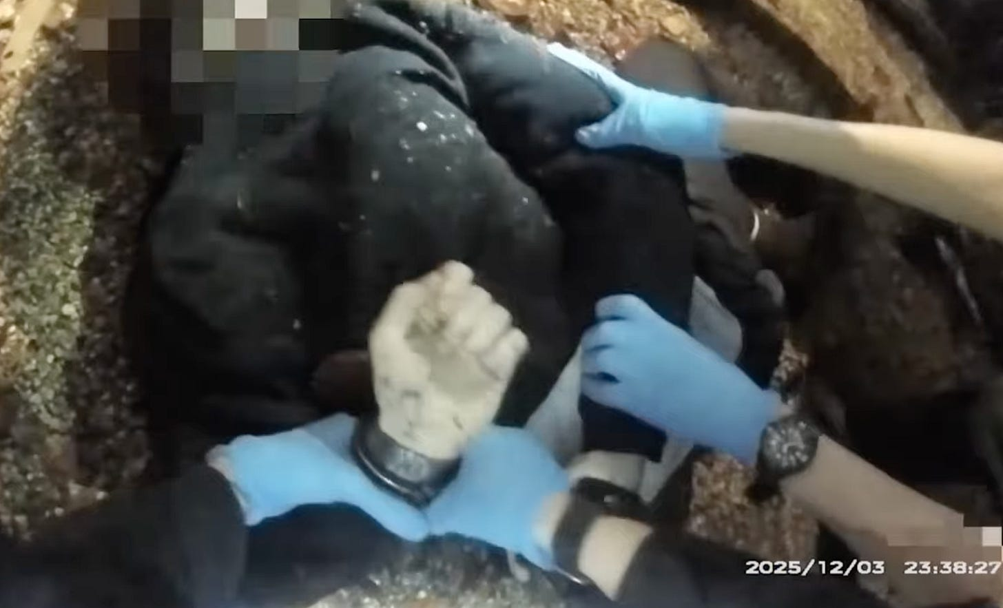
What followed is now on camera. The bodycam footage was released by Hampshire Police after Digwa’s murder conviction at Southampton Crown Court, and you should watch it if you can bear to.
Henry told officers several times: “I have been stabbed” and “I can’t breathe.”
An officer’s response to a dying teenager is now one of those phrases that will stay with you: “I don’t think you have, mate.”
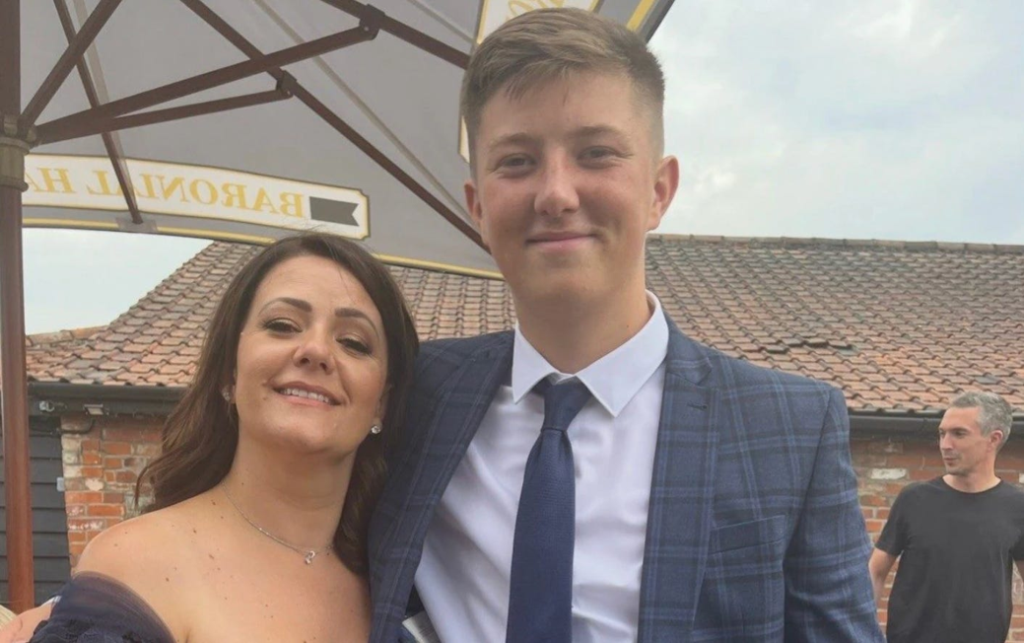
Based on Digwa’s false allegation that Henry had racially abused and assaulted him, the officers treated the injured teenager as the suspect rather than the victim. Henry was read his rights, handcuffed and drowned in his own blood.
The judge in the murder case noted that “Henry Nowak dying alone, humiliated and handcuffed was a direct consequence of Vickrum Digwa’s dishonesty.”
That is certainly true. Digwa murdered and lied. He fabricated a story of racial abuse to officers who believed him, and Henry Nowak died for it. Digwa has been convicted of murder and sentenced to life in prison with a minimum of 21 years. Justice has been served.
But the question remains: why did the officers believe him? And why didn’t they believe Henry?
Henry told them repeatedly he had been stabbed and could not breathe. The officers’ response required active disbelief. And that followed as a consequence of actively choosing to believe Digwa.
I want to be careful here, because I mean this carefully.
I don’t think those officers were bad people. I genuinely don’t. I feel sorry for them. Although I feel a great deal sorrier for Henry and his family. What I think – and what I find more disturbing – is that they are probably thoroughly ordinary people, caught inside a system that has trained them to process certain information before other information.
Put it this way. They arrived at a scene. One man was standing. He was claiming racial abuse. He was visibly from an ethnic minority. One man was lying on the ground. He was white.
Did the categories do the thinking for the officers?
It appears that Henry Nowak, bleeding on a gravel driveway, was not – in that moment – seen as an individual. People who have outsourced their moral judgement to an institution are the people Arendt was talking about.
While Arendt saw this as a political philosopher, CS Lewis identified something similar, as a theologian – the “Devil’s Strategy.” He warned that the devil rarely tempts you into evil directly, rather he relies on your intense dislike of one error to pull you into the opposite one. In this case, we might deduce that a fear of racism became an overcorrection that obscured individual accountability. And a commitment to protecting minorities cost a young man his life.
While Arendt drew on the incomparable horror of the Holocaust and Lewis was writing about Christian ethics, the observations are universal. When virtue is unmoored from a belief in the dignity of the human individual, it becomes its own kind of danger. Errors and tragedies will continue while human beings – complex, morally distinct, each carrying their own story and their own dignity – are sorted into categories and assigned a hierarchy of importance and credibility. Identity politics creates this trap at a civilisational scale.
The less important groups are the people Arendt termed the “superfluous people.” Once you have decided that some people’s lives are less important, or less believable, than others, you are already walking into very serious trouble. In this case, it appears obvious which character was the “superfluous” person.
And if you want further evidence that some groups of people matter more than others, notice how the people who dropped to their knees for the criminal George Floyd are emitting mealy-mouthed, useless, too-little-too-late statements, blaming “knife crime.”
So, what do we do?
The solutions require more than any single article can provide, but I will say this: it doesn’t begin and end with the Independent Office for Police Conduct (“IOPC”) investigation or reviewing the training protocols at Hampshire Police and across every other force. Obviously, the question must be asked: has equalities and diversity training introduced a dangerous bias? If the answer is yes, that needs to change. And in that case, vigorous public debate, journalism that names things plainly, political accountability and retraining the police are all key.
[Note from The Exposé: In 2021, the IOPC nailed their colours to the mast in the article ‘Remembering George Floyd’]
But will that go far enough? I’m sceptical. It never has before. Institutions investigate themselves, reports are commissioned, inquiries burn from taxpayer pounds, well-meaning training is revised.
Free thinking is the deeper requirement. You need to be able to look at the person in front of you and see a person and refuse the pre-packaged category. This has been a preoccupation of mine since the covid-19 pandemic and it’s why I wrote ‘Free Your Mind’ after ‘A State of Fear’. Free thinking has never been more urgent.
There is hope. The most interesting thing about all those conformity experiments -Milgram, Asch, Zimbardo – is not that most conform but that some don’t. Still, even free thinking is not the firmest ground.
More and more, I think the firmest ground is older than any of this. I think we need to renew and return to the conviction that runs through the entire tradition of Western law and civilisation, that each human being carries an intrinsic dignity that must not be revoked or harmed by any institution, state, ideology or group identity.
That conviction has a source. And I’m afraid that some of you might consider what follows to be a little bit old-fashioned. It is not a product of liberal democracy – rather, liberal democracy depends on it. It comes from the understanding that human beings are made in the image of God; that we are sacred. The source of the conviction is Christianity.
Whether you are Christian or not, whether you believe in God or not, nevertheless, we built a civilisation on Christian foundations. More and more, I come to the conclusion that the true source of so many of today’s existential problems is that we have been enjoying the protection of a building while ignoring its foundations.
I keep going back to so many details of Nowak’s death. The “mate,” the apparent adherence to procedure down to the blue gloves, and the fact that he was making his way home from the Hobbit Pub. Evil threatened the folk in the Shire, too.
Identity politics must have sounded to some people like a nice and kind thing, but truly, it has been an instrument for the banality of evil.
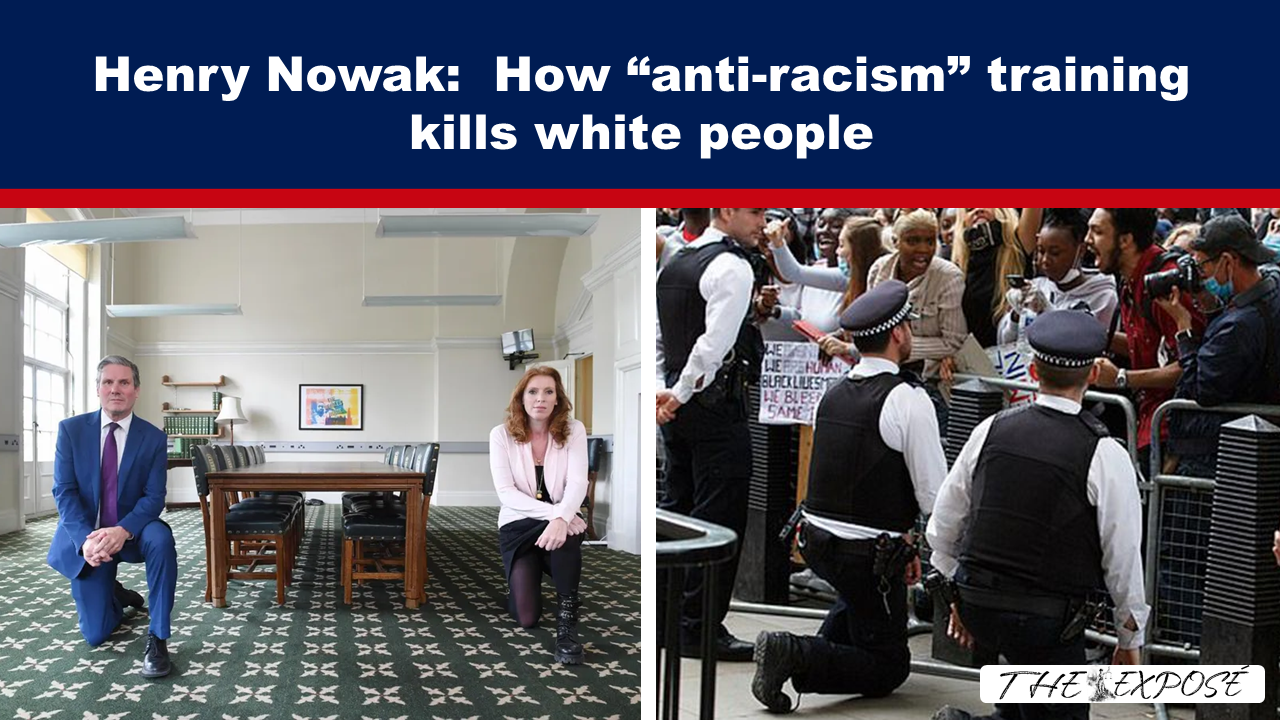
Featured image: Starmer and Rayner kneeled for Black Lives Matter ideology. ‘Why are they not kneeling now for poor Henry Nowak?’ (left). UK police kneeling for the Black Lives Matter ideology, 2020 (right). Source: Mail Plus
Categories: Breaking News, UK News
Sound like Black Lives Matter (BLM) political & social movement to me. More “TOSSING” for distractions…?!
Then, a movement to collect donation to buy oneself a luxury home just like BLM movement. Same pattern different race-cism.
Then came Dr. Mehmet Wizard of Oz doing medical evolution of Trump…. a cartoon, narrative.
Cartoon of Yen Sid <+> Dis Ney of Vahl Disney.
Mark Twain’s Quote:
“Never argue with stupid people, they will drag you down to their level and beat you with experience.”
“It’s Easier To Fool People Than To Convince Them That They’ve Been Fooled”
“I don’t think those officers were bad people. I genuinely don’t. I feel sorry for them.”
Methinks, on the other hand, that they should be held accountable for what they did. Which was assist a murder.
Billy Moore was at the Southampton protest.
“SOUTHAMPTON – There Was Carnage & Destruction As Angry Protesters Clashed With Police!!”
https://www.youtube.com/watch?v=yzKHvwdMuYA
See the smug, Fascist police at 35 minutes in – those scenes made me think of what the French people did to the Nazis collaborators after WW2 ended.
Near the end, see the Poles face up to the police goons. I think the Poles also knew how to deal with Nazi collaborators at the end of WW2.
Any that bend the so-called knee has fallen for the ultimate racist scam, they are no different than any that preach Judaism. (The so-called chosen race) A racist religion that is anti white or any human not of their ‘KIND’
For they are the chosen race…!
We know Starmer supports Israel, that means Starmer is a complete racist.
Stuart-James, You say, “Judaism. (The so-called chosen race) A racist religion that is anti white or any human not of their ‘KIND’”. This is utter nonsense. It’s neo-Nazi/Islamist/Islamo-communist/Globalist propaganda. And it is racist. Your comment is a classic example of the pot calling the kettle black.
I don’t think those officers were bad people. I genuinely don’t. I feel sorry for them. … What I think – and what I find more disturbing – is that they are probably thoroughly ordinary people, caught inside a system that has trained them to process certain information before other information.
With that attitude, you presumably feel the same way about Nazis in the 1930s and in WW2.
it’s spiritual warfare – the cop who couldn’t even tell someone was stabbed is an insult and should be held accountable for his part in this drama besides the additional training that it seems is needed for a crime scene. the stabbing liars that do not assimilate rather think it is their god-given duty to slay the unbeliever wherever he is should be deported. in this case the one should be given the death penalty and the other should be imprisoned for each year of henry’s life that he was able to live then deported. when do those who allowed the illegals into the country to cause mayhem be held accountable? ya there’s a clash coming by the locals and rightfully so to preserve their lives and their country and throw the sword stabbing clowns out of the country and back to their barbaric ways of life in their own countries. it shouldn’t end there – it should then move to those who allowed it in the first place – it’s time for the leaders of the world to feel the heat of their mad decisions…
“Did the categories do the thinking for the officers?”
I see, you see it as “I was only obeying orders”.
That excuse did not work for Nazis leaders at Nuremberg.
There is only one race, the human race. Pastor Boyd
“I don’t think those officers were bad people. I genuinely don’t. I feel sorry for them. … they are probably thoroughly ordinary people, caught inside a system that has trained them to process certain information before other information.”
When some of the young girl victims of the rape gangs reported to the police that they had been raped, they were turned away and accused of being prostitutes. Some were even raped by police officers who told them that if they didn’t let them have what they wanted, the they would hand the girls back to the gangs.
Do you feel sorry for those police officers?
Did that “system that has trained them to process certain information before other information” tell them that it is all right to rape young girls?
Look up this news article – “Women abused as children by Rotherham gangs say police also sexually assaulted them”
In it – “One says she was raped from the age of 12 by a serving South Yorkshire Police (SYP) officer in a marked police car. He would threaten to hand her back to the gang if she did not comply, she says.”
Look up this one – “As the true scale of the involvement of South Yorkshire Police officers in the Rotherham grooming gangs scandal is revealed, one victim – just 14 at the time – tells her horrific story”.
And this one – “Women abused as children by Rotherham gangs say police also sexually assaulted them”
And this one – “No police were sacked over child grooming scandal: Officers avoided serious sanction over failures that let down victims of Rotherham gangs” – Operation Linden.
Hi Celie,
Thank you for mentioning Rotherham.
Over 25 years ago, my wife and myself, and relatives of the abused children, were on the streets in Rotherham.
We could not understand why the abused children were not being listened to.
I only found out last year in this Expose blog, that the Labour councillors were using the postal votes of the moslems.
This is why nothing was done, plain and simple corruption.
https://tapnewswire.com/2026/06/04/henry-nowak-is-our-george-floyd/
It is going to get worse not better. The next generation is being brainwashed to be biased against white people and self-hate is being inculcated into the minds of white kids.
“UK nurseries told to report ‘racist’ toddlers to police”
“Childcare workers in Wales have been told to call police on children as young as three if they are suspected of “racist” behavior, according to a new official guidance backed by the Labour government.
The document, produced by Diversity and Anti‑Racist Professional Learning (DARPL), an organization that has received over £1.3 million ($1.7 million) from the Welsh government, advises childcare workers to assess whether a child’s behavior could be deemed a “hate crime” and, if so, to call authorities.
The guidance applies to children aged 12 and under, even though the age of criminal responsibility in Wales is ten. Staff are told to record whether the alleged racism is “child to child,” “adult to child,” or “systemic.” Workers are also encouraged to assess their own “white privilege” and audit toys, books, dolls, posters and even snacks to ensure an “anti‑racist stance is visible.” ”
That was from RT but the Daily Mail also reported it.
I don’t know a lot about the Chinese revolution, but I believe that Mao brainwashed kids to turn them into “Mao’s little generals” – snitches who would report their own parents for having anti-Communist views.
Is your child being brainwashed at school? Will you one day be dragged away to a re-education camp because your child reported you?
Hi Rhoda,
This article is an appalling state of affairs.
It seems fairly obvious Henry Nowak was a genuine young man, who deserved better.
His Father did well to keep his composure.
If my son had just been brutally murdered, I would be looking for the family of Vickrum Digwa, to have a word with them about his upbringing.
How on earth is it ok for Sikh’s to be marching about with a large knife, when small knives are banned for normal people.
Without a doubt the police need to have more civility.
Remember Bhodi Beach killing?
The wiki use term “ALLEGEDLY” killing those Israel people. The real number people killed was unknown.
This is a well planned operation using two ‘Indian’ as a killers.
In Novak’s case, the Sikh race. Do you see the patterns here? Immigrants killed the locals.
Flash back to year 1511 British India Colonial era, Indian & Sikh was the soldiers and army.
There are no other ways to prevent something that already WELL PLANNED using MK-ULTRA hypnosis victim killing the carefully choosed selected prey.
This is all for = PROBLEM – Reaction – underground Government intervine offered solutions.
The mass media needs your REACTIONS to escalate (viral) the hate+anger race-cism virus.
Hi AkashicRecordLibrarian,
Have you been reading this article, you mean like a False Flag.
Yet we still do not know which of our MP’s went to Epstein Island.
https://tapnewswire.com/2026/06/04/henry-nowak-is-our-george-floyd/
Your link flagged as error 403: Access denied.
Answer to your which MP’s went to Epstein Island: ALL of the old geezers. They signed membership of Freemason’s lifetime members. Member shall grant full access to group sex of pedophile.
They are recruiting new member as per today.
You can package this behavior in whatever words coined by intellectuals, but it simply comes down to Stupid People acting out according to their innate wiring, their God-given wiring. This Nowak guy has an innate drive to physically dominate people when he can, with alcohol exacerbating it, and Digwa has the wiring of a paranoid, selfprotecting person with a dependency on blades and other weapons, without which he’d feel insecure. Stupid People have no control over their impulses. When these types of people meet, this can easily turn into an explosive encounter, with one of them paying the price. The cops are Stupid People too who simply follow orders in deciding who are “superfluous people” and act out freely and with impunity on their own wiring to be derisive to a seriously injured and dying guy. After all, they get paid for obeying instructions. Take home point: another Whitey bites the dust. But at least the “racisted” killer goes behind bars. Long live George Floyd. In the end, on the bottom line, it’s all about Stupid People acting out, packaged as ‘racism’ or some other fancy socialist explanation to use stupidity as a way to cause rifts and tears in society, as the merry-makers like George Soros have wanted for so long and the NGO’s milk. Whiteys are the hardest to oppress in their quest for world dominance. Stupid People are the best army you can get if you want to destroy a society, that’s why the mixing of cultures is so desired – it fuels the stupidity. Read also about the murder of Renee Good, another Whitey killed by a Whitey. https://zonderreden.substack.com/p/the-execution-of-renee-good